

The Government has put forward a consultation proposal aimed at banning the use of fossil gas for heating buildings.
The world is to be saved by burning the gas somewhere else.
Rogaland is the heart of the Norwegian oil and gas industry. Yet local businesses and households have paid a high price for the climate hysteria that has gripped the Norwegian authorities.
In addition, the region supplies large amounts of electricity from hydropower. But large-scale production of extremely climate-friendly hydroelectric power is of little help when a large proportion of the power is transmitted via cables to the European mainland and England. Much of what remains is sold at a reasonable price to battery factories and data centres owned by foreign investors.
Almost all Norwegian data centres that require electricity are owned by foreign entities
That is why the region that generates so much of Norway’s electricity has been struggling with the country’s highest electricity prices for over five years.
The frenzy is also affecting fossil fuels, including natural gas. This is affecting both businesses and households. As early as 2028, a ban on the use of gas for heating could become a reality.
“If that happens, we’re done for,” says Edwin Skavland (25) to Stavanger Aftenblad.
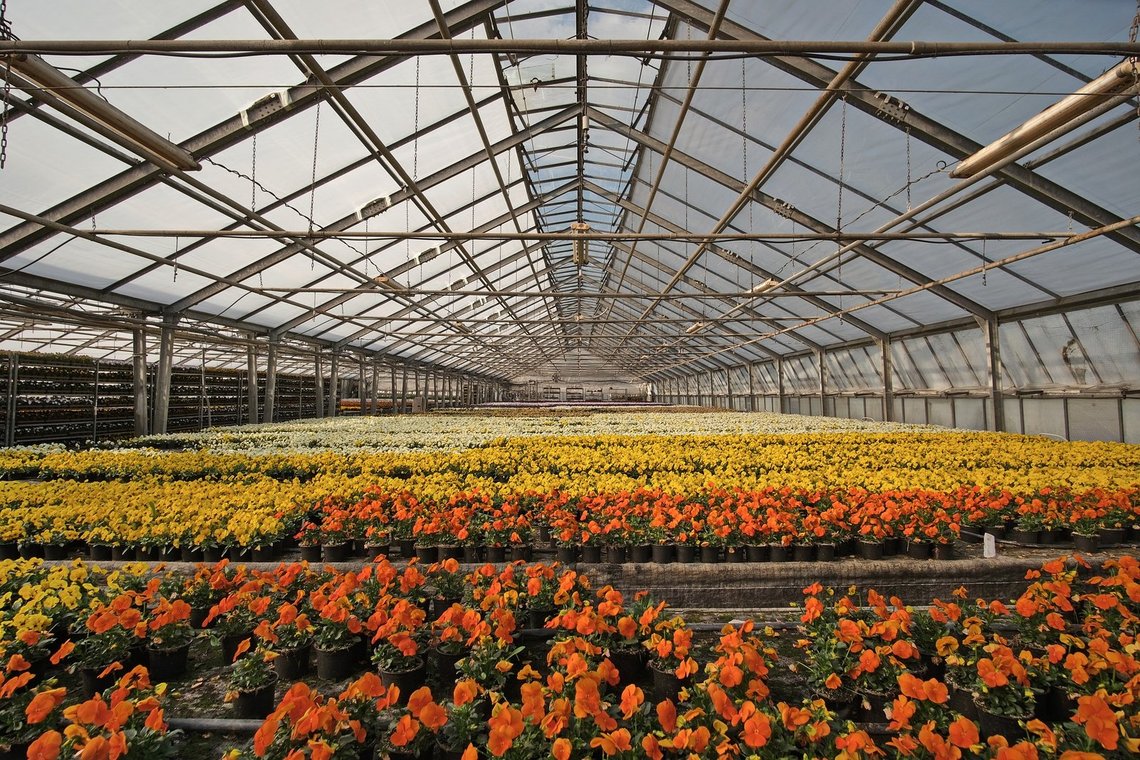
Edwin runs Skavland Gartneri in Talgje together with his twin brother Håkon and his father Håvard. They have recently invested 100 million kroner in a new greenhouse.
“We did that to ensure we can produce tomatoes all year round,” says Edwin.
May be banned from 2028
In just over a year and two months, the calendar will turn to 2028. If the climate fanatics in the government get their way, a ban on the use of gas for heating will then be introduced.
– “A national ban on fossil gas for heating buildings will help to cut emissions significantly in Norway, whilst allowing fossil gas to be replaced by heating from, for example, electricity, biogas or district heating,” said the then Minister of Climate and the Environment, Andreas Bjelland Eriksen, when the proposal was sent out for consultation in June.
According to the Norwegian Environment Agency, the ban could reduce greenhouse gas emissions by between 123,000 and 207,000 tonnes of CO₂ in 2028.
It is, in a sense, true that greenhouse gas emissions will be reduced – in Norway. The same argument is used to waste billions of kroner on climate projects such as the electrification of the continental shelf and Melkøya, the push for electric cars, electric ferries and even battery-powered aeroplanes.
But as Document has repeatedly pointed out: the gas doesn’t actually disappear; it’s simply sent to other countries to be burnt there. This actually increases global greenhouse gas emissions, and if one is concerned about CO₂ emissions, it is global emissions that count.
Rogaland is the county in Norway that dominates the greenhouse industry, both in terms of the number of facilities and total area. That is why the county is hit particularly hard by such measures, and it is not so easy to find alternative solutions for both heating and CO₂ supply.
– It’s not feasible. There isn’t enough time, and we don’t know if the solutions will be in place by then,’ says Håvard Skavland.
CO₂ supply is crucial for tomato production to be profitable.
– It’s absolutely vital. It does two things: it provides heat to the plants and increases tomato production by around 30 per cent.
Sidsel Bøckman, Deputy Chair of the Norwegian Horticultural Association, is concerned and points to other areas in Rogaland that will be severely affected. This applies in particular to the market gardens on Finnøy and the surrounding islands.
Here, access to electricity is limited, whilst investment has already been made in a gas network.
– In the 2000s, an extensive gas network was built, and the market gardens adapted their production to it. And these pipes carry fossil gas.
Private individuals are also concerned
A close friend living in Stavanger brought this matter to my attention. With a home in Stavanger and a holiday cottage in the mountains in Sirdal, his family is also affected.
For years, he has been heating the family cabin in Sirdal using gas. The gas is stored in an underground tank which now risks losing all its value, unless one believes that biogas can take over. The cabin owner is, however, unsure whether it is possible to convert the system to biogas.
All these extremely costly climate measures are being implemented even though they have absolutely no effect on the global emissions that politicians and the media are so deeply concerned about. The fact that the US, China, Africa and large parts of Asia are completely ignoring the climate panic means nothing to people like Bjelland Eriksen.
The Norwegian climate mafia dreams that Norway can help reduce the global temperature by 0.000001 degrees by 2100. That way, Norwegian politicians can boast of ‘saving the world’, whilst we taxpayers foot the bill.
After all, it requires nothing more than total economic collapse, and perhaps our ‘leaders’ feel that mass immigration, industrial closures and the enormous bureaucracy are taking a little too long to do their bit?
The worst thing about this whole circus is that it’s so obvious even a moderately intelligent primary school child can understand it. Apparently, it’s more insurmountable for MPs and ministers.