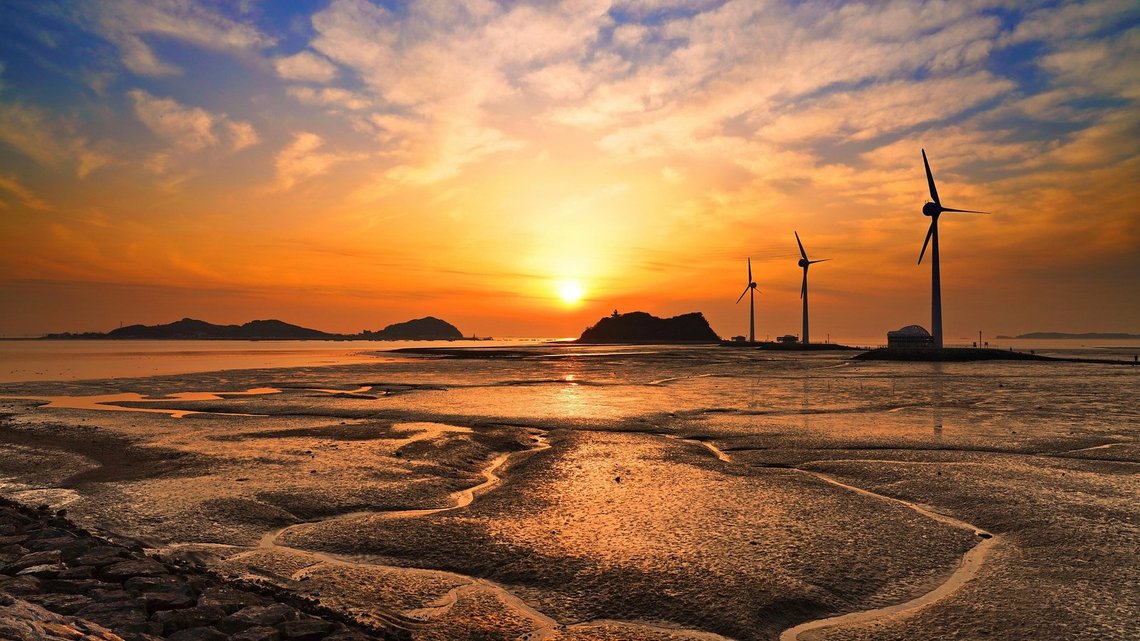


A significant proportion of these extremely expensive climate initiatives are destroying natural environments worthy of protection. Moreover, some of these projects lead to a rise in greenhouse gas emissions.
What is the cost to nature as a result of climate measures and ‘green’ initiatives? This question is posed by commentator Hilde Øvrebekk in Stavanger Aftenblad.
Øvrebekk has read the report ‘The Nature Agreement in Practice”, recently published by the Forum for Development and the Environment (ForUM) and eight Norwegian civil society organisations.
The report shows that the government is on track to meet only 3 of the 23 targets Norway pledged to achieve by the ‘magic year’ of 2030, by signing the global nature agreement adopted in Montreal in 2022.
This is despite the fact that the Norwegian targets were vague, unambitious and unclearly worded. Nature is paying the price, according to ForUM.
ForUM also believes there is a gap between the progress the authorities believe they are making and the developments that are actually taking place. In several areas, ForUM and the other organisations believe there has been no progress at all.
This applies, amongst other things, to the target of managing land in a way that protects nature – for example, forests, bogs and coastal areas. This is also the case when it comes to the restoration of damaged ecosystems, such as peatlands.
Climate trumps everything
At the same time as the national budget was presented, the government unveiled what it calls ‘Green Paper – Climate Status and Plan for 2027’. This is a sort of plan for, and annual update on, progress towards the climate targets.
Last year, the Labour Party government secured support from the Conservative Party and the Liberal Party to adopt a target for Norway to reduce greenhouse gas emissions by at least 70–75 per cent compared with 1990 levels by 2035.
One aspect is the economic costs, which will be astronomical in the attempt to achieve an unattainable target. But nature will also be hit hard.
One example is how wetlands are being drained and destroyed by climate projects such as wind power. This causes great harm to large numbers of animals, birds and insects.
Wetlands purify water and prevent the natural environment from drying out. In addition, wetlands store large amounts of CO₂.
This means that wind turbines built in wetlands cost enormous sums of money, produce absolutely no stable power, destroy the natural environment and, on top of that, lead to increased CO₂ emissions! This is a glaring example of how climate fanatics are merely playing to the gallery.
This is happening even though Scottish researchers as early as 2013 warned against building wind farms in peatland areas.
To meet its climate targets, Norway is set to expand renewable energy and electrify society. However, several of these climate measures may simultaneously result in major encroachments on the natural environment.
The Green Paper states that ‘purposes of particular public benefit, such as renewable energy generation, power lines, critical digital infrastructure and defence, shall be given significant weight in the event of conflicts between development objectives’. Consideration for nature does not seem to matter when it comes to saving the world from becoming one degree warmer by the year 2100.
The authorities now say that the consequences for carbon-rich areas are to be assessed during the licensing process. But in the quest for renewable energy that does not exist, consideration for the real natural environment is unlikely to play any role.
Consideration for nature is simply not sufficiently integrated into energy policy, according to ForUM. The result will be a further loss of biodiversity.
In Rogaland, you cannot drive the 75 kilometres from Stavanger to Egersund without constantly having to look at beautiful countryside that has been completely ruined by giant wind turbines.
Homeowners are experiencing significant drops in property values due to monstrous pylons that suddenly appear in their neighbourhood. It is quite simply depressing.
Doesn’t add up
The report states: “The reallocation and development of particularly important and carbon-rich natural areas should be avoided.” But this is merely rhetoric; there is no overarching plan, and no follow-up to check whether nature is being preserved.
The Government has appointed a committee to investigate a national target for land-use neutrality, whereby all physical loss of natural areas is to be compensated for by the restoration of equivalent natural areas.
The problem, of course, is that when there are simultaneously no rules on how nature is to be preserved in the face of hydropower development, ‘green’ projects and other development, we are back to square one.
Anything not directly related to the climate is ignored. Nature conservation lacks political will and leadership. Nature is being destroyed so that we can boast about climate measures that will have no effect on the climate.
Climate change is, in fact, a global phenomenon, but politicians who believe the climate will be saved by sending gas through pipelines from Melkøya and the continental shelf to be burnt in other countries do not seem to understand a thing.
In practice, this increases the very emissions we fear, as pipelines and power cables do not materialise out of thin air. Furthermore, gas leaks occur along the way.
So the question for our climate-hypnotised politicians should be:
How high will the environmental cost actually be for the individual climate measures or ‘green’ initiatives?
Today it was announced that the Norwegian Water Resources and Energy Directorate (NVE) has granted Eviny and Norsk Vind permission to build Moldalsknuten wind farm in Sokndal in Rogaland.
This is the first licence granted for a new wind farm in nine years.