



The UK is already engaged in ‘hybrid warfare’ with the Kremlin, and the front line lies in the High North, says former National Security Adviser Lord Sedwill at a security forum in Oslo.
Lord Sedwill, who also served as Cabinet Secretary in the governments of Theresa May and Boris Johnson, urged NATO allies to make Moscow feel “threatened” and to create “strategic dilemmas” that would deprive President Putin of the initiative, writes The Times.
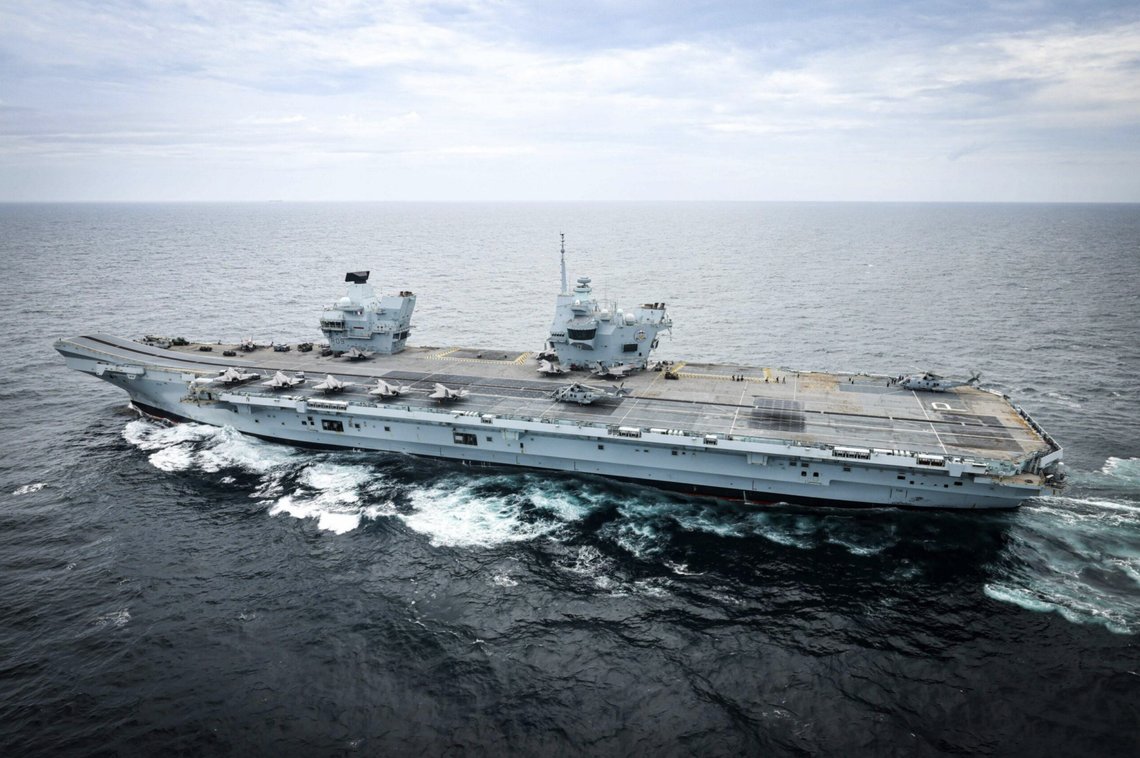
The remarks were made at the Atlantic Future Forum aboard HMS ‘Prince of Wales’, the Royal Navy’s flagship, which is moored in Oslo. Sedwill, who is chairman of the AFF, said, amongst other things:
‘I hear people say that Britain is far from the front line and that we are therefore safe. That is wrong. We are already facing hybrid warfare on a daily basis, whether in the form of cyberattacks, bomb threats, drones, assassinations or dirty money in elections designed to disrupt our politics.’
Sedwill sits in the House of Lords as an independent. Speaking before an audience of ministers, military chiefs and defence industry leaders, he added:
‘NATO is a defensive alliance, but the most effective form of defence is often to create a dilemma – and that frequently means taking the offensive against our adversaries.
‘How do we make them feel threatened? Not simply by surrendering the initiative to them and defending ourselves against it. […] How can we put pressure on the Russians, whether through conventional defence or hybrid warfare?
‘Deterrence requires not only effective defences but also ensuring that our adversaries face a degree of risk if they continue to test us.’
Foreign Secretary Espen Barth Eide attended the conference and also gave a speech.
Sedwill highlighted the High North as the British front line, stating that the Kremlin is in the process of expanding its influence in the North Atlantic from the naval base of the Russian Northern Fleet in Murmansk. The British front line will therefore be located in areas close to Norway.
Like most European countries, the British have been downgrading their military forces for a number of years. This applies particularly to the Royal Navy.
Last month, the Defence Committee warned that Britain had ‘obvious shortcomings’ in its military capabilities in the Arctic, leaving the region vulnerable to Russian threats.
A committee report concluded that the Royal Navy had allowed its ability to conduct submarine operations beneath the ice to ‘deteriorate at a time when the High North has become increasingly important strategically’. It found that the Royal Navy’s Astute-class nuclear-powered attack submarines were not yet capable of operating beneath the ice, meaning that Britain could not effectively counter Russia beneath the surface.
On Tuesday, it was also revealed that the British defence forces will procure new drones and sensors worth 90 million pounds to protect British undersea cables from Russian sabotage. This seems like an extremely small investment.
The UK and Norway signed the Lunna House Agreement last December. It enables the Royal Navy and the Norwegian Navy to cooperate in combating Putin’s fleet.
The main objective is to secure a strategically important 400-mile-wide maritime chokepoint in the Norwegian Sea and the Barents Sea, known as Bear Gap, the stretch of sea between the Norwegian coast and Svalbard, which serves as a gateway for Russian vessels into the North Atlantic.
However, if the agreement is to have any effect, both countries must first build up a naval defence force of sufficient size. This is, to some extent, already underway, but will not have any noticeable effect for many years.
The British have long adopted an aggressive stance towards the Kremlin, and, together with France, Keir Starmer’s government took the initiative to form a ‘coalition of the willing’ to send military forces to Ukraine following a possible ceasefire.
Both London and Paris are completely ignoring the fact that the Kremlin says NATO troops in Ukraine are utterly unacceptable and will be treated as hostile forces.
Moreover, the UK is facing massive problems at home, where the economy has been devastated by mass immigration and climate hysteria. The question is therefore whether the British will have the necessary funds available to carry out the planned expansions of their defence forces.
One could say exactly the same about France, but the French are not, of course, involved in these plans in the north.


