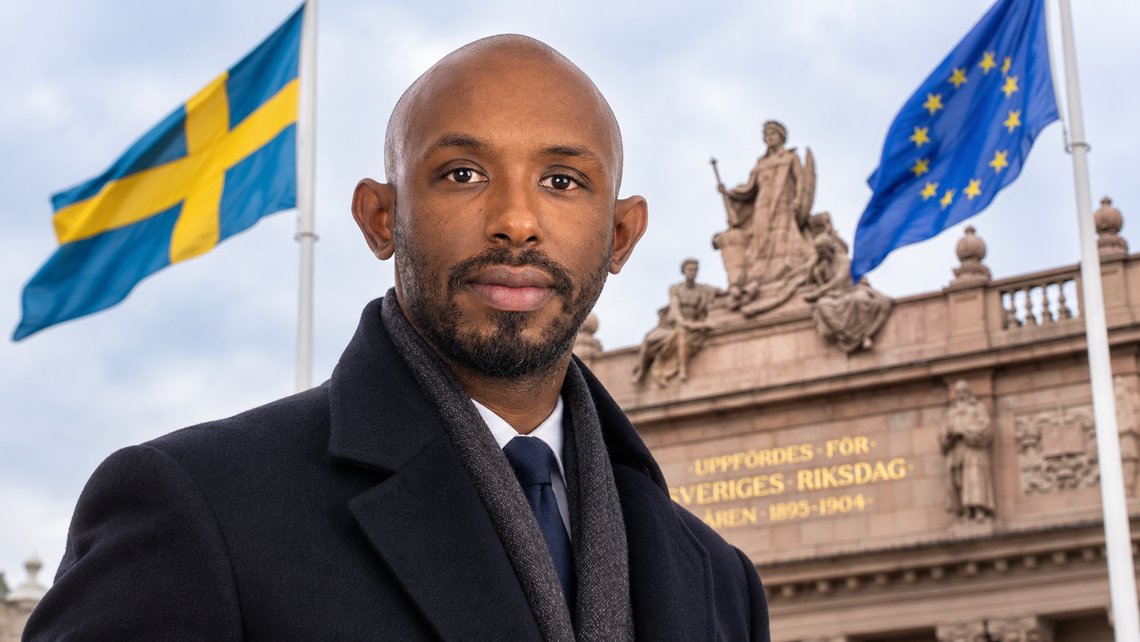


The Swedish Parliament has voted in favour, for the second time, of a constitutional amendment that will make it possible to revoke Swedish citizenship in certain specific cases. The change applies to people with dual citizenship who obtained their Swedish citizenship on false grounds or have been convicted of crimes.
On Wednesday, Parliament decided on several far-reaching amendments to Sweden’s Constitution. One of the most widely discussed changes means that it will in future be possible to strip individuals of their Swedish citizenship.
The vote was 292 in favour and 51 against, with six members absent.
According to the Swedish Parliament’s press release, the change applies to people with dual citizenship and means that citizenship can be revoked from individuals who obtained their Swedish citizenship through “false or misleading information” or have been convicted of crimes that “seriously harm Sweden’s vital interests”.
This could, for example, involve someone having bribed or threatened their way into obtaining citizenship, or having provided false information in connection with their application.
The issue is highly topical in Sweden due to the numerous scandals surrounding newly appointed Member of Parliament Mohamed Abdukardir Ali (V). Ali was granted Swedish citizenship after providing false information to the Swedish Migration Agency. Ali has links to gang crime, has substantial debts registered with the Swedish Enforcement Authority and is currently being investigated by the police following allegations of electoral fraud.
The next government will have to take over
However, the constitutional amendment does not mean that citizenship can automatically begin to be revoked at the turn of the year. Parliament must first pass an ordinary law regulating how the provisions are to be applied.
The outgoing government has been working on such a legislative proposal, but the work has not yet been completed. It will therefore be up to the next government to present a concrete proposal.
The Left Party and the Greens voted against
The proposal has been the subject of political debate and has faced criticism from, among others, the Green Party and the Left Party. Both parties submitted reservations against the constitutional amendment and voted no when Parliament took its second decision on Wednesday.
During the parliamentary debate, Left Party member Caroline Täljeblad criticised the proposal, arguing that it risks making Swedish citizenship unequal and less legally secure.
– In relative silence, we are now taking steps towards making Swedish citizenship both unequal and less legally secure, Täljeblad argues.
Human rights organisations have also expressed concern that the change creates two categories of citizenship: one that cannot be revoked and another that can be withdrawn. Aida Samani, senior legal adviser at Civil Rights Defenders, has warned that people with dual citizenship may consequently be forced to live with uncertainty about their status as citizens.
– It creates two categories of citizenship, one of which is irrevocable while the other is very weak. Anyone with dual citizenship will have to live with this insecurity throughout their lives, says Aida Samani.
The Social Democrats, on the other hand, have supported the change.
Freedom of association can be restricted
Parliament’s decision also includes a constitutional amendment that opens the way for freedom of association to be restricted through ordinary legislation in the case of organisations engaged in serious criminal activity for financial gain or other improper benefits.
The outgoing government has already drawn up a proposal under which participation in a criminal organisation could carry a prison sentence of up to four years, with harsher penalties proposed for serious offences. The proposal is intended to enter into force on 1 April 2027, but has not yet been submitted to Parliament as a government bill.
The approved constitutional amendments will enter into force on 1 January 2027.