

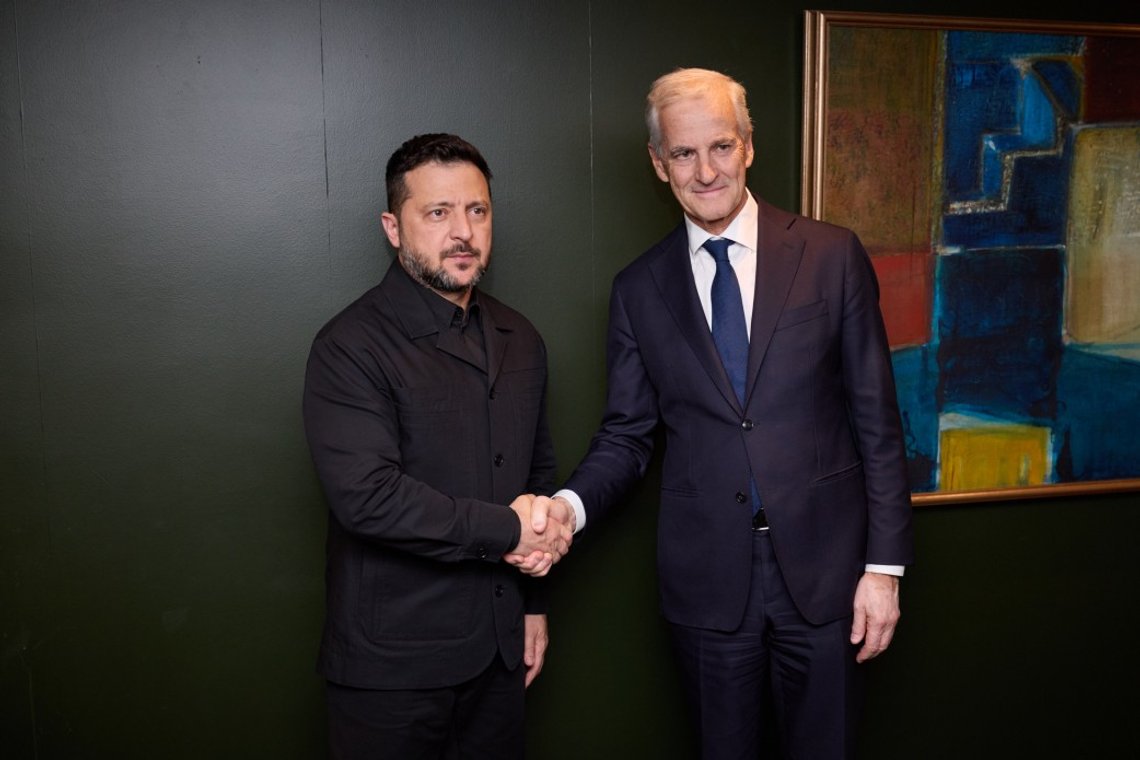


For several hours now, I have been watching Norwegian commentators discuss today’s meeting between Zelensky and Witkoff in Oslo. NRK has devoted Dagsnytt 18, Dagsrevyen, NRK-Debatten and the entire evening to covering the meeting. I am shocked, not only by how the state broadcaster is now being used to gloss over Norway’s failed peace diplomacy, the dark underbelly of which was so brutally exposed by the Epstein case.
Dangerously ignorant echo chambers.
I am shocked by the commentators’ ignorant, historically illiterate and one-sided portrayal of the background and causes of the war. I am shocked by the unrealistic and uncompromising demands they believe are necessary to reach a peaceful solution. And I am shocked, though not surprised, by the demonising, unconstructive and undiplomatic coverage of both the opposing side on the other side of the Grense-Jakobselv border, as well as the characterisations of our most important ally on the other side of the Atlantic.
This betrays a total lack of understanding that it is interests, realpolitik and power that govern relations between states in the real world. And it demonstrates a total lack of understanding of ‘the other’. Understanding our counterparts or a potential enemy on the other side of the fence or border is important. Equally important is understanding our neighbouring countries, our allies and our friends. We do not always need to have fully aligned interests. Understanding this is fundamental to all diplomacy. Yet it has been poorly understood in Norwegian foreign policy, and it is poorly understood in the echo chambers of Norwegian defence and security policy circles.
A recent example can be found in *Forsvarets forum*, which refers to a think tank in Ukraine and a researcher at the Norwegian Military Academy, who believes that the Baltic states and Norway are next on the list of Russian targets should Russia win the war in Ukraine. They believe it is more likely that Russia will attack a NATO country in the next three years than that it will not. This is the same view held by the unanimous echo chamber of commentators.
I agree with the conclusion, but not with the analysis. They may be right, but in that case it is not only Putin we have to fear. At the risk of being labelled a ‘Putinist’ and pro-Russian, I would argue that, in that scenario, it would largely be our own fault.
I disagree with the analysis.
Norway is highly vulnerable geopolitically should a confrontation arise between the superpowers, but all other things being equal, there are few reasons why Russia would attack Norway. The greatest danger of that happening lies with ourselves and our failure to understand that great powers have geopolitical interests, as well as our politicians’ unwillingness to spend money on safeguarding our own defence.
I actually believe it is quite likely that we could provoke a Russian attack on Norway if we do not change our approach. First and foremost, we must rebuild a credible national defence. Secondly, we should strive to rebuild solidarity within NATO, particularly with regard to developing Nordic defence cooperation on the northern flank. We should limit our support for Ukraine to defensive measures and set aside the demonising war rhetoric. And in the long term, we should reintroduce the self-imposed security policy restrictions that helped maintain low tensions in the High North and served us so well during the Cold War.
The Støre government is doing neither of these things. It is doing the exact opposite! It is dragging its feet when it comes to rebuilding the Armed Forces. It is turning towards Brussels rather than Washington, despite the fact that, strategically speaking, Norway is to be regarded as a North Atlantic ‘island nation’ with the US and the UK as its natural allies, rather than the EU and the continental powers. The dismantling of the security policy restrictions dating from the Cold War era increases, rather than reduces, the risk of Norway becoming a theatre of war in a confrontation between the superpowers. And through its extensive and increasingly offensive military support for Ukraine, the government is contributing to a further escalation of the war.
Whilst we have dismantled our own defence and pushed our most important ally on the other side of the Atlantic even further away from us by failing to fulfil our obligations within NATO, we are, for all practical purposes, at war with our superpower neighbour on the other side of Grense-Jakobselv – a war to which we are actively contributing to the escalation of. There is a paradox in current Norwegian security and defence policy so great that we cannot even speak openly about it. But we must, sooner or later, if we are to escape the security policy corner into which we have painted ourselves.
The Government is dragging its feet.
A small, geopolitically vulnerable country without an adequate defence force could easily fall prey to pressure from major powers. At the turn of the millennium, however, the Defence Reform 2000 dismantled 85 per cent of the Norwegian Armed Forces. Warnings were issued early on. The security policy analysis, which assumed that war could not return to Europe, was quite simply based on false premises. For a long time, luck prevailed over reason, until the Russian invasion brought existential war back to Europe with full force on 24 February 2022.
We are now in a situation where it will take at least 10–15 years to rebuild the Armed Forces. Much can go wrong in that time. Despite the grandiose rhetoric about a ‘historic boost’, however, the pace of rebuilding is slow, both in relation to the actual threat picture and in relation to the historical backlog. It is true that the defence budget has increased to 180 billion for 2026, but the shortfall required simply to make the current, severely reduced Armed Forces function at all is between 80 and 100 billion. In addition, just over 70 billion is going to Ukraine via the Nansen Programme. In other words, the rebuilding of the Armed Forces is more or less still at a standstill.
Oslo, 20 October 2026.
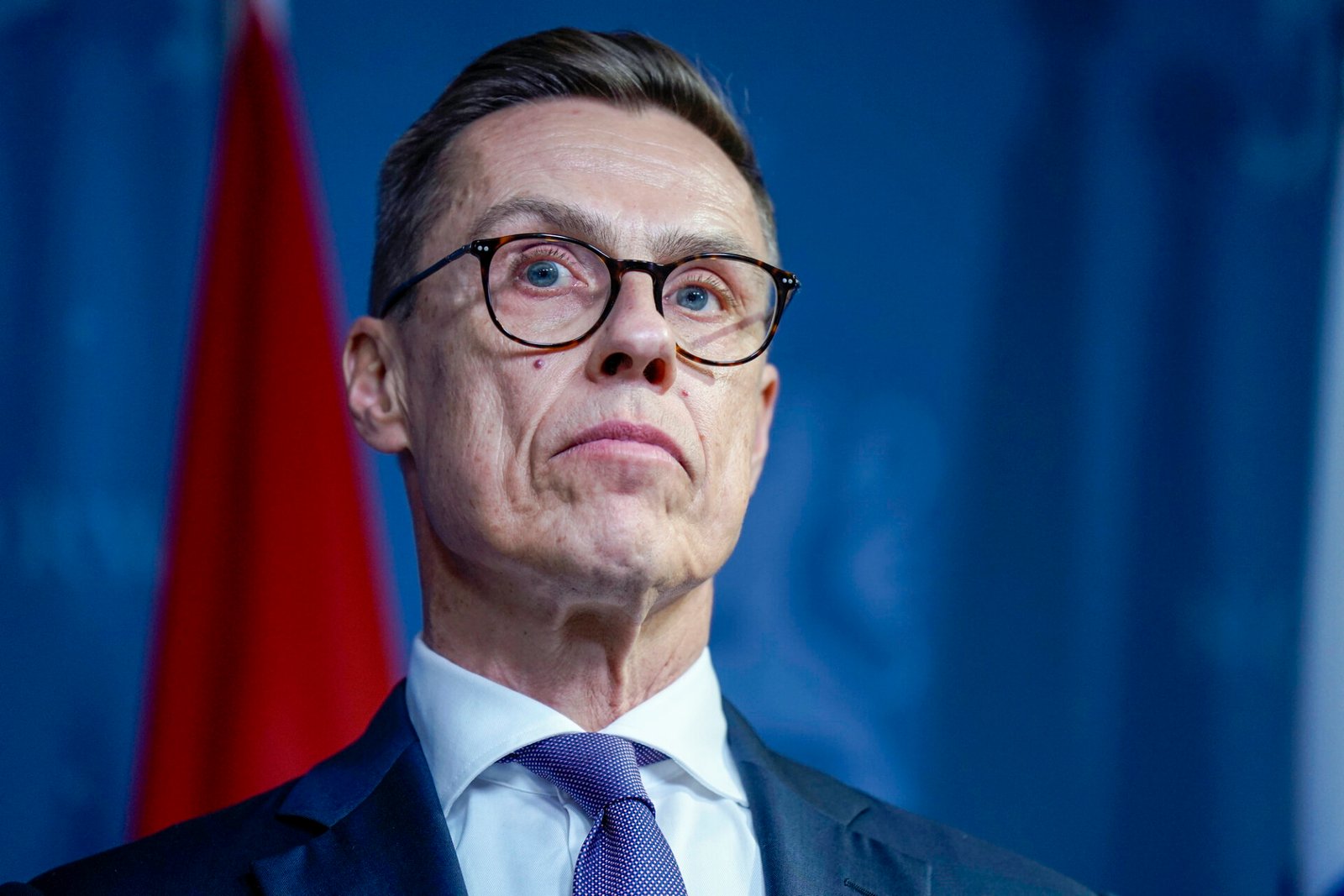
Finnish President Alexander Stubb during a press conference. Volodymyr Zelenskyy is in Oslo, where he is meeting Norway’s Prime Minister Jonas Gahr Støre, US Special Envoy Steve Witkoff and Finland’s President Alexander Stubb.
Photo: Cornelius Poppe / NTB
Funds and resources are being diverted to foreign causes. At the same time, the volume is too low and the approach is wrong. Whilst we were able to mobilise up to 350,000 men during the Cold War, today we can mobilise only between 60,000 and 70,000, including the Home Guard. By comparison, Finland, with the same population, currently has a wartime strength of 280,000 men and a total reserve of over 900,000. In Norway, we have enough personnel to cover a few kilometres of the front line for a few days. We have no missile or drone defence, no offensive drone or missile capability, let alone the capacity to mass-produce such systems. Strategic targets such as power stations, ports, air bases and other infrastructure lie unprotected. The same applies to the pipelines and energy infrastructure in the North Sea. To make matters worse, three-quarters of the F-35 fighter jets remain unprotected, with no bomb-proof shelters.
Choosing Brussels over Washington.
Norway’s geography and location in relation to the Barents Sea, the Norwegian Sea and the North Atlantic make the US and the UK the most relevant allies for deterrence and reinforcement for Norway in a wartime scenario. The nuclear umbrella and reinforcements come primarily from there, not as a result of Anglo-American philanthropy, but first and foremost because Norway is regarded as a forward defence perimeter for the US and the UK.
Nevertheless, the government prioritises a number of bilateral agreements with European countries (Germany, the Netherlands, France, Poland and others), which largely have a different geopolitical exposure and different security policy interests. The Prime Minister continues to emphasise that the US is the most important partner because of the High North, but the bilateral agreements and rhetoric are increasingly pointing towards Brussels. The natural course of action would be to intensify efforts to strengthen Nordic defence cooperation – possibly as an alliance within NATO – and to contribute by all means to rebuilding Euro-Atlantic relations.
Lift the security policy restrictions.
The self-imposed restrictions – the 1949 base declaration not to permit permanent foreign bases on Norwegian soil, the ban on nuclear weapons on Norwegian soil in peacetime, and restrictions on allied activity east of the 24th meridian in Finnmark – helped to reassure the Russians and contributed to détente in the High North. This reduced the risk of Norway becoming a direct front line in a confrontation between the superpowers. With the new defence agreements with the US and the establishment of 14 ‘agreed base areas’, which provide expanded US access for training, storage and operations, together with the relaxation of the guidelines for military activity east of 24 degrees longitude, the self-imposed security policy restrictions have largely been suspended.
This may strengthen deterrence, but at the same time it reduces the buffer that previously contributed to longer warning times and to greater predictability and stability. In a confrontation between the great powers, this increases the risk that Norwegian territory will become more vulnerable as a potential target or theatre of operations, rather than an area characterised by predictable restraint. Historical experience shows that reassurance, combined with national defence capability, reduced the risk of becoming a theatre of war. The opposite – a lack of defence capability and an increased military presence by the major powers – increases that risk.
Adds fuel to the fire.
Norway is among the largest contributors of military support to Ukraine. The Nansen Programme commits a total of at least 275 billion kroner up to 2030, with substantial annual sums (around 70 billion) earmarked for military support. In practice, Norway imposes few restrictions on the use of the weapons Ukraine purchases. The support includes both equipment and logistics, as well as training and weapons production in Norway. This enables Ukraine to continue the fight, which is legitimate given Russia’s attack and violations of international law.
However, open, comprehensive and increasingly offensive support without corresponding pressure for negotiations prolongs the conflict and entrenches positions. It reduces incentives for compromise, increases the risk of further escalation (including towards NATO territory) and ties up Norwegian resources that could instead be used to strengthen our own defence capabilities. A realistic security policy for a small country should combine support with active efforts to bring the parties to the negotiating table, rather than prioritising one side’s ability to continue fighting. Norway has no strategic interest in an endless war of attrition in Europe, which is constantly escalating and drawing us closer to a direct confrontation with Russia.
The choices the government has made – weakening its own defence and delaying reconstruction, the shift in security policy away from the US and towards the EU, the suspension of security policy restrictions and extensive military support for Ukraine without sufficient diplomatic counterbalance – undermine rather than strengthen Norway’s long-term security as a geopolitically exposed North Atlantic state.
The war could also reach Norway. It is not just Putin who decides that. To a large extent, we decide it ourselves.


