

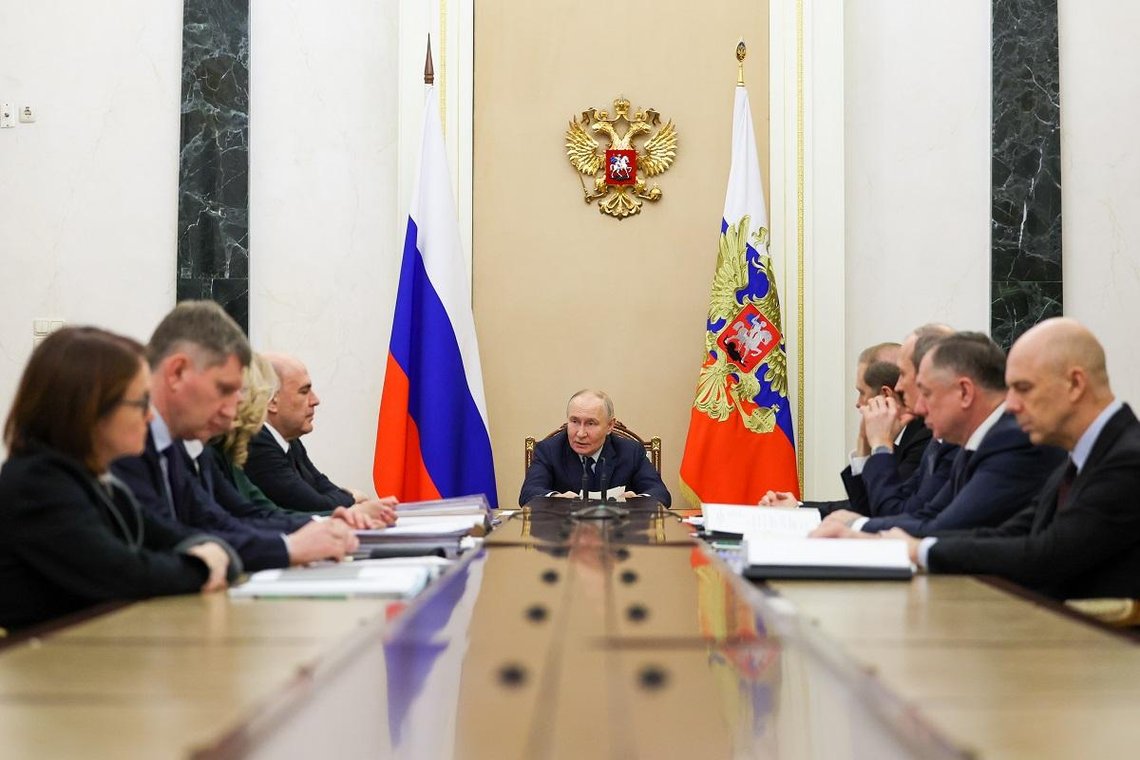


In an interview with The Telegraph, Estonia’s intelligence chief Kaupo Rosin discusses Putin’s divided inner circle and the looming threat to NATO. At the same time, he issues a warning to the Kremlin and Putin.
“Russia is in a very difficult situation – a revolution could break out from one day to the next,” says Rosin, who heads Estonia’s Foreign Intelligence Service EFIS (Välisluureamet).
EFIS is highly respected by its British partners. As head of MI6 in 2022, Sir Richard Moore publicly stated that the “brilliant” Estonian intelligence service (EFIS) “probably beats us by miles”, “pound for pound”.
It was precisely EFIS’s particular insight and expertise on Russia that earned it public praise from MI6, The Telegraph writes.
Perhaps it is because of this insight that Rosin believes we should stop using euphemisms such as “hybrid warfare” and instead call Putin’s escalating campaign of sabotage and subversion across Europe – but particularly in the Baltic region – by its proper name: “state-sponsored terrorism”.
Putin will probably point out that NATO countries might instead want to look at what they themselves are doing. British Storm Shadow missiles are being used in attacks deep inside Russia, and at least initially this was entirely dependent on British forces helping to guide the missiles towards their targets.
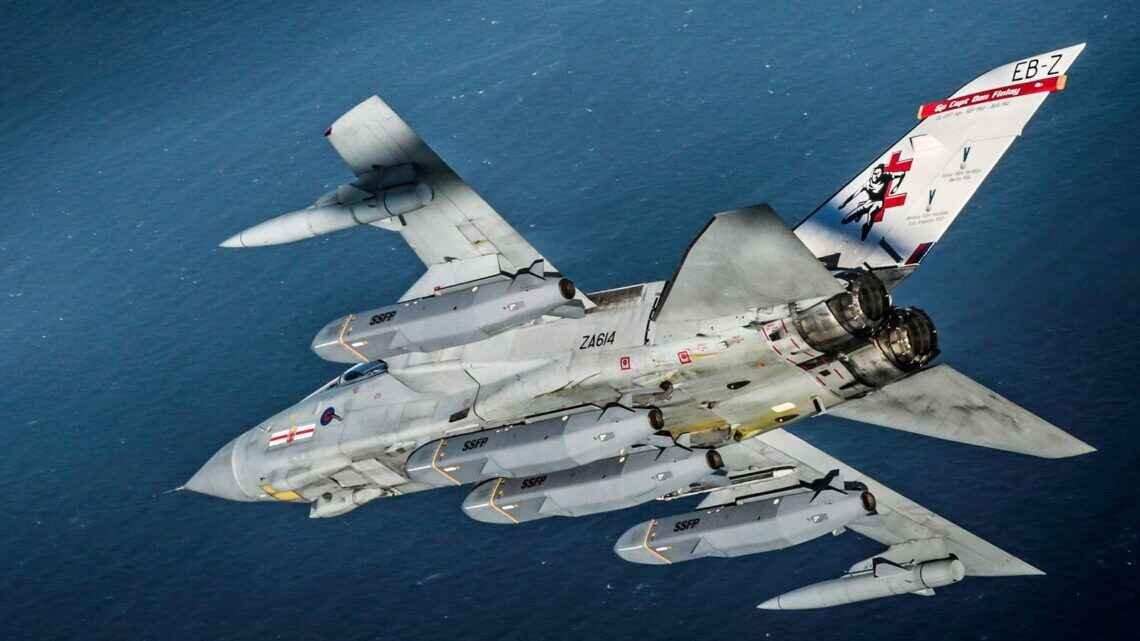 Storm Shadows, seen here on a British Tornado GR4 fighter aircraft, can also be launched from the air. Photo: Ministry of Defence/ UK
In addition, European countries provide massive financial support and large arms deliveries to Ukraine. Norway is right at the top in terms of funding per capita. At the same time, European NATO countries lack weapons for their own military forces, which on paper are undergoing a major expansion.
Even the United States is reportedly short of weapons because of the war against Iran. But the United States has a strong arms industry capable of expanding deliveries rapidly. European NATO countries are largely entirely dependent on American supplies, since they have driven away large parts of their industry as a result of climate measures that only Europe cares about, while simultaneously finding themselves in an economic crisis with a prolonged lack of economic growth.
NATO’s forces in Estonia consist mainly of a multinational battlegroup led by the United Kingdom. Norway’s designated contribution to the Enhanced Forward Presence (eFP) in the Baltic states is deployed in Lithuania, not Estonia.
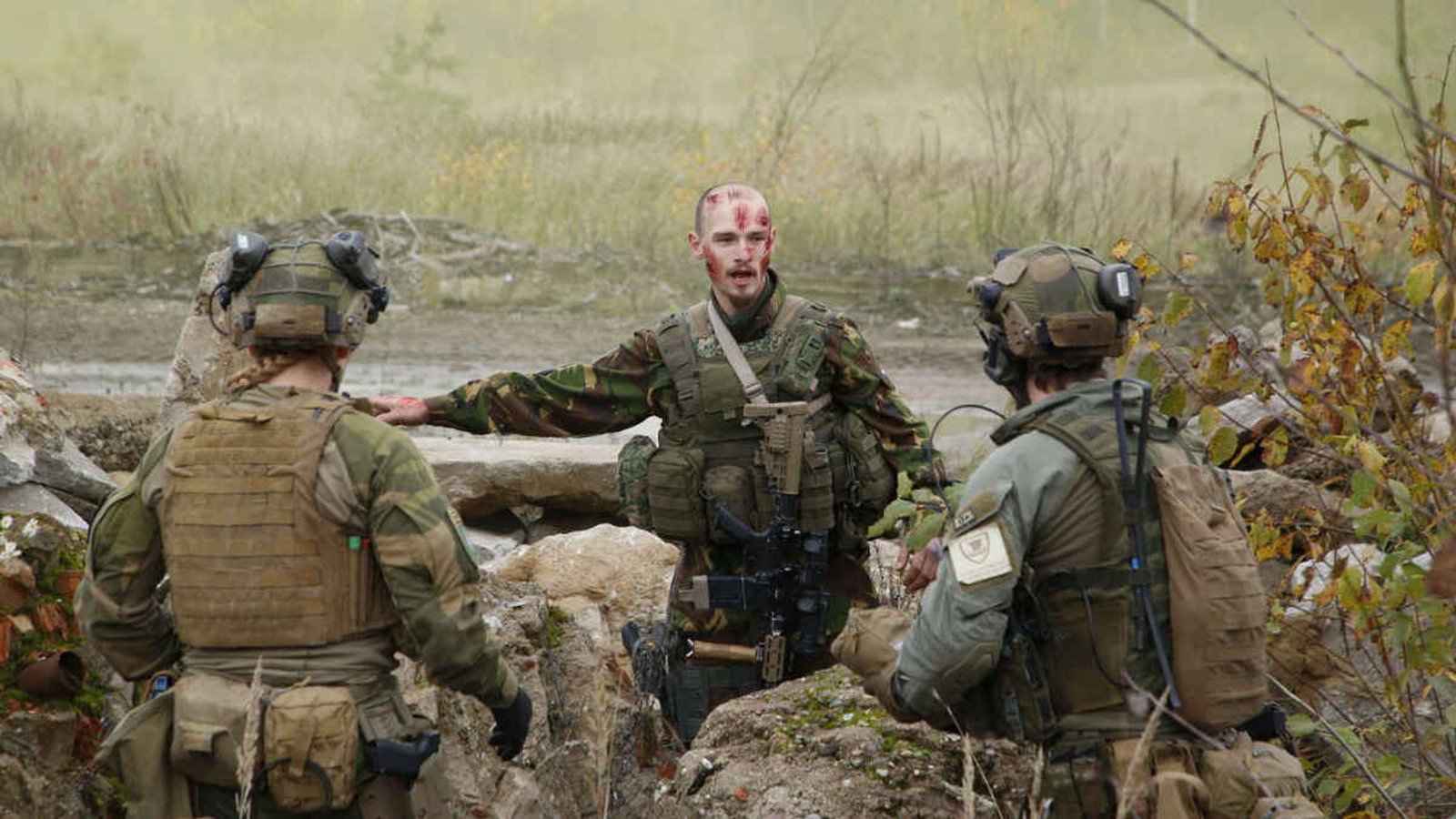 Soldiers serving with the eFP in Lithuania. Photo: NATO
Estonia is a small country with only 1.3 million inhabitants. Its location motivates people such as Rosin in today’s tense situation. The headquarters of EFIS, in the Estonian capital Tallinn, is only 210 kilometres from the Russian border, a two-hour drive along the M11 motorway.
Since there are rumours that Putin is planning to escalate the war against Ukraine, in order finally to achieve his military objectives after more than four years of bloody fighting, many see a major risk to the Baltic NATO countries. CIA Director John Ratcliffe warned his Russian counterpart, the FSB, about this during his recent visit to Moscow.
If Putin attacks the Baltic NATO countries, this opens the way for NATO’s Article 5 to be invoked. Article 5 stipulates that an armed attack against one member state in Europe or North America shall be considered an attack against them all.
But the EU and countries such as Norway almost seem to have extended Article 5 on their own initiative to include Ukraine as well, which is not a NATO country at all. US President Donald Trump views the situation differently from both Brussels and his predecessor Joe Biden. Biden may in fact have contributed to Russia’s decision to attack Ukraine on 24 February 2022 by stating that NATO could probably tolerate a limited attack.
Relations between the United States and the European NATO countries have clearly deteriorated. Trump has suggested that the United States cannot guarantee that it will come to the rescue if the European NATO countries get themselves into a war with Russia.
The United States is highly dissatisfied with its allies, which not only refuse to help keep the Strait of Hormuz open, but also imposed direct obstacles on American combat aircraft en route to the Middle East to contribute to the war against Iran.
– Only bad options
Brussels will no doubt appreciate Rosin’s statements that Russia has only bad options when it comes to continuing the war against Ukraine.
“There are clearly voices that think he should continue, but I think the voices that, let’s say, are urging [him] perhaps to reassess the situation are becoming stronger and stronger.
What he is facing at this point is only bad options. And every decision he makes entails different risks for him. So the decision to continue entails a risk that the internal problems and tensions in Russia will increase, against the backdrop of the heavy losses and the economic situation.”
Putin’s problem is that if he ends the war without a clear victory, he risks appearing weak, Rosin believes. So Putin really has something to think about now.
“Objectively speaking, I think Russia is in a very difficult situation at the moment, and many people in Russia understand this, particularly people in business, and probably some of the oligarchs as well. So I am sure they are having serious discussions.”
Heavy losses on the battlefield – some analysts speak of 500,000 Russian soldiers killed – could force the Kremlin to choose between giving up or introducing full mobilisation. As mentioned, giving up could threaten Putin’s position, which therefore appears to leave him choosing escalation.
At the same time, Russia is of course being hit economically; war is costly, and sanctions on oil and gas exports are hurting the Russian economy. The problem is that the sanctions are also hurting the already weak European economy, where the threshold of endurance is far lower.
Ukraine is in no better position. Its losses of soldiers are far higher per capita than Russia’s, and economically it is surviving for the time being on handouts from a West that is itself approaching the brink of bankruptcy.
European voters’ support for Brussels’ involvement in the conflict is also declining, and there appear likely to be major shifts in a conservative direction in the forthcoming elections in important EU countries such as Germany and France, as well as in the European Parliament. We are seeing the same wave in the United Kingdom.
Nevertheless, both France and the United Kingdom pledged on Monday to provide Ukraine with stronger military support, including access to classified technology and faster deliveries of air-defence missiles.
But Rosin stresses that the Kremlin is also struggling, and in his view the risk of a Russian popular uprising is also present.
“I don’t envisage any street uprising emerging at this point,” says Rosin. “What is more important: What are the people who have access to money, weapons and information thinking?”
More and more Russians have stopped talking about a total victory and are now mainly discussing how to bring this [war] to an end in a responsible manner, Rosin believes.
“But I would say that if anything changes in Russia, it will happen very quickly, and we will all be surprised. It will happen overnight, if it ever happens.”
The Ukraine war has ended up as a quagmire for Russia, Ukraine and large parts of Europe alike. The war has been going on for four and a half years and does not appear to be approaching its end.
To describe the consequences the war is having for the European economy, which is already under massive assault from a bloated bureaucracy, destructive regulations, sky-high taxes, mass immigration and climate hysteria, it is tempting to quote an extract from T.S. Eliot’s poem The Hollow Men:
Between the idea
And the reality
Between the motion
And the act
Falls the ShadowFor Thine is the Kingdom
Between the conception
And the creation
Between the emotion
And the response
Falls the ShadowThis is the way the world ends
This is the way the world ends
This is the way the world ends
Not with a bang but a whimper.
Thus Europe moves towards its demise: Not with a bang, but with a whimper.


