

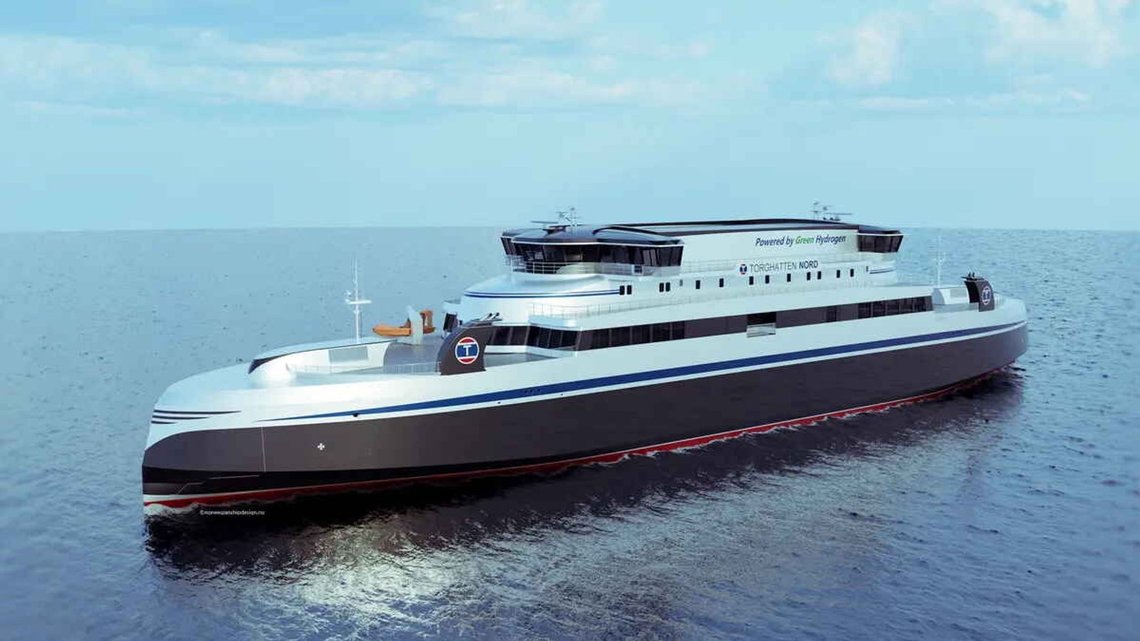


The farce surrounding the politically mandated hydrogen ferries “Moskenes” and “Røst” has taken a further negative turn: The experimental ferries, which are due to operate on Norway’s longest ferry route in Lofoten, were due to enter service in October 2025, but further delays have now been announced, pushing the date back to summer 2027. And as if that weren’t enough: if and when they finally enter service, they will not run on hydrogen, but rather on biodiesel transported from China.
Last week, the shipping company Torghatten issued a press release in which it admits that the project is significantly delayed, and that the ferries will initially be put into service running on biofuel – which is actually the fallback solution should hydrogen propulsion fail. The plan is now to start testing and regular operations using hydrogen afterwards. Perhaps – certainly. But that requires the hydrogen plant that is to produce the fuel to actually be completed.
A troublesome hydrogen adventure
It is the company Green H that is building the new hydrogen plant in Bodø. However, the start-up has been postponed several times, and according to NRK, there are several reasons for this: the ground beneath the plant is clay, and it has taken time to stabilise the foundations. In addition, it has taken longer than expected to source key components and to obtain approval from the Directorate for Civil Protection and Emergency Planning (DSB).
This suggests that someone in the ministry has realised that hydrogen is very, very dangerous, explosive, volatile and corrosive. This requires a NASA-standard safety regime – and that is why hydrogen is completely unsuitable as the “energy carrier of the future”. Also because so-called “green hydrogen” involves an enormous energy loss and is many times more expensive than the natural gas that powers today’s perfectly functional ferries.
As if that weren’t enough, the thoughtless gigantomania behind the project has ensured that the world’s largest hydrogen ferries are incompatible with the existing infrastructure and quays. The new vessels are, in fact, a full 20 metres longer than the current ferries, and this was done deliberately: In 2023, it was decided to make the ferries more ‘energy-efficient’ for the next 15 years, which resulted in more equipment and larger ferries than originally planned.
Chinese cooking oil to save the planet’s climate
It is NRK that has forced the admission that the biofuel currently used by the reserve ferries is based on used cooking oil from China. The fuel is purchased from established suppliers, and Torghatten tells NRK that “We have obtained information about the raw material’s country of origin and calculated the greenhouse gas reduction”. (China would surely never cheat on something like that?) Torghatten has not yet decided where it will purchase biodiesel for the new main ferries – something the oil companies will never disclose where the biofuel in Norwegian petrol comes from.
The news comes as no surprise to Documents’ readers, for, as with everything to do with the «green transition», the project has been ordered by politicians with «grand visions and ambitious targets» rather than scientific insight, economic responsibility and sound risk assessment: Not only is Norway to “lead the way” in showing the world how to build functional hydrogen-powered vessels, but naturally the ferries are also to be the world’s largest. Anything else would, of course, have been sensible.
And guess who’ll have to foot the bill for this transport experiment? It’ll be the passengers and taxpayers, as always.


