

I “green circular economy” (grønn sirkulærøkonomi), which the EU has legally bound itself to implement, the words “value chain” (verdikjede) and “profit” (overskudd) take on an entirely new meaning. It does not mean producing a good that the market demands at a cost of £58 at one’s own expense and risk, and selling it for £78, in free competition with other business actors. That is capitalism.
In a green circular economy, you produce a good or service that no one demands at a cost of £233, force taxpayers to subsidise you with £155, impose climate levies on businesses amounting to £78, and sell the product for £272. And if no one wishes to buy, you prohibit others from competing and make it legally obligatory to purchase. This is green circular economy, which in practice is Karl Marx wrapped in green paper.
A new, experimental economy
This political monster is not merely an airy plan or a political side project, as many believe. It is an active process through the EU’s Circular Economy Action Plan, which is a central part of the European Green Deal. It shall be implemented. It is legally mandated. And the objective of setting aside capitalism is twofold:
To force the business sector to become a political actor in order to solve the “climate crisis”, in exchange for subsidies. The second is to decouple economic growth from resource consumption, so that products last longer, can be repaired, and that materials are reused in a cycle, based on theoretical technology and without regard for costs, profitability or demand. All in order to “reduce consumption”.
Since it is proceeding too slowly to introduce this economic atomic bomb against free enterprise in Western countries, the EU is planning to adopt a new, comprehensive «Circular Economy Act» in 2026. This shall force the emergence of a market for recycled products and “climate-smart” materials, and remove barriers to circular business models.
Absurd logical short circuit
Here it is worth noting that the struggle against the “consumer society” does not include Western countries’ massive buying spree of “climate-smart” products, such as wind turbines, solar panels, batteries, heat pumps, electric cars, smart appliances and everything else you are persuaded to purchase in order to “save the planet”. For you cannot “save the climate” without purchasing something from private actors. Imagine that.
The same applies to six billion people in poor developing countries, where everyone has been promised refrigerators, meat consumption, cars, washing machines and a higher standard of living through the United Nations’ “Sustainable Development Goals”, for there the objective is precisely a full buying spree. It is only Western citizens who are to save the planet from overconsumption, by repairing the ten-year-old PC, while the ten-year-old diesel car must be scrapped due to emissions. Then the planet is saved. Because nothing is coherent in climate policy. Do not laugh!! Climate is serious!!
An echo from Marx and the 1970s
The belief in green economy and “sustainability” is not new. It began in tiny, communist hippie sects that everyone laughed at in the 1970s. Remarkably, this reality-removed body of thought has developed into the greatest global political driving force in history. And one of the key figures is Klaus Schwab and his World Economic Forum:
Ever since its founding in 1971, Schwab has promoted his untested economic theory of «stakeholder capitalism», whereby public limited companies should serve the interests of society and the environment rather than shareholders. As if they do not do so under capitalism, which has created better and wealthier societies than any other economic system.
The Bond villain Klaus “Blofeld” Schwab did not, however, invent the concept of “green economy”. It was introduced by the environmental economists Pearce, Markandya and Barbier in the report «Blueprint for a Green Economy» from 1989. The objective was to define Gro Harlem Brundtland’s concept of “sustainable development”, and to provide politicians with a tool to incorporate environmental values into economic decisions. As if environmental legislation does not exist under capitalism.
WEF has manoeuvred itself into enormous political power that the organisation has never had any right to, and Schwab has ensured the persuasion of naive politicians to integrate his theories into practical policy – something no voters have been given the opportunity to express an opinion on. The launch of the “Great Reset” initiative in June 2020 was in practice a political coup by a private actor without a single voter behind it.
The state decides what society needs
“Green circular economy” does not merely entail regulation of existing products. It also entails that politicians decide what we need, what shall be produced and how. It began with energy-saving light bulbs, paper straws, battery cars and washing machines that use so little water that nothing becomes properly clean. But politicians have also assumed the authority to determine what kind of industry we shall live from in the future.
In 2019, Støre declared that “we shall live from saving the climate” by producing wind turbines, solar panels, batteries, hydrogen and ammonia. We shall also “lead the way” ahead of everyone else and introduce “zero-emission” ferries, electric construction machinery and a carbon storage industry, and that at breakneck speed. And nothing can go wrong with this grandiose transformation, since all risk assessment has been removed. This is naturally the recipe for everything to go terribly wrong.
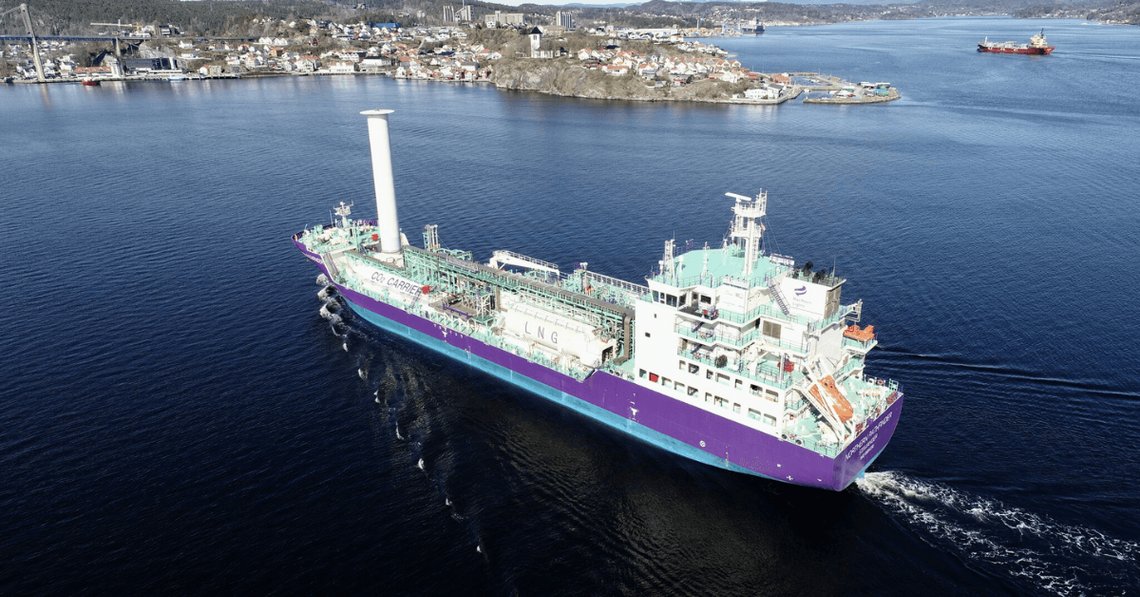
The carbon storage facility Northern Lights JV DA is owned by Equinor, Shell and TotalEnergies in a build-up phase for commercial carbon capture and storage (CCS), and primarily financed by the Norwegian state together with the owners. Phase 1, with a capacity of 1.5 million tonnes of plant nutrition, has cost £583 million. Taxpayers covered 80 per cent of that.
Commercial operations have begun, but it is massively unprofitable. European industry pays less to emit CO2 than it costs to capture, transport and store it. For CCS to become commercially profitable, the quota price in the EU (ETS) must triple. Moreover, the customer base depends on EU politicians massively introducing requirements for ultra-costly CO2 purification – and EU industry is already in the process of going bankrupt. So no.
The EU alone will require hundreds of these facilities for “emission cuts” to have any effect, and that is not going to happen. The madness is thus evident – and yet there are plans to expand “Northern Lights” with phase 2, which shall increase capacity to 5 million tonnes of CO2 annually. It is this insane political project that Støre calls a “value chain”. Everything operates at a loss in these green “value chains”, yet that does not halt the enthusiasm:
A fanatical belief in theoretical castles in the air
From July 2024, “Ecodesign for Sustainable Products Regulation” (ESPR) entered into force in the EU, with specific requirements beginning to apply from 2026. It thus sets requirements that products shall be designed to last longer, be repairable and contain recycled materials. This sounds very appealing, but the practical side of it is highly uncertain. Clothing cannot be recycled. Batteries can be recycled, but it is massively unprofitable. Repairers cost £78 per hour, and there are few of them.
From 19 July 2026, the EU will also introduce digital product passports (DPP) to provide transparency regarding material content and repair possibilities. A very concrete rule is the prohibition against destroying unsold consumer goods, such as clothing and electronics that no one has wished to purchase, even on sale. This applies to large enterprises from 19 July 2026, and may undermine profitability for many industries.
The EU’s efforts are particularly directed at resource-intensive sectors such as electronics, packaging, plastics, textiles and construction materials. Everything shall be reused, including that which cannot be reused – and this appeals to people’s instincts, because it appears convenient, simple and obvious. “Why did we not think of that before!” What they do not understand is that it undermines profitability, development and democratic, economic models based on free competition in a free market. It is a planned economy, not a “value chain”.
There exists no empirical evidence showing that this theoretical castle in the air based on regulation, bureaucracy, fanaticism and ideology will actually function or be profitable. Nor does there exist any serious assessment of negative ripple effects, or how much the bureaucracy required to follow up the provisions will cost. “Green economy” has nothing to show for itself, apart from theory, belief and extensive abuse of power.
Nevertheless, the “circular economy” is like a runaway train. No arguments or observations function. What is entirely certain is that any introduction of bureaucracy, regulation and subsidies opens for higher costs. And higher costs weaken businesses and threaten jobs.
There exists no “value chain” in climate policy. Never, ever, anywhere. There is only bureaucratic sabotage.


