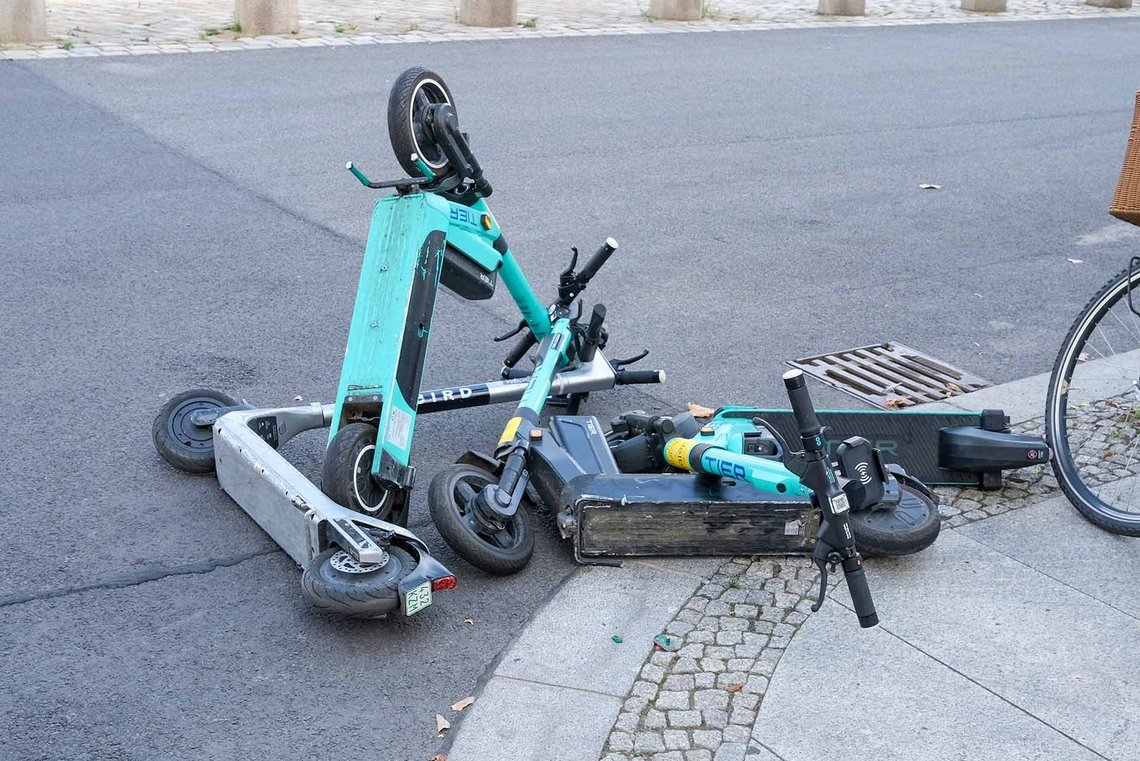


On 15 October, the Mayor of Lisbon announced that the city would suspend the shared electric scooter scheme. In a video posted on social media, he described the situation as “shameful” and said that the scheme “is not working”.
Carlos Moedas highlighted several problems: riding against the flow of traffic, dangerous behaviour, a rising number of accidents, scooters being left haphazardly, and their use by minors. The city collects more than 1,200 abandoned or incorrectly parked e-scooters every month.
Given 60 days to clear up
The proposal to suspend the scheme is due to be considered by the city council on 21 October. The operators Bolt, Lime and Bird have 60 days to remove the vehicles, which means that the shared kick scooters will likely be off the streets by the end of January.
According to city councillors, there are no plans to reintroduce them. Privately owned kick scooters are not affected by the ban.
🛑🛴 We are suspending the current shared scooter scheme in Lisbon.
We want a Lisbon with free, safe and accessible pavements, where everyone can get about safely. pic.twitter.com/AMiGvdGafe— Carlos Moedas (@Moedas) 15 October 2026
The decision came after the Automóvel Club de Portugal collected 20,000 signatures for a referendum on the continued operation of the scheme.
Lisbon is not alone
Lisbon’s decision follows a clear international trend in which city authorities prioritise pedestrian safety and order in urban spaces over shared micromobility:
- Paris: Ban following a referendum in 2023. Around 15,000 shared e-scooters were removed from 1 September 2023. Private scooters remain permitted.
- Madrid: Licences for Lime, Dott and Tier were revoked in October 2024 following breaches of parking and safety regulations.
- Barcelona: Ban on shared services in 2023 due to pavement congestion and poor safety.
- Prague: Total ban on shared electric kick scooters from January 2026 due to chaos in the historic city centre.
- Malta: First European country to introduce a national ban on the public hire of electric scooters from March 2024.
- Brussels: Shared electric scooters to be phased out from 1 January 2027 following a rise in accidents and links to crime.
- Melbourne: Contracts with operators terminated in August 2024 due to reckless riding and obstructions to pedestrians.
- Perth: Suspended in June 2025 after a pedestrian was killed by a hired electric kick scooter.
- Montreal and Toronto: Montreal banned them in 2020, whilst Toronto chose to opt out of provincial pilot schemes.
- Copenhagen effectively banned the hire of shared electric scooters in densely populated areas in 2020. In 2021, the scheme was reopened with significantly stricter rules.
- In Portugal, Braga, Vila Nova de Gaia and Espinho have suspended or banned shared electric scooters.
An environmentally friendly and flexible service
Shared electric scooters were introduced as an environmentally friendly and flexible service in many cities around 2018–2020. After a few years, most places have experienced the same problems: a high risk of accidents, particularly amongst young and inexperienced users; blocked pavements; illegal parking; and a limited actual reduction in car use. Many cities have moved from liberal schemes to strict regulations or outright bans on the shared model.
Young women often argue in favour of the scheme; an e-scooter enables them to ‘outrun’ attackers and get home more quickly after a night out.