

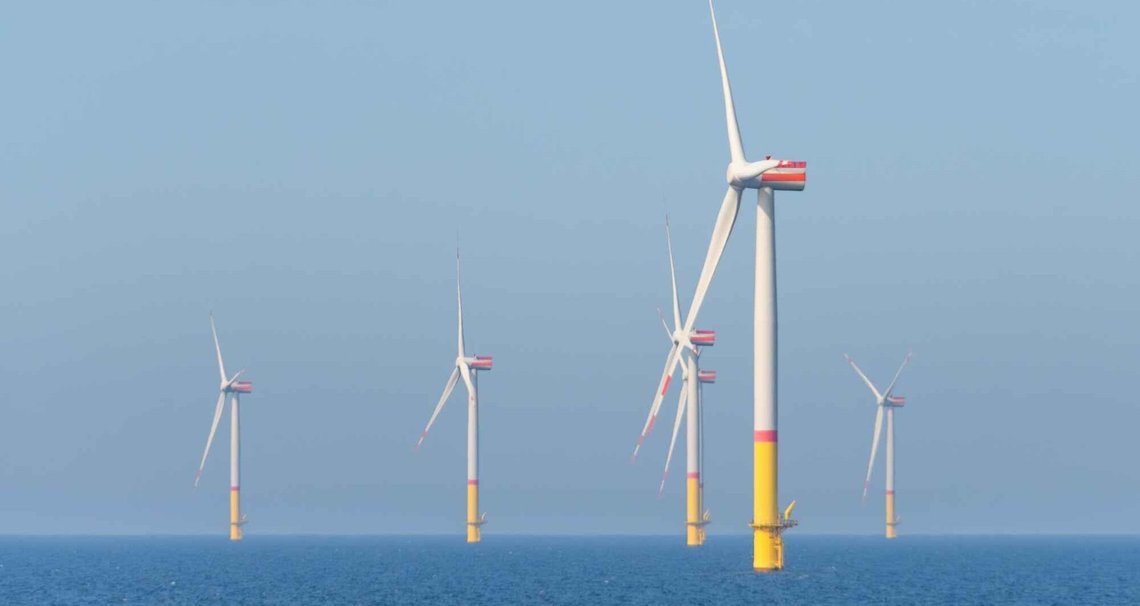


Wind power projects in the North Sea worth €50 billion are at risk. This could lead to significant consequences for the wind industry, jobs, grid costs, and state budgets. The dream of renewable energy appears unattainable.
Germany is among the countries hardest hit. The investment in offshore wind generates little energy and massive costs. A number of major energy companies want to abandon their construction plans in the German section of the North Sea and return the construction areas to the federal government, writes Die Welt.
This places not only important plans for the energy transition at risk, but also thousands of jobs in the supplier industry. Billions in revenue from federal financing that had been firmly budgeted for will be lost.
The scale is enormous. The coastal states bordering the North Sea have agreed to build 300 gigawatts of wind power capacity. This corresponds to the construction of approximately 20,000 wind turbines in the new 15-megawatt class on the open sea. Germany’s share: 70 gigawatts, or 4,600 wind giants the size of the Eiffel Tower. By comparison: an installed turbine capacity of 70 gigawatts corresponds to 70 nuclear power plants, but with wind turbines the frequency of electricity production depends on the weather.
The Oil Giants’ Delayed Regret
1,700 smaller wind turbines with a total capacity of 10 gigawatts are located in the North Sea and the Baltic Sea. But as is well known, offshore wind delivers unstable power, so the 1,700 turbines cannot in reality reliably power even a single dwelling.
To achieve the expansion targets in the Offshore Wind Energy Act (Havvindloven), offshore power generation must increase sevenfold over the next twenty years. Yet even 100,000 wind turbines will operate at maximum only 30 per cent of the time. Such details do not appear to matter greatly to those focused on achieving the self-imposed climate targets.
Several investors are planning to withdraw from their construction projects. In the federal government’s land auctions between 2022 and 2025, project developers bid more than €16 billion merely for construction permits. The French oil companies TotalEnergies and BP, together with the subsidiary Jero Nex, alone pledged €7.5 billion for land use in the auctions.
So far only around ten per cent of the money has been paid out. The project developers were supposed to repay the remainder of their obligations over many years. But it has become uncertain whether the federal government will receive any money at all: the project developers, organised in the industry association Offshore Wind Energy (BWO), are urging the federal government to release the energy giants from their construction and payment obligations free of charge, as the economic damage would otherwise become far greater.
Whatever one may think about climate change and the threat this entails for humanity, it appears that most climate measures pursued by politicians are unlikely either to solve the “climate crisis” or to ensure a healthy social economy.


