
 Erling Marthinsen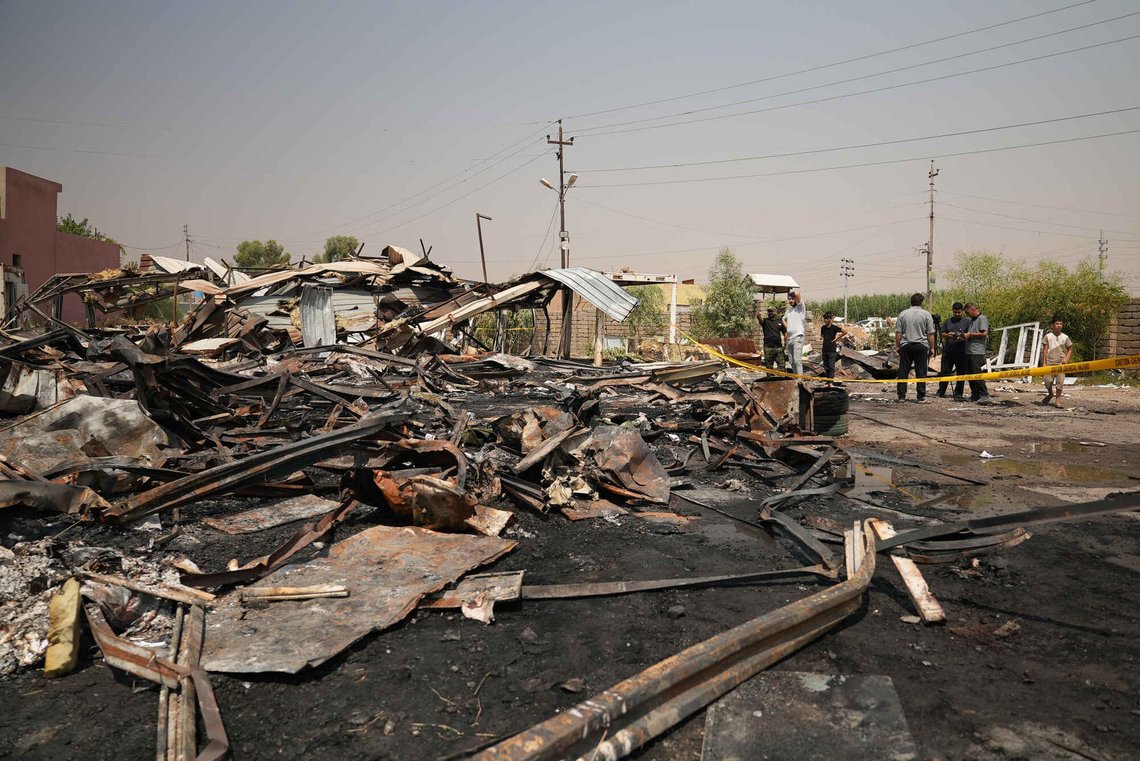
The military leadership in Tehran would rather risk escalating the war than adopt a defensive posture or accept a peace agreement that would expose them to greater domestic political pressure.
This is what Iran demonstrates with its surprise rocket attack on American forces in Jordan on Wednesday, writes Wall Street Journal. The attack with ballistic missiles demonstrates the Revolutionary Guard’s willingness to go all the way.
There have also been attacks against Egypt.
US President Donald Trump likewise does not appear willing to withdraw the US from the conflict. To Fox News Trump said on Wednesday morning that the US would strike hard back against Iran and their proxy fighters in Iraq in response to the attack. “They’re going to get a beating,” said Trump. Or as NTB translates it: “We are going to thrash them.” Trump said the following: They’re going to get a beating.
Five rockets were intercepted in the eastern desert of Jordan, without causing damage. American troops are stationed at a Jordanian base near the Syrian border and at a separate air base in the desert, where an Iranian rocket attack killed two American soldiers earlier this month.
A source from Jordan told the WSJ that the Iranian attack showed that the region is undergoing dramatic changes.
Analysts say the attack illustrates a fundamental shift in which the Revolutionary Guard (IRGC) has become more self-confident and more comfortable with a state of war that may last for several months, rather than entering into a peace agreement in which they would have to face public discontent with Iran’s weak economy and the deadly suppression of protesters earlier this year.
Norwegian News Agency NTB writes about the matter. They write that the attack came from Iran’s proxy fighters in Iraq. The US and Saudi Arabia responded by carrying out air strikes against militias in Iraq.
The US and Saudi Arabia describe the attacks in Iraq as retaliatory strikes against militias that among other things have carried out drone attacks against Saudi Arabian oil installations on the orders of the Iranian Revolutionary Guard.
Four Iranian military advisers have been killed in these attacks, according to the news agency
Reuters which cites the Iranian newspaper Hamshahri. To AFP sources report that five Iranians are said to have been killed, while the news agency AP has sources stating that six Iranian military advisers were killed.– Iran is now using its network of proxies to maintain influence, while the diplomatic track absorbs international attention, says the Saudi Arabian security analyst and researcher Hesham Alghannam to the news agency AFP. (NTB-Reuters-AP-STT-DPA-AFP)
Iraq’s Prime Minister Ali al-Zaidi has convened a crisis meeting of the country’s national security council, and has also cancelled a planned meeting with the Saudi Arabian Crown Prince Mohammed bin Salman that was to take place in Jeddah on Thursday.
At least 20 people were killed and 32 wounded in the attacks in Iraq, according to a source in the Iran-backed militia alliance Hashed al-Shaabi, also known as the Popular Mobilisation Committee.
Iraqi men shouted Shiite Muslim, sectarian slogans and “Death to America!” as they carried the bodies of killed fighters in body bags out of a hospital in Mosul in northern Iraq, according to footage from the Iraqi television channel Al-Ahad.
The attacks in the early hours of Wednesday occurred a few hours after President Donald Trump and Israel’s Prime Minister Benjamin Netanyahu met at the White House.
The Islamic Resistance Movement, an Iraqi pro-Iranian group, vows revenge against the attackers, particularly against American interests in Saudi Arabia.


