

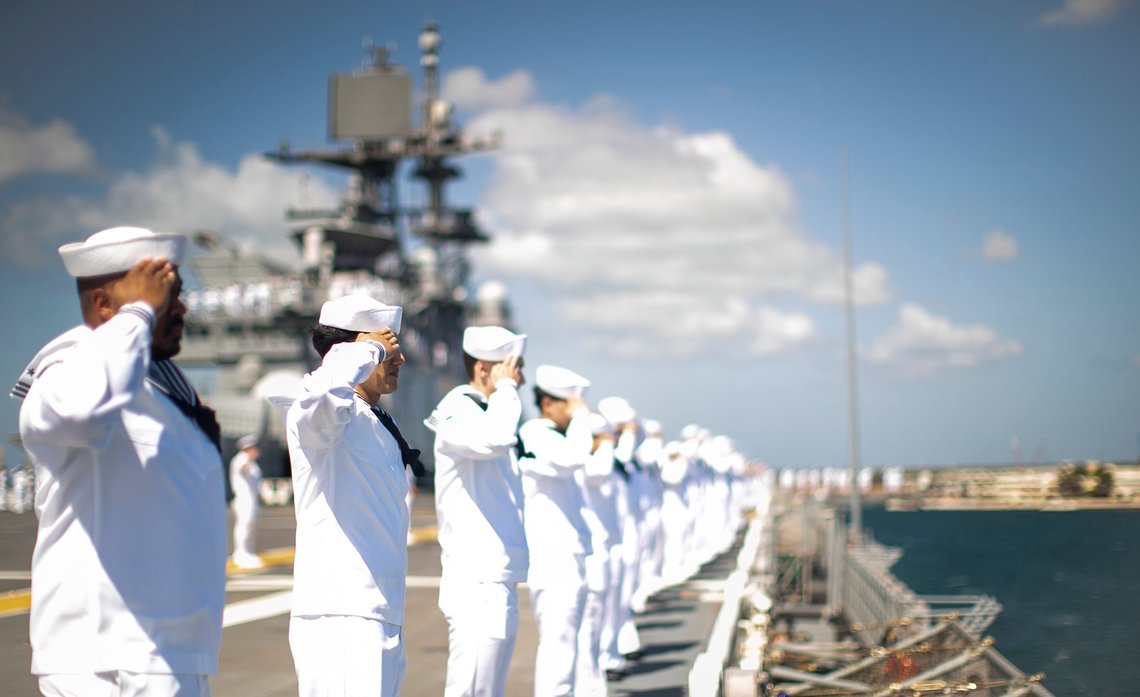
Iran is, as a last resort, choosing to threaten to bomb oil infrastructure in the Gulf. This concerns scenarios that could cause the oil price to run out of control, but it is still some way off. A new American carrier group, USS Tripoli, is approaching, and it brings with it 5,000 US Marines equipped to seize and hold territory such as the coast of Hormuz. The Iranians must be neutralised so that traffic through the shipping lane can proceed as normal.
USS Tripoli is an amphibious vessel, which suggests that the United States intends to go ashore and secure the coastline.
Western media are painting the devil on the wall.
Energy facilities across the Middle East were evacuated on Wednesday as Iran threatened attacks on installations “within the coming hours”. The oil price rose by more than 5 per cent to 108 dollars per barrel after Iran, according to state media, urged employees to leave facilities in Saudi Arabia, the United Arab Emirates and Qatar ahead of a possible attack.
Such an attack would further cripple the global oil and gas supply, and Brent crude reached its highest level in 10 days due to fears of increasing scarcity.
“These centres have become direct and legitimate targets and will be attacked within the coming hours,” the message stated.
“Therefore, all citizens, residents and employees are requested to leave these areas immediately and move to a safe distance without delay.”
Citi, the Wall Street bank, said that Brent crude could reach 200 dollars per barrel if Tehran carries out “extensive attacks on energy infrastructure” or in the event of a prolonged closure of the Strait of Hormuz until June.
Stock markets fell worldwide as the war in the Middle East intensified.
The evacuation warning was issued shortly after Israel attacked Iranian oil facilities in South Pars and Asaluyeh.
Evacuation was urged for the Samref refinery and the Jubail petrochemical complex in Saudi Arabia, the Al Hosn gas field in the United Arab Emirates, as well as the Mesaieed petrochemical complex, Mesaieed Holding Company and the Ras Laffan refinery in Qatar.
The Israelis have been given free rein to eliminate the Iranian leadership wherever they may detect them. The head of the Basij was killed in a tent in the forest.
Military officials cited in Hebrew-language media said that tracking Soleimani to a tent in a wooded area demonstrated that one had succeeded in forcing high-profile targets away from their traditional headquarters through air strikes.
He was killed together with his deputy and ten other senior Basij commanders. Larijani was killed together with his son.
The Iranian command structure. Israel is working its way downwards. So far, it is estimated that 5,000 security personnel have been killed.
Several senior Iranian politicians and military leaders have been killed since the United States and Israel went to war against Iran at the end of February. These are some of them:
* Supreme Leader Ayatollah Ali Khamenei (86) was killed in an American-Israeli air strike on the first day of the war, 28 February. He was appointed Supreme Leader in 1989.
* Security chief Ali Larijani (67) was killed in an air strike in the Pardis area on Tuesday 17 March. Former commander in the Islamic Revolutionary Guard Corps and nuclear negotiator, and Iran’s top security chief since August last year. A close adviser to the slain Khamenei and one of Iran’s most influential top leaders for many years. His son and bodyguards were also killed in the attack, according to the security council he headed.
* Intelligence Minister Esmail Khatib was killed in an attack on Tuesday 17 March. He was mentored by Ali Khamenei before heading the civilian intelligence apparatus from August 2021.
* Ali Shamkhani, one of Ali Khamenei’s advisers and a key figure in the country’s security and nuclear policy, was killed in attacks on Tehran on 28 February. He survived an attack on his home during the twelve-day war in June 2025.
* The commander-in-chief of the Islamic Revolutionary Guard Corps, Mohammad Pakpour, was killed on 28 February in Tehran. According to Iranian state media, he became head of the Guard after his predecessor, Hossein Salami, was killed in the war in June.
* Minister of Defence and air force officer Aziz Nasirzadeh was killed in the attacks on the top leadership in Tehran on 28 February, according to sources. He played a key role in military planning and defence policy.
* Abdolrahim Mousavi, Chief of Staff of Iran’s armed forces, was killed in the attacks on 28 February during what Iranian media said was a meeting of the top leadership in Tehran. He was responsible for coordinating Iran’s military branches and overseeing the conventional forces.
* The head of the paramilitary Basij force, Gholamreza Soleimani, was killed on Tuesday 17 March, according to Iranian state media. He was a senior officer in the Islamic Revolutionary Guard Corps and led the force that is central to internal security and enforcement of state authority. (NTB)


