

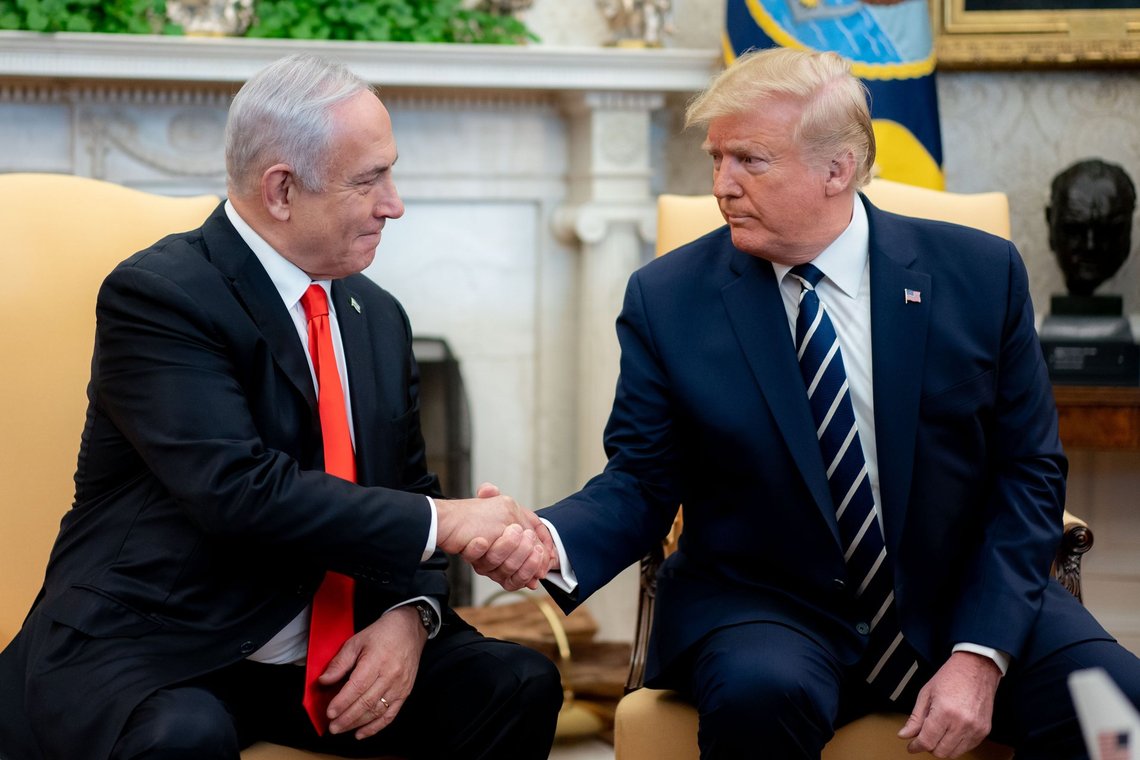


Iran’s attacks on its neighbouring countries are pushing them into the arms not only of the United States, but also of Israel. Iran is thereby achieving the exact opposite of what it intended. It wanted its neighbours to criticise the United States for having drawn them into a war they did not want.
NRK attempts to portray the war as unpopular in the neighbouring countries, but this is not correct.
Saudi Arabia has recently allowed the United States to use an air base where the Americans have not been permitted to operate since the Gulf War.
One of the clearest signs of this change is that Saudi Arabia has reportedly granted US forces access to King Fahd Air Base in Taif, a western air base that has not been used for American combat operations since the Gulf War.
At the same time, the Emirates have broken diplomatic relations with Tehran.
This shift is also visible across the region. The United Arab Emirates has severed diplomatic relations with Tehran, closed institutions linked to Iran and undertaken a hard crackdown on networks connected to the Islamic Revolutionary Guard Corps following a wave of attacks.
This development in favour of the United States is not reported by Norwegian media.
Iran’s neighbouring countries have practised a live-and-let-live policy towards Iran. They have attempted to find a point of balance where they do not challenge Tehran more than necessary. But it is Iran that has brought the war to them. They did not wish to be drawn in, but Iran believes they deserve it because they allow the Americans to operate on their soil. They know well that this serves as a guarantee precisely against a country like Iran, but Iran does not believe they should escape and proceeds to attack.
It was a miscalculation of historic proportions.
Bahrain has meanwhile taken the lead at the United Nations in seeking the adoption of a resolution in the Security Council condemning Iranian attacks on the Gulf states, while several countries – including Saudi Arabia, the United Arab Emirates, Qatar and Kuwait – have issued coordinated statements condemning Iran’s actions and asserting their right to self-defence.
The root of the war lies in Iran’s expansion. The regime has shown all too clearly what its ambitions entail through its support for proxies such as Hamas, Hizbollah and the Houthis. The Gulf states see that Iran is willing and able to set the entire region ablaze. They therefore support that Trump and Netanyahu have set their sights on toppling the regime.
These Gulf states are aligned with the United States’ view that Iran’s missile development, uranium enrichment programmes and support for regional militant groups must be “addressed and constrained”, but they remain opposed to attacks on critical infrastructure inside Iran, a Gulf official told Fox News Digital.
Qatar has also taken concrete steps in response to Iranian attacks, expelling Iranian military and security attachés and ordering them to leave the country following strikes on critical energy infrastructure. Qatar has, however, not gone so far as to sever diplomatic ties completely, and maintains its role as a mediator, even as tensions rise.
The regime has thus fallen victim to its own hubris. In order to play such a role, the regime has severed its connection to its own population. The population has been left to make do with next to nothing: no electricity, no water and a worthless currency. This resulted in mass demonstrations that turned into riots. The regime responded with mass killings.
Thus the regime cut away everything that had sustained it. It lost the last remnant of legitimacy, and Trump said: “Help is on the way,” and meant it.
Qatar’s Prime Minister was in Washington on Thursday to discuss enhanced defence cooperation.
The attack on American aircraft at Prince Sultan Air Base in Saudi Arabia on Friday, which wounded several American soldiers and destroyed aircraft, illustrates why Saudi Arabia is inviting the Americans to use King Fahd Air Base.
The location of King Fahd Air Base, deep within Saudi territory and beyond the reach of Iran’s missiles and drones, will provide a strategic depth that the United States has not been able to rely on for decades. The US military presence in the region has long been concentrated on more exposed bases along the Persian Gulf, including hubs in Qatar and the United Arab Emirates.
Sources familiar with the matter, cited in an article in The Wall Street Journal, state that Saudi Arabia has agreed to allow US forces to use the base. The Pentagon and the Saudi embassy declined to comment on the base.
Fighter aircraft routinely operate “dark” with transponders switched off in potential combat zones, so that they do not appear on civilian flight radars. Saudi Arabia’s tightly controlled media environment also means that there are few, if any, independent local reports of US flight activity at King Fahd Air Base.
“Our primary concern today is to defend ourselves against the daily attacks on our people and our civilian infrastructure,” the Saudi government said in a statement on its position towards Iran. “Iran has chosen dangerous risk-taking over serious diplomatic solutions. This harms all parties involved, but none more than Iran itself.”
The reported change in basing is one of several signs that the Gulf states are recalibrating their position as Iranian attacks escalate across the region.
Much suggests that the war will be a game changer. The Middle East will look entirely different if the regime in Tehran has its teeth pulled. The United States will be top dog, more than ever. Saudi Arabia never liked Obama and certainly not Biden, who treated them poorly.
In the Middle East, it is the strongest horse that rules, and there is no doubt that this is the United States.
But Europeans are in the process of ending up in a historical backwater.


