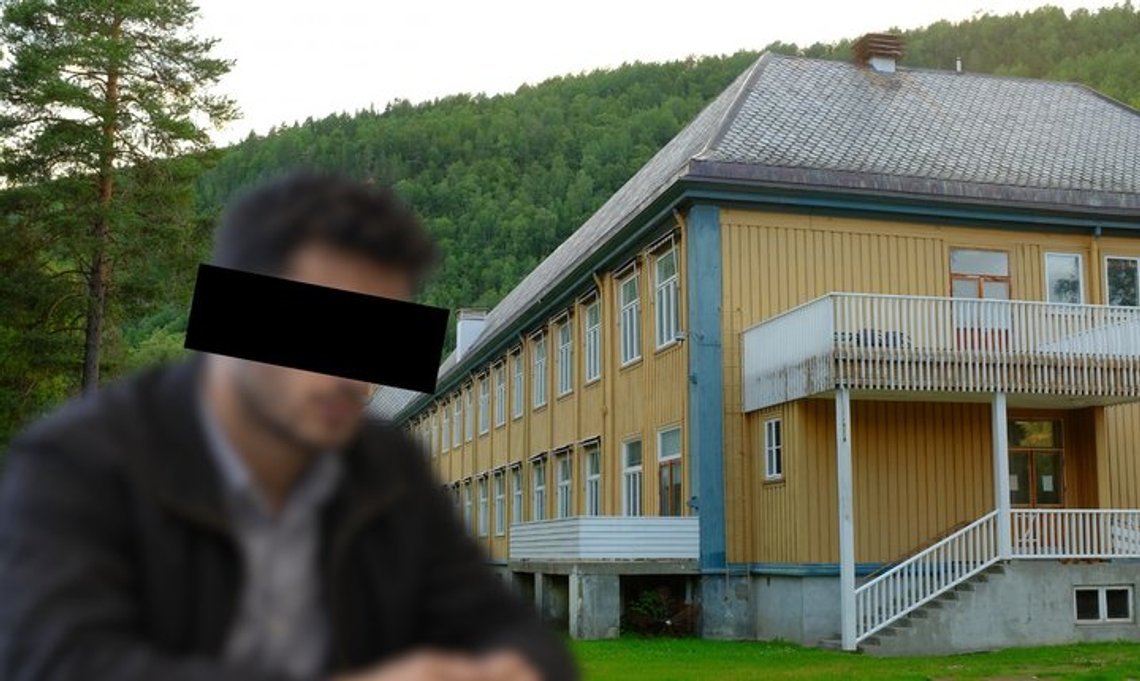


A 25-year-old Syrian asylum seeker has been convicted of restraining a young, vulnerable woman and raping her at the Vensmoen asylum centre in Saltdal.
On 15 September, Salten and Lofoten District Court sentenced the man to four years’ imprisonment for rape and breaching a restraining order. He must pay the woman 273,000 kroner in compensation. Senior Public Prosecutor Hilde Stoltenberg had sought a six-year sentence.
The man arrived in Norway as an asylum seeker in May 2024. A year later, he moved into the asylum centre at Røkland. The woman, who was in her early 20s, was living at a residential treatment centre for young people with substance abuse problems and mental health issues, a short distance away.
In July 2025, she saw him playing football. He walked past her window, and they struck up a conversation. He asked to add her on Snapchat. Shortly afterwards, they became a couple. The relationship was on-and-off and characterised by jealousy and mutual accusations of infidelity.
On Tuesday 9 September 2025, she visited him at the reception centre. That same evening, she told healthcare staff what had happened. They were sitting on the bed and kissing. Suddenly, he laid her down and lay on top of her. She said “no, stop” several times and tried to push him away. He pulled down her trousers, held her down and had sexual intercourse with her whilst she begged him to stop. Afterwards, she told him that this wasn’t right. He just smiled.
– “I just froze, because when I said things like ‘stop’, ‘please, stop’, and then pushed him away, he just carried on,” the woman explained during a facilitated interview.
The man explained that it was the woman who had taken the initiative, and that the sexual intercourse had been consensual. The court found his explanation implausible. According to the court, it stood in stark contrast to the other evidence.
That same evening, the woman told a social worker what had happened. She was unsure what to do and asked the social worker to decide for her. The social worker accompanied her to the sexual assault centre in Bodø. There, medical staff examined her at 8.30 pm.
A week later, her support worker noticed bruises on her wrist and upper arm. They appeared to have been caused by fingers gripping or squeezing. The woman did not want to talk about it. She said she had forgiven him and that she was very much in love with him.
It was not until 7 January 2026 that the head of department at the institution reported the man to the police. By then, four months had passed since the rape. The police arrested him on 26 January. The day before, the two had been together for the last time.
In its judgement, the court describes a relationship characterised by control. According to the woman, he checked her mobile phone, demanded to know where she was at all times and followed her. He made her sleep with her phone on, so that he could hear her throughout the night.
He forbade her from having male friends, dictated what she should wear and forced her to eat. The court considers that medical records and several thousand pages of messages support her account.
The man explained that it was she who was controlling. He said he kept an eye on her because he was afraid she would relapse into drug use. The court does not rule out that the controlling behaviour stemmed in part from his contempt for drugs, and states that it ‘therefore also appears to be related to care’. According to the court, however, the controlling behaviour went far beyond what could be considered caring involvement.
The court finds that the balance of power between the two was skewed, because the woman faces what the court describes as ‘complex challenges’ relating to substance abuse and mental health.
– “Her condition is striking, and the court rules out the possibility that the defendant did not perceive this,” the court writes.
The prosecution also charged him with three other assaults against the woman in December 2025 and January 2026, including one in the shower at the reception centre. He was acquitted on these counts. The court considered that her accounts of these incidents lacked sufficient detail. One of them also did not correspond with what she told the staff the following day. The court emphasises that the acquittal does not mean that her account is incorrect.
Regarding the rape on 9 September, the court found that there were no particularly aggravating or mitigating circumstances. The court therefore imposed the standard sentence of four years. The fact that the two were in a relationship did not result in a reduced sentence. He will have 242 days spent in custody deducted from his sentence. The verdict was unanimous.
The Public Prosecutor reopens 19 cases against police whistleblower Vigdis Bollerud: ‘I am shocked’
On the same day he was arrested, the man was served with a restraining order. The order was served on him with the assistance of an interpreter. He was prohibited from contacting the woman in any way whatsoever, whether in person, by telephone, in writing or through others.
On Friday 13 February, at around 7.40 pm, he rang her from Bodø prison. The call lasted about 20 minutes. He was in custody without any restrictions on communication.
In court, he acknowledged having made the call. He also admitted that he knew he was not allowed to ring her. He explained, however, that he had asked a prison officer for permission to ring the woman. According to the man, the officer said it was fine and helped him dial the number.
The court rejected this explanation.
‘The fact that the defendant is said to have received permission from a prison officer to ring the victim is irrelevant, as the defendant himself must take responsibility for not contacting the person whom the ban is intended to protect,’ the court wrote.