

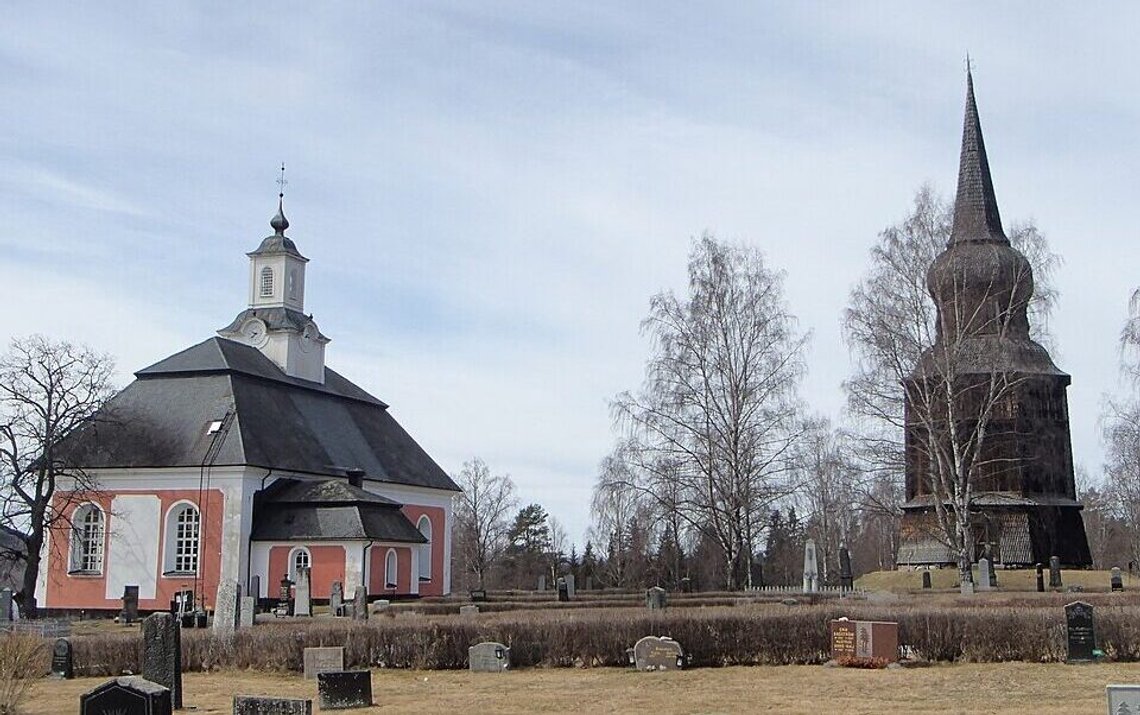


What is ethnicity, really? Blood ties, genetics and shared history – or identification and agreements? For me, the answer is something much more concrete. It is the forest where my ancestors lived, the church where they were baptised and buried, and the stories that have been passed down through the generations. It is the feeling of being at home, even though I am only passing through.
What is – really – ethnicity? The question is highly topical now that the Sweden Democrats have distanced themselves from so-called ethno-nationalism. So is ethnicity about blood ties and genetics, or about identification and agreements?
The truth lies somewhere in between. Or is it a matter of both-and?
I have come to the conclusion that ethnicity can only be described through one’s own experiences of actual belonging.
So let me explain.
Every time I drive the stretch between Sundsvall and Östersund and approach Borgsjöbyn, the E14 transforms from an optimally planned transport route into a place of memories. Memories that, although they are not mine, nevertheless live within me.
When the waters of the Ljungan River open up beside the road, I know that my relatives fished in those very coves. When my eyes search along the mountain ridges on the horizon, I know that those who once lived, those to whom I owe my own life, looked out over exactly the same forest-covered peaks. They walked here, trod the paths, herded cows and goats, and warned the children about wolves and little people.
I do not merely know that this is so – I feel it.
When I pass the pink church in Borgsjöbyn on my right, I know that it was in that very church that my relatives baptised those who came and said farewell to those who left. And it is here they rest, in the family grave beneath the great birch tree, once deeded “in perpetuity”.
There rests my great-grandmother Signe, my grandmother’s mother, beautiful but serious, the woman who went out to milk the cows just hours after giving birth to her daughters. There rests my great-grandfather Alfred, my grandmother’s father, the one with the kind eyes, who built the kitchen sofa that today stands in my kitchen. For as long as I can remember, it has been called the “Sjusovarsoffan” (the Seven Sleepers kitchen settle), because one sleeps so well in it. There rests my great-great-grandfather Jakob, my grandmother’s grandfather, who left his home village of Tallberg (which roughly translates to Pine Mountain) in Västerbotten and built a new farm for his family, deep in the forests of the borderlands between Jämtland and Medelpad. A farm which, for nostalgic reasons, was given the name Tallåsen (Pine Ridge).
That was where my grandmother and her sister were born. That was where my grandmother’s goat, Pelle, ate the rag rugs in the kitchen. It was in that kitchen that the only surviving photograph of Jakob was taken. Sometimes I take it out and look at it. I recognise something of Jakob in my own sons. (And were those the rag rugs Pelle ate?)
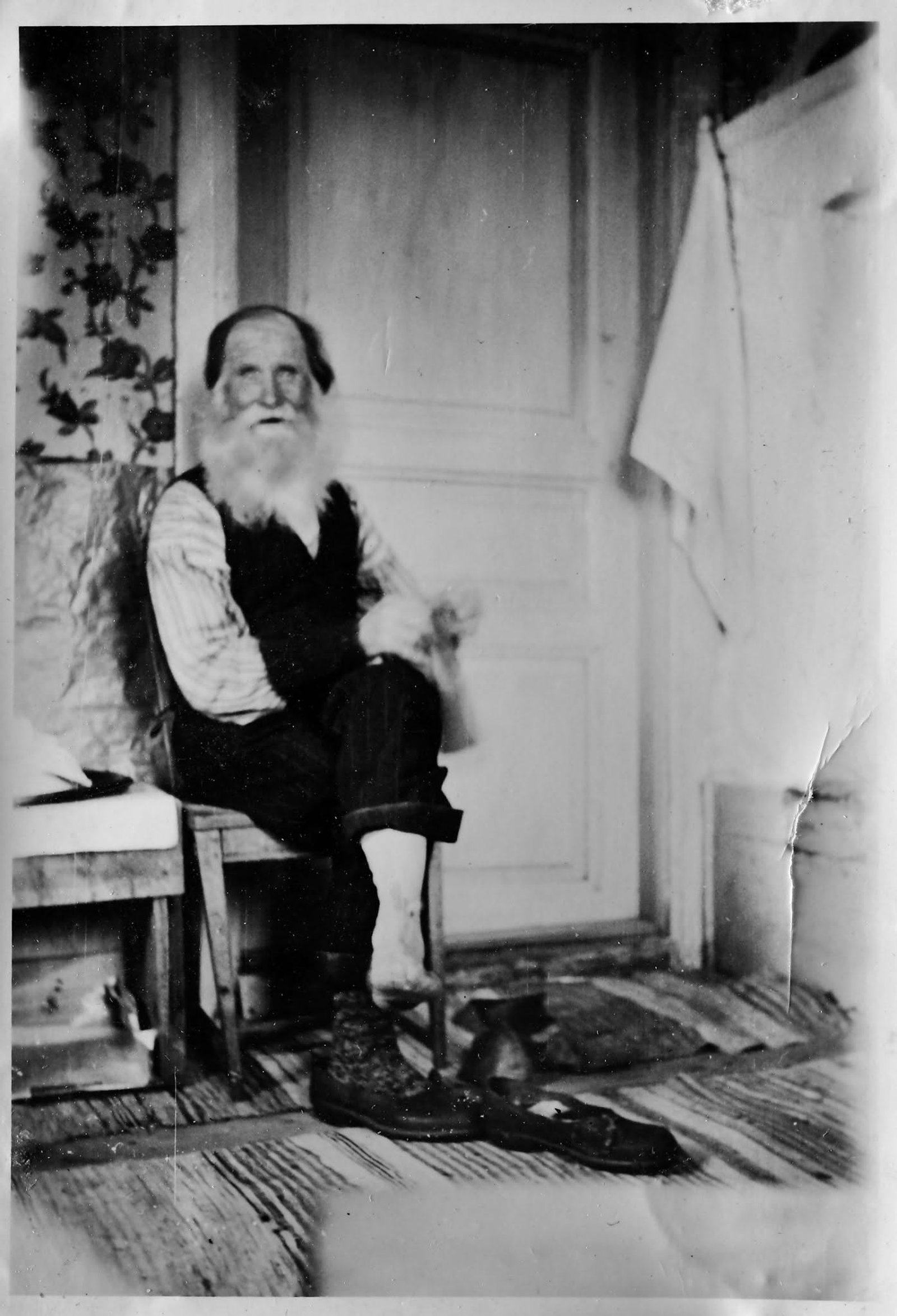
My grandmother’s grandfather, Jakob Persson Nordberg (1852–1945), in the kitchen of his home at the Tallåsen farm. Photo: Private.
About one minute after passing the church, I know that the remains of the farm lie there, on the left, a few kilometres into the forest. Unless nature has completely reclaimed it by now – it has been many years since I last visited. But I feel that it is there. Something inside me resonates.
I am home, even though I am only passing through.
It is not logical, but that is how it feels inside me. Here, in the forest where Jämtland meets Medelpad, my roots lie. It is mine, and wherever I go in the world, I carry it with me:
The scent of the forest in autumn. The pike thrashing in the reeds. The warmth of the spring sun against my face. The fox’s bark in the night. The feeling of bare feet in dew-covered grass. Wild strawberries on a stalk. The light of summer nights. Mother Troll’s lullaby. The crunch of shoes in fresh snow. Melting butter on freshly baked thin bread. Seven kinds of flowers on Midsummer’s Eve. The scent of warm cinnamon buns and boiled coffee. Lucia processions in the winter darkness. The words in the Jämtland dialect that I long believed were standard Swedish.
And I send a thought to you whom I never had the chance to meet, but who have nevertheless shaped me so deeply: I am here now. I have carried on. My children have heard the stories many times – about you, about Tallåsen, about the forest gnome, about the goat Pelle.
Now five generations have slept on the Sjusovarsoffan.
Life goes on. Because you, of all people, existed. Because you dreamed and loved and struggled. Because you did not give up. That is why – precisely why – I exist. Right here, right now. That is why all of this is mine – to love, cherish and pass on. To the family I will never have the chance to meet, but for whom I live.
That is ethnicity to me.


