

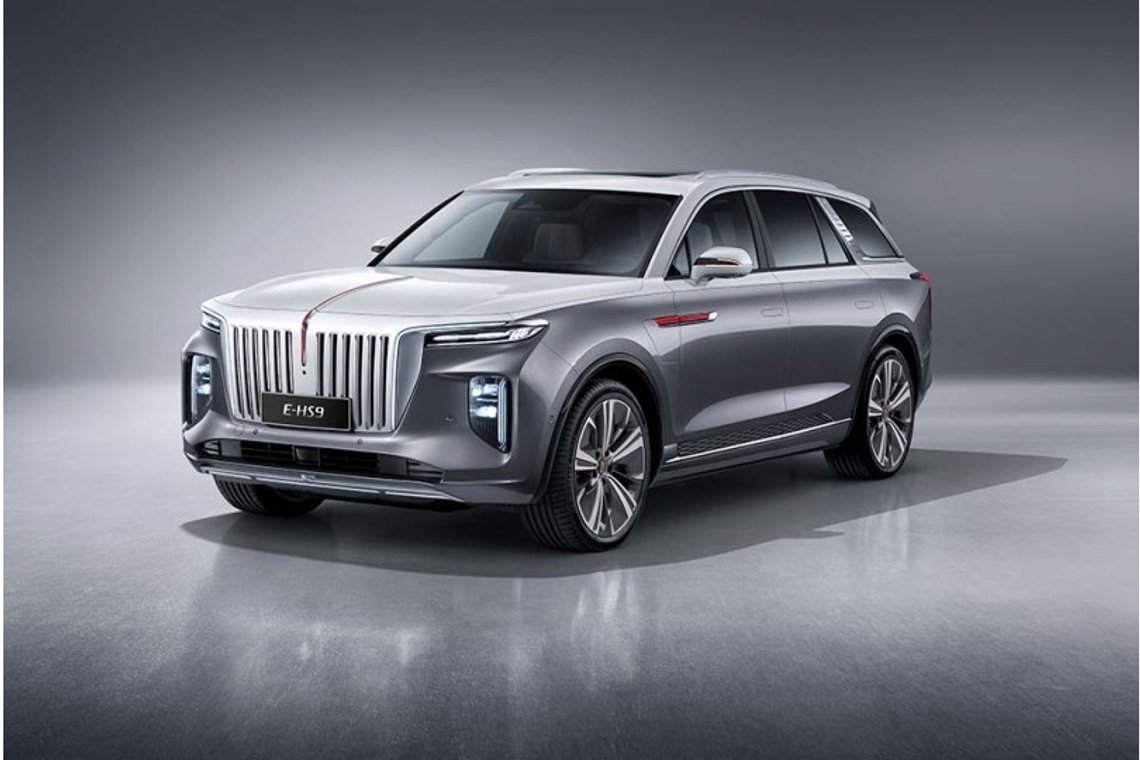


The Dutch insurance company Univé has decided that it will no longer insure a number of Chinese car brands. The reason for the decision is not based on quality or technical considerations, but rather on the fact that the car brands do not have a service network capable of keeping up, either with repairs or spare parts. This exposes the insurance company to far too much risk, regardless of the insurance premium. Take the hint?
No fewer than nine brands have been shown the red card by Univé: Hongqi, Changan, Voyah, KGM, Leapmotor, Vinfast, Jaecoo, MHero and Omoda. Four other Chinese car brands can only be insured with third-party liability cover, without comprehensive insurance: Dongfeng, Lucid, Nio with its sub-brand Firefly, and Zeekr. This is exactly the same problem being experienced in, for example, England and Norway, where Chinese brands are largely sold through agencies, and the car brand itself has no independent representation in the country.
Lack of service infrastructure and car parts
According to Univé, it is primarily access to spare parts that is the problem: Established car brands deliver parts to workshops within one or two days. With new Chinese players, it can take months, because the electric-car market prioritises building new cars over building up stocks of parts, everything is in Asia and has to be shipped by sea, (car parts are too heavy for air freight), and there are no cheap used parts and “pirate” parts, which of course abound for fuel-powered cars.
In addition, independent workshops do not have the correct diagnostic software and lack service manuals, and the result of all this chaos is that cars can remain at workshops for months, insurance claims drag on for ever, and they often end with almost-new cars being written off because the repair becomes more expensive than the car is worth. There is, after all, a considerable difference between the quality of a car and the quality of an organisation.
Not only the Netherlands
British insurance companies have also pulled the emergency brake and priced insurance for several Chinese brands at “sod-off prices”, or simply refuse to insure the cars – and this follows clear dividing lines: Brands that have invested in permanent dealerships, parts supply and training, and those that throw cars onto the European market through agencies without a service network to speak of. For agencies can simply pull out or shut down at any time. We saw that with the car brand Fisker here in Norway in 2024.
Despite this obvious danger, people are buying Chinese cars like mad, here in Norway too: Chinese brands had a combined market share of 17 per cent in Norway in December 2025, more than double the 7.7 per cent in 2024. BYD has grown so strongly that the brand is now among Norway’s largest, while MG and Xpeng are also regarded as established, with their own dealership networks, selling state-subsidised cars from the dictatorship of China as though there were a sale at the state liquor store. Because it is all about price.
People do not care about the security of an established brand, and Chinese battery-electric cars are substantially cheaper than European ones. This is in the process of undermining the entire European car industry, a danger that was already obvious in 2019, when we warned about it: The globalists who run the EU have, after all, systematically dismantled European industry in favour of China over the course of 40 years. That is what globalism is about.
Norwegian motoring organisations have failed their members
Unfortunately, the motorists’ associations NAF and KNA have been frighteningly uncritical of the introduction of both battery-electric cars and Chinese cars, and have completely failed their own members because advertising revenues have poured into the magazines “Motor” and “Bil”. Together with political pressure and climate-hysterical media, people have been misled into believing that battery-electric cars are just like fuel-powered cars, and that Chinese cars are as safe a purchase as established brands with representation in the country.
Hongqi was completely unknown, but has sold no fewer than 2,757 cars in Norway – most of them the giant E-HS9. Some bitterly regret it, and Hongqi had zero registrations at the beginning of 2026. What people have not been informed about either is that there are between 100 and 150 Chinese car brands flooding into Europe, and far from all of them will survive. Eighteen of these are present in Norway, and here it is Zeekr, Nio, Leapmotor and Changan that are “financially vulnerable”, to put it politely. I would not buy a Polestar either, but that is me.
As a consequence of the EEA Agreement, something called “free choice of workshop” applies in Norway, as it does in the EU. This means that car dealers cannot tie you to the brand’s authorised workshop, but rather that you can freely shop around for a workshop for servicing and repairs according to location and price. In principle. In the flood of battery-electric cars and new car brands from the dictatorship of China, however, this has failed in practice: Non-authorised workshops do not always have the software they need, so you are forced to use the authorised workshop. And on top of that come subscriptions for your car, which mean that you never fully own your own car. That people and politicians accept this is completely incomprehensible.
What should you buy?
I have repaired cars for more than 40 years, and can only repeat my warnings, on which NAF and KNA have completely failed: No, you do not have higher morals and you are not saving the planet by buying a new battery-electric car, as I pointed out in 2017: Short-lived battery-electric cars are just consumption. A new car is for people with lots of money to spare, regardless of brand and powertrain. If you have to lease a new car instead of paying cash or taking out a loan, then you cannot afford it. Do not buy a used battery-electric car unless it is no more than five years old, extremely cheap and backed by a massive and solid warranty. And never buy cars whose brand lacks representation and a physical workshop network in Norway, as well as a stock of parts in Norway or Europe.
And please, please, please do not listen to car salesmen. They are not there to help you – they are there to sell cars and make money. OK? It is probably cool to drive around in a new car that no one else has even heard of, but the financial risk is sky-high. And finally: All car adverts are about range, power and price, and none of this is important when it comes to owning a car. What matters when owning a car is your personal needs, reliability and quality, warranties, the service infrastructure and resale value. Use a calculator and buy a nice used fuel-powered Toyota instead?
If you are going to spend hundreds of thousands on a car, spend a few hours googling instead of looking at glossy advertising: You will soon find out which cars are riddled with faults and cause their owners a great deal of trouble and worry. You can read all my “consumer tips for buying a car” here. And do not listen to the owners either: Everyone hates admitting that they have been conned into buying a crap car. That is why everyone says they have “the best car in the world”.
Even those who drove British cars and Citroëns in the 1970s said that. Help!
https://www.document.news/editorials/2026/07/documents-consumer-tips-for-buying-a-car


