

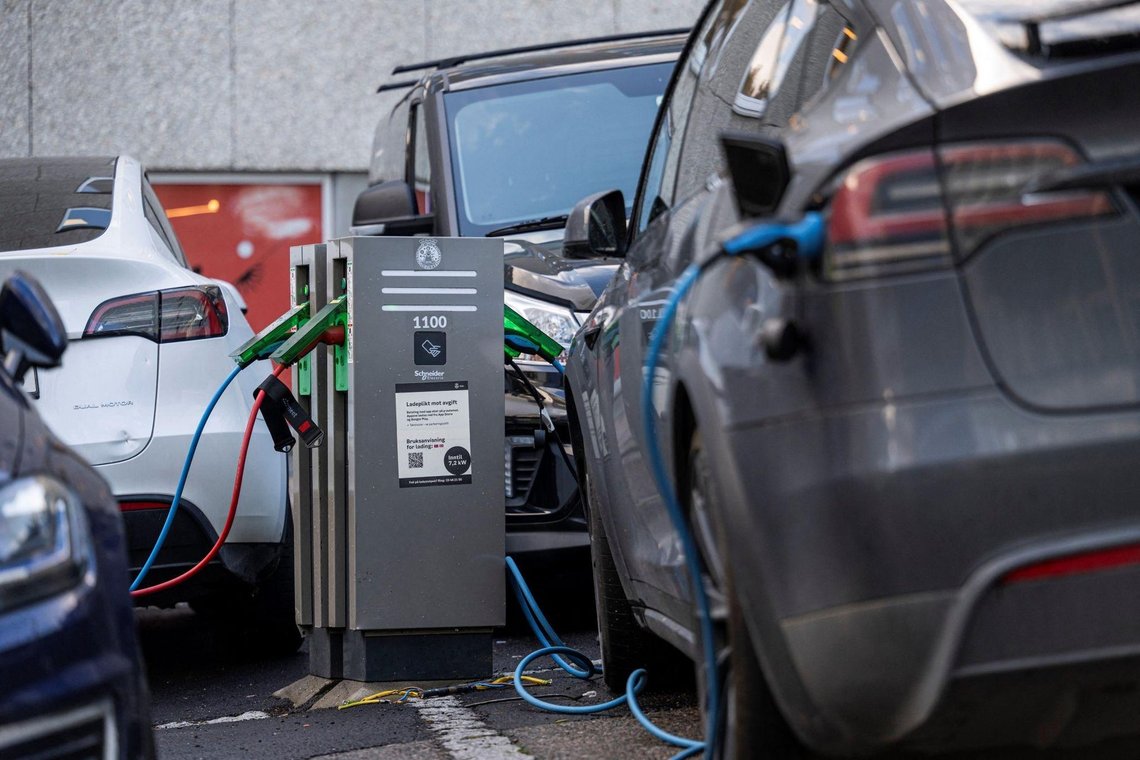


Norway is the only country in the world where sales of petrol, diesel and hybrid cars have been eliminated by centrally planned tax policy. This means that all new cars sold are battery-powered, and according to the activists this is entirely problem-free: battery cars are better than fuel-powered cars, and both charging anxiety and depreciation are fictitious problems from the past – according to social-media comment sections. Nevertheless, facts occasionally make it through the climate propaganda:
Norstat recently conducted a survey on behalf of Frende Forsikring, which is owned by Norwegian savings banks and mutual fire-insurance associations. Because although every other Tesla owner insists that they have driven a million kilometres without a fault, that the battery is better now than when it was new, and that travelling abroad is easier than with a fuel-powered car, the purpose of the survey was to determine whether this is actually true. And it is not.
But the spectre of charging anxiety had not disappeared after all
In fact, charging anxiety is as prevalent as ever, and the survey shows that more than half of electric-car owners have experienced charging problems while on holiday. According to the survey, the most common challenge is charging stations being out of order: 31 per cent have encountered this problem, while 28 per cent have experienced problems with apps or payment solutions that do not work. Twenty per cent say they have struggled to find charging stations, and 10 per cent report other types of charging problems. Alas.
The survey also shows that the newest electric-car owners have the greatest problems: 35 per cent of those under 30 have arrived at charging stations that do not work, while among those over 60 only 16 per cent say the same. Thirty-four per cent of the young have struggled to find charging stations, while 12 per cent have experienced the same. Painful and lengthy experience is the likely explanation here, while young people are often a little more spontaneous – and that can be a very bad idea with a battery-powered car:
Many electric-car owners organise their holidays around access to charging stations and plan everything that is going to happen down to the smallest detail. (Spot the problem?) It is undoubtedly an exciting hobby to waste one’s time on, but the problem is that even the best-laid plans fall apart when the charging infrastructure fails. This does not mean that the entire holiday is ruined, but rather that it becomes exciting and full of surprises for those who enjoy wasting time, queues, irritation and stress as the battery indicator approaches zero. And it does so surprisingly quickly at 120 km/h with the air conditioning on in the summer heat.
No problem at all for owners of fuel-powered cars
Hardly a single owner of a fuel-powered car reports the same problem, because petrol stations are everywhere, the pumps work, and you can fill the tank to 100 per cent in three minutes, with a range of 800 kilometres regardless of temperature, headwind, weight, speed, air conditioning or luck – while the battery crowd is left standing at the charging station swearing. In addition, the fossil-fuel crowd can carry a small jerrycan in the boot, or receive a splash of fuel from the roadside-assistance vehicle, which is unlikely to be carrying a charging station. But electric cars are best! Of course. Keep at it!
Now that electric-car sales are faltering in the rest of Europe, car manufacturers are changing their electric-vehicle strategies, electricity has become outrageously expensive and charging infrastructure is no longer a top priority among European politicians, the problems… er, I mean the “exciting holiday challenges”, are unlikely to disappear any time soon. Frende Forsikring has therefore drawn up a long list of useful advice for the battery crowd:
Good advice does not come cheap
Plan more charging than you think you will need. (!) If you are going on a long journey, include several possible charging stops along the route. Have several apps ready, and download them and register in advance. Do not run the battery too low, and maintain a safety margin, especially in areas with few chargers. Check the charging status before you set off. Look for updated status information in the apps you use, because there you may find information about chargers that are out of order. Avoid the busiest times, as there may be queues at charging stations in the middle of the day.
In other words, drive short distances and travel at night. Frende Forsikring also advises you to check the small print in your insurance policy regarding what is covered and what you must pay for yourself. And if you run out of power, roadside assistance may be the solution. Or not. Who knows?
To counter this long list of absurd and unnecessary advice, KenteForskning, on behalf of the Document editorial staff, has drawn up an even better piece of advice for those who do not enjoy planning their holidays in detail and do not need unnecessary sources of stress during their holiday:
Buy a fuel-powered car, and let the air conditioning keep everyone on board cool without the slightest trace of range anxiety. Have a pleasant and stress-free motoring holiday!


