

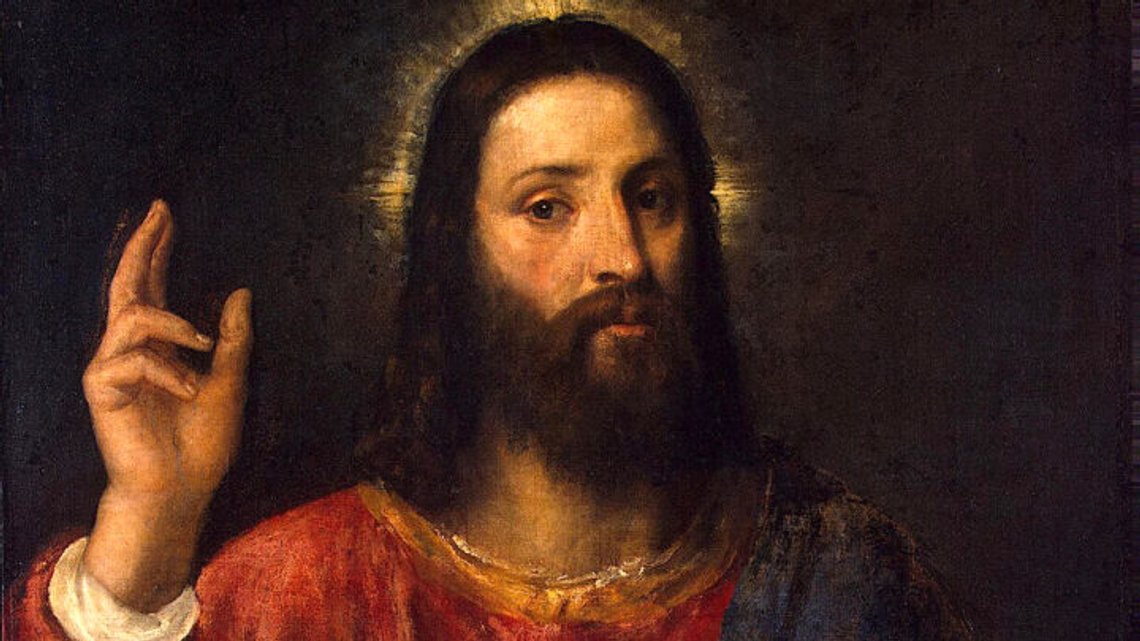


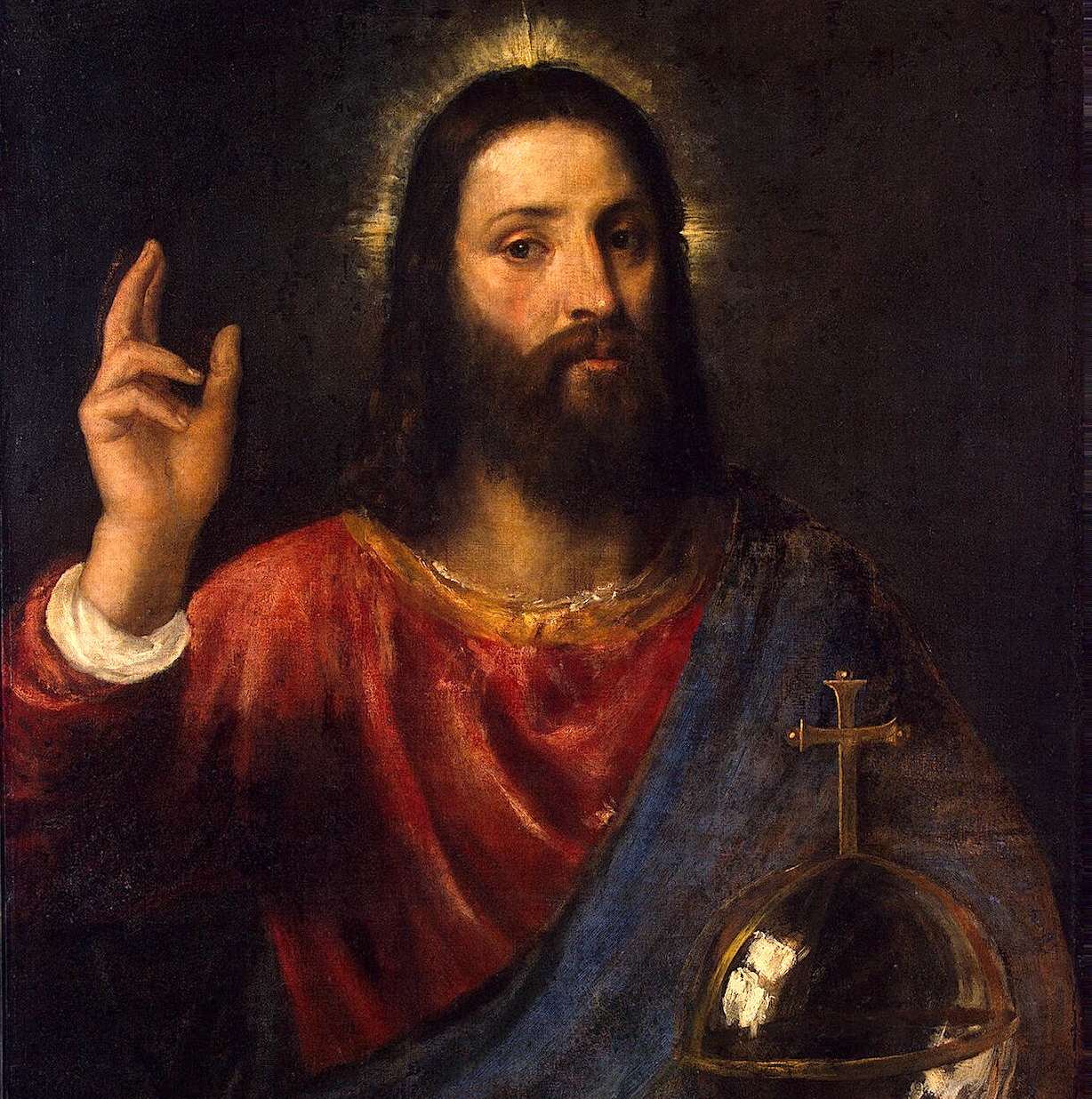
 Tiziano Vecellio (c. 1490–1576), «Salvator Mundi», Hermitage Museum, St Petersburg.
“I am the way, the truth, and the life.”
John 14:6
Last Sunday, the theme was God as love, and how love is a relationship that bears witness to the triune God. The Christian understanding of love is not self-love, but self-giving love between persons.
Thus, for example, the Church Father Augustine says that the Father loves the Son, the Son loves the Father, and the Holy Spirit is the bond of love between them.
In that case, love is not something God begins with when the world is created. It is eternal. A solitary, non-relational God could not have “invented” love either, since it is not an attribute of such a God, and to claim that God loves Himself in a form of self-love is, in the Christian faith, not genuine love but rather the very opposite.
The same may be said of today’s theme, namely objective truth and the fact that it must be absolutely good.
If God is the absolute good, He cannot become more good by creating the world. Otherwise, He would have lacked something before creation.
Truth in this context is not whether an event or a statement is true. Thomas Aquinas relates it to the intellect, to the knowledge that God has of Himself in perfect fullness. We may say: perfectly rational. As Thomas Aquinas famously said: Truth is one, because God is the source of truth. Therefore, there can never be any real contradiction between true faith and right reason.
As Christians, we identify this perfect self-knowledge with the Logos (Christ’s name before the Incarnation) – the Son who says: “I am the way, the truth, and the life.”
Thus, truth is not something God only “acquires” once the world exists.
It exists eternally in God’s own eternal life, the life of the Trinity.
We may think in the same way about the absolute good. If goodness merely means power or will, then God could, in principle, define anything whatsoever as good (something we find, for example, in the Muslim faith), but if God is goodness, that becomes impossible.
Therefore, God cannot do evil. Not because He lacks power, but because evil is a denial of His own nature. Thus goodness becomes objective, a characteristic of God that exists prior to creation, independently of mankind.
The good exists because God is the absolute good.
For us as human beings, this is absolutely decisive, for we live in a world created by such a God, who furthermore commands us to subdue the world while at the same time loving Him. But in order for us to do this, God must be intelligible and consistent, just as His creation is, while at the same time we acknowledge the consequences of the Fall. For regardless of the Fall, God is the same both before and after it.
And regardless of the Fall, our ability to love God presupposes that truth is good, while the good must also be personal and rational.
It is therefore natural that, with the emergence of the Christian Church, science also emerged. Science presupposes that truth is objective, and reason presupposes that truth is rational. The American sociologist of religion Rodney Stark points to this fact when he shows how the natural sciences emerged as a continuation of theological studies. It was the Christian faith that made the natural sciences rational.
One historian wrote that the reason medieval people became Christian was that Christianity gave them a tool for understanding the world. And I think there is a profound truth in that. The doctrine of the Trinity is not merely a revealed doctrine that must be believed; it also sheds light on why reality is intelligible at all.
We may thus also understand how Aquinas could say that a person who knowingly acts against what right reason shows to be good is at the same time acting against God – not because reason stands above faith, but because both faith and reason spring from the same divine truth. To reject reason is therefore indirectly to reject God as the source of truth. For God cannot tell us to love Him with all our reason unless there exists an absolute truth within which reason can operate.
This also makes liberal Christians’ defence of postmodern ethics incomprehensible, since that ethic is founded upon what is transient, namely man’s own will. An ethic that rejects belief in an absolute truth cannot be rational either, and therefore cannot be in accordance with the nature of God.
Have a blessed Sunday!


