

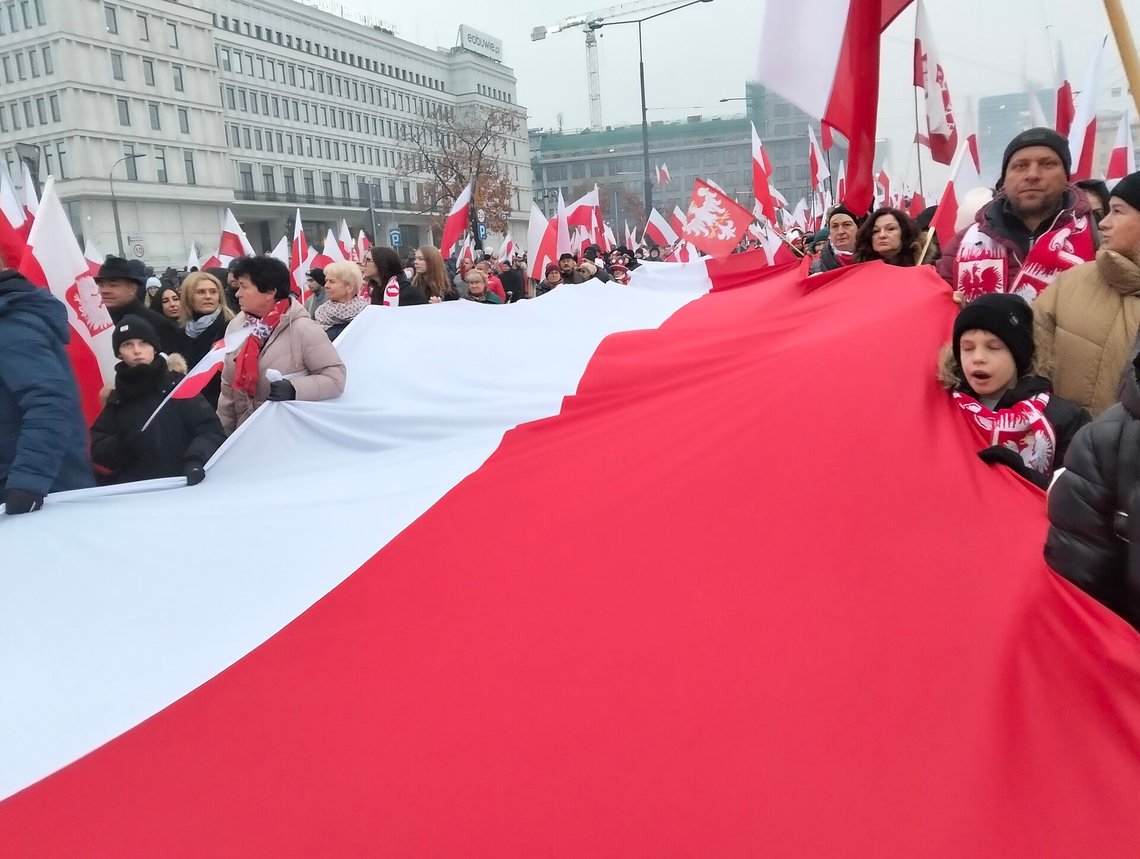


Over 250,000 people took part in the Independence March in Warsaw on Wednesday.
NRK tells its readers that the mass shooting in Kraków may be one reason why so many people turned up, and that the Polish government has suggested that the shooter held far-right views.
What NRK does not mention is that the prosecution service stated as early as Monday that there is no evidence to support this claim.
“We do not have data that makes it possible to determine the motive categorically,” said spokesperson Przemysław Nowak of the Office of the Prosecutor General, according to the Polish newspaper Do Rzeczy.
In the room of 24-year-old Michał Oksiński in Ostrowiec Świętokrzyski, investigators found no far-right or far-left symbolism. The only thing hanging on the wall was a yellow Gadsden flag featuring a rattlesnake, an American symbol of freedom which, according to the prosecution itself, cannot automatically be linked to extremism. If anything, however, there are indications that Oksiński harboured political sympathies for the left.
Oksiński shot and killed six people in Kraków’s main square on Saturday, after killing his parents and sister at home. He died of his injuries in hospital on Monday.
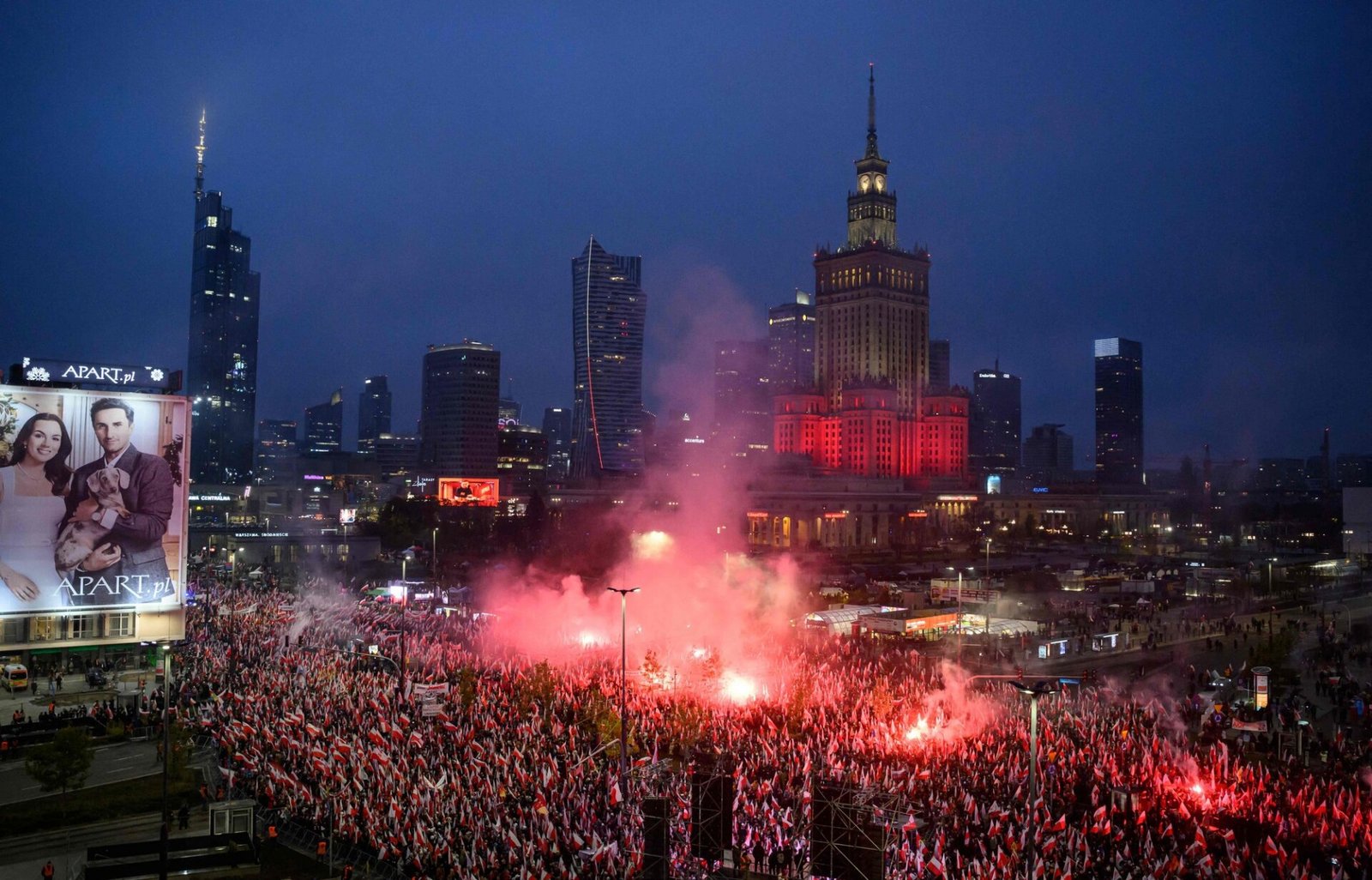
Around a quarter of a million people took part in what is traditionally regarded as a nationalist march. Photo: Mladen ANTONOV / AFP / NTB
The theory regarding the far right was put forward by Interior Minister Marcin Kierwiński just hours after the shooting. He said that “everything points to” the shooter having been fascinated by far-right ideologies. The statement was reported worldwide via Reuters, AP and the BBC. Although the prosecution has not confirmed this claim, Kierwiński refuses to retract it.
NRK merely states that the government’s claim has not been confirmed by the investigation or the police. The state broadcaster does not inform its readers that the investigators have said the opposite.
Researcher Jørn Holm-Hansen at OsloMet mentions the shooting as a possible reason for the large turnout, but does not wish to conclude that it was the main cause. Instead, he emphasises the political crisis in Poland.
“Both the national conservatives and the far right have mobilised to a far greater extent than before,” he tells NRK.
The article is illustrated with a photograph of a placard bearing the text “Make Europe white again”. Poland’s President Karol Nawrocki, who also took part in the march, is told by the researcher that he is divisive and lacks statesmanship.
On Monday, Nawrocki and Prime Minister Donald Tusk walked side by side in Kraków, in a silent march for the victims.


