



The Italian economic historian Carlo Cipolla (1922–2000) had a distinguished academic career both at home and abroad, but is best known to posterity for his essay ‘The Basic Laws of Human Stupidity’, in which he offers fascinating definitions of different types of people:
Intelligent is the person who does good both to themselves and to others; stupid is the person who does harm both to themselves and to others; helpless is the person who does good to others and harm to themselves; and criminal is the person who does good to themselves and harm to others.
Can there be any doubt whatsoever that, in Professor Cipolla’s classification system, the Norwegian power elite is to be regarded as criminal?
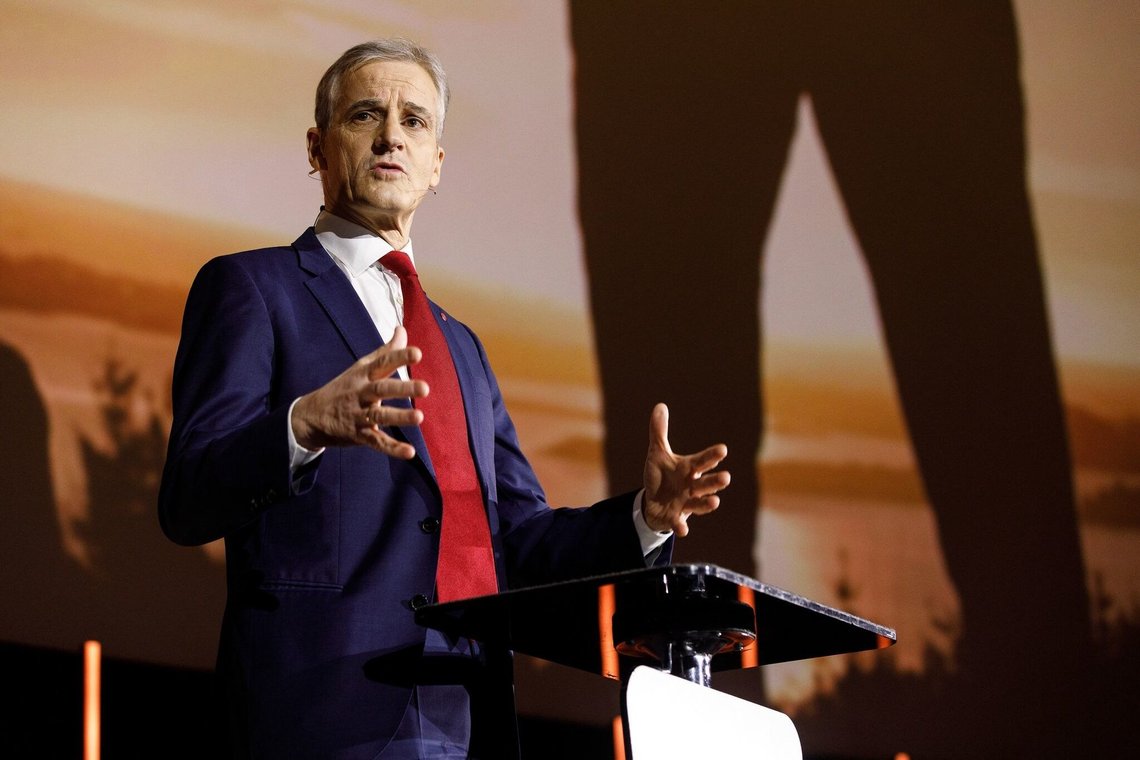
Prime Minister Jonas Gahr Støre provides an exceptionally good illustration of the phenomenon when he takes to the podium at the climate conference in Turkey and pledges 40 billion kroner of the Norwegian people’s money to ‘climate finance’. But this is, of course, just one of many examples of the corrupt squandering of public funds that serves no socially beneficial purpose.
Thanks to our country’s long history of sensible utilisation of our vast natural resources, Norway has become an immensely wealthy nation. Unfortunately, the political elite does not manage this wealth for the benefit of the Norwegian people; quite the opposite, in fact.
It has stifled ordinary private initiative, rendered large sections of the population passive, concentrated significant portions of the wealth amongst oligarchs in Norway with strong political connections, imposed huge and unnecessary costs on Norwegians, and siphoned hundreds of billions out of the country. At the same time, the quality of the country’s infrastructure and public services is, in some cases, scandalously low, given the level of financial wealth.
We once associated the word ‘oligarchs’ with Russia, and not without reason: following the collapse of the Soviet Union, a Russian oligarchy took control of Russia’s greatest economic assets. Russian oligarchs, who gradually developed a symbiotic relationship with the Putin regime, subsequently became notorious for their vulgar displays of luxury whilst travelling to exclusive destinations in the West.
The question is whether our own oligarchs are any better. They have raked in a disproportionately large share of Norway’s wealth and, as such, enjoy great personal luxury. For the power elite who distribute wealth to the Norwegian oligarchs, the luxury lies in appearing moral abroad with your money, just as Støre has just done in Turkey.
But the Norwegian government apparatus is also part of this symbiotic relationship, insofar as it too appeases Norwegian oligarchs with money. Whether it be development aid, climate finance, the expansion of ‘renewable’ energy, electrification, carbon storage or the export of electricity, all of this is implemented by a vast system – not just the actors themselves, but also the administrative and financial system surrounding it – which is fuelled by Norway’s wealth. People in the communications industry therefore realise who it is best not to cross.
Whilst the Russian oligarchs seemed most concerned with enriching themselves, without going out of their way to harm national interests, Norway – with the dismantling of Norwegian independence – has, however, ended up with an oligarchy that is also channelling our economic wealth abroad.
Norway is quite simply being bled dry, as the EU colony we now are. And this isn’t even a political issue of any particular significance.
The colonial subjects that Norwegians have become thus lack political representation. Perhaps it would be safest to give those Norwegians a bit more of a kick.
The Progress Party (FrP) is a pleasant surprise when it challenges the Paris Agreement. But shouldn’t there be much more to address here?


