

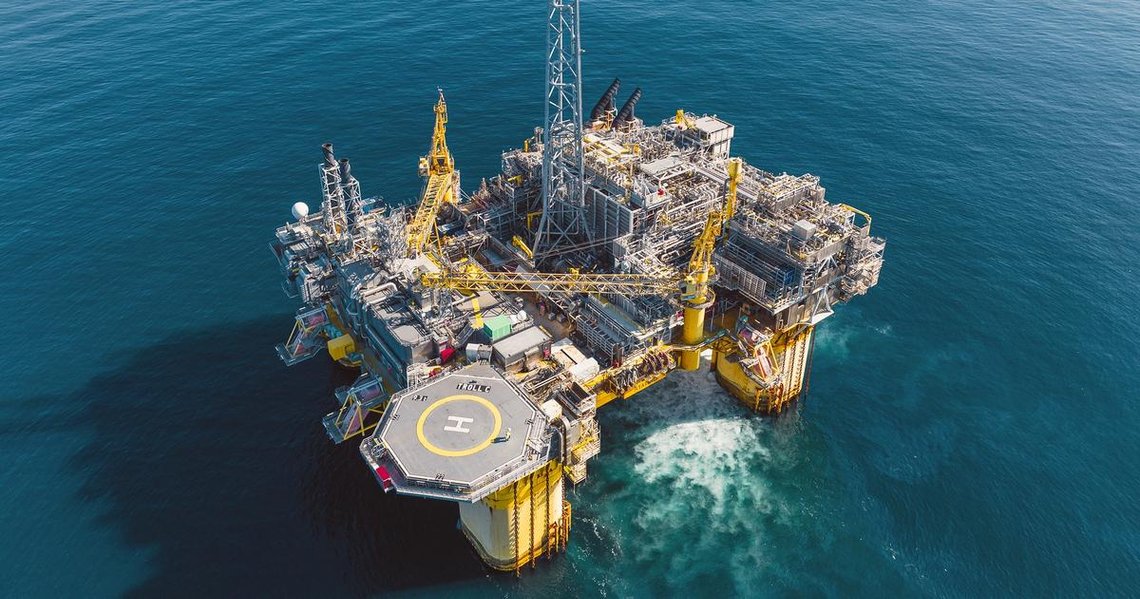
The Economist has discovered that Norway’s oil wealth is used to plug gaping holes in the state budget, and conveys the analysis carried out by Martin Bech Holte in the book “Landet som ble for rikt” (“The Country That Became Too Rich”): oil revenues and returns on the state’s financial assets allow Norwegian politicians to squander money.
Although the fund invests only abroad to avoid crowding out the domestic private sector, it channels money back to the government, which uses it to plug the gap between spending and taxes. In 2008 this dividend was a modest 36 billion kroner, or less than 5% of spending. In 2025, 414 billion kroner, a fifth of spending, came from the oil fund.
The influential periodical draws the conclusion that this turns politicians into irresponsible layabouts, and that the people let them get away with it, perhaps in order themselves to go the same way:
This has unfortunate consequences. Politicians can postpone difficult decisions. Voters see little reason to restrain demands for increased spending. Take healthcare, the government’s largest expenditure item. On average, medical services cost 30% more in Norway than in the EU. But why reform hospitals when one can throw more money at the problem? Denmark, which spends roughly the same per person as Norway, has reduced waiting times for routine operations twice as fast as its neighbour to the north.
Few legislators bother to consider the economic benefits and costs of their proposals, sighs one. This is a weakness elsewhere, but Norway seems particularly exposed to it. Like the Munch Museum, the renovation of the Storting building in Oslo took four years instead of one, and cost six times as much as expected.
Thus one can also maintain a welfare state that passivises large parts of the population, or spend money to purchase admiration:
In 2023 the government channelled 250 billion kroner, half the revenues from taxes on labour and capital, into foreign aid and domestic charitable organisations. That is a high price to pay for buying goodwill abroad and alleviating climate guilt at home.
One might perhaps have used somewhat stronger words about this criminal foolishness, but one is, after all, cultivated, as it were.
The incentives to make an effort are absent:
The same applies to the need to generate income in the first place. Nearly one in ten Norwegians in their twenties is unemployed, compared with one in 20 Danes. Norway’s dropout rate from upper secondary school and university is among the highest in Europe. The higher education system offers as many degrees as one wishes free of charge, plus generous student loans. This encourages people to postpone their degrees, change fields of study and prolong their time in education.
The result is a weakened economy:
This economic hedonism is already damaging the economy. The central bank is reluctant to raise interest rates because of households’ high debt, which has weakened the krone and frightened off foreign investors. Workers’ productivity has stopped growing. Real wages are beginning to fall.
In principle this can continue indefinitely, at any rate so long as the money machine hums along for all eternity, notes The Economist, which warns that it may not do so.
But there is also a human price to be paid, the analysis continues: in a healthy economy, people flourish as well. Elementary logic would then suggest that Norwegians are now ceasing to flourish.
In its capacity as a globalist periodical, The Economist does not consider the economic consequences of immigration. The oil doping would not have been necessary if Norway had not imported a large population that pays little into the public purse but takes much out of it. An immigration-liberal periodical with any self-respect simply cannot look too closely in that direction – just as Martin Bech Holte does not do.
For in this mental paradigm, people are somewhat like money or goods; they are merely elements in the economy, and if they move about, that is only a good thing.
From such a perspective, it is of crushing indifference whether a number of wealthy Norwegians flee the country, while hordes of less wealthy people who cannot emigrate end up in a kind of internal exile, far removed from the ruling class that neglects its own population and spoils foreigners.
The outside world – including also bandit states, organised criminals and foreign fortune-seekers – naturally sees that an immensely wealthy country with a decadent ruling class and a compliant population is easy to exploit. But that, of course, you will not read in The Economist.


