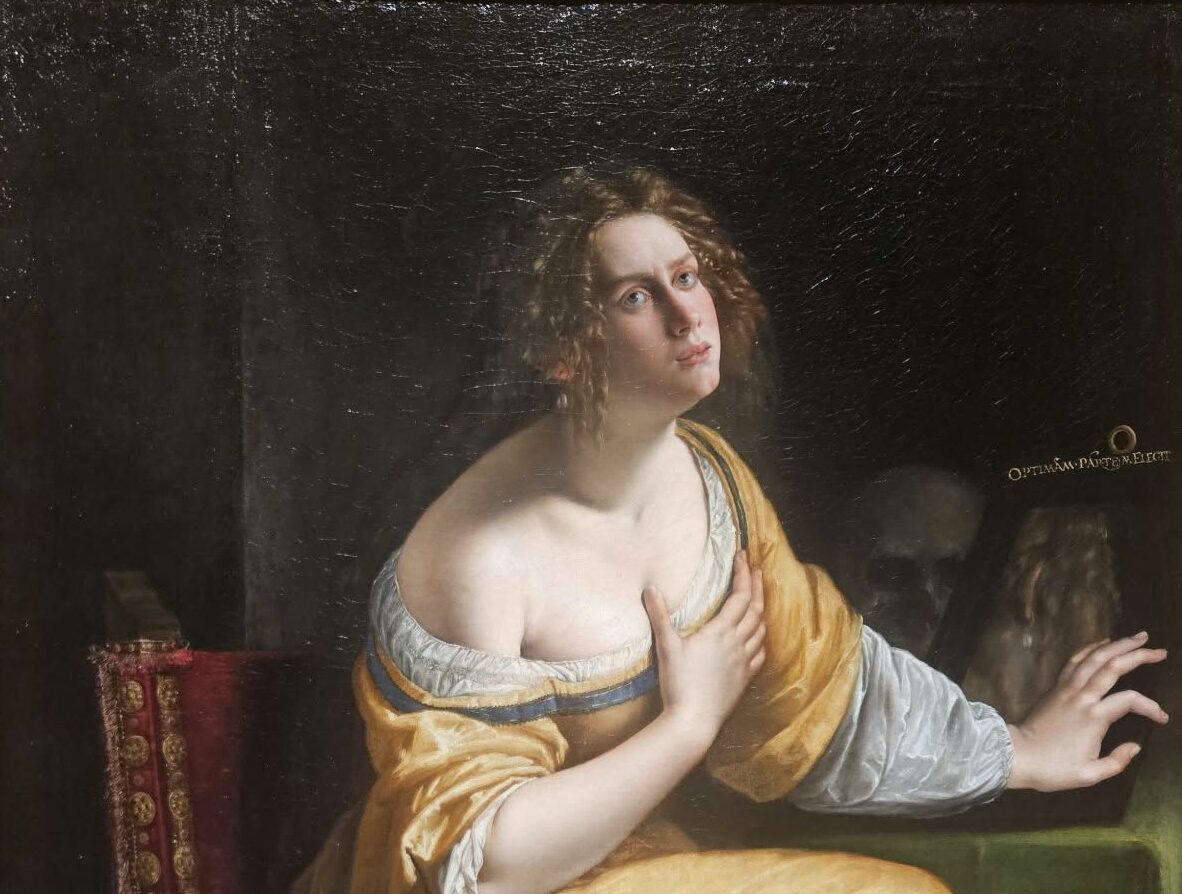
Artemisia Gentileschi: “The Conversion of Mary Magdalene”, 1614/1615.
According to the National Museum’s current exhibition on 17th-centuryart, the selection is curated with a view to showcasing the female artists of the period at their best, even though their professional achievements were subsequently downplayed and disparaged in comparison with those of their male counterparts. It is this art-historical discrimination that the National Museum is seeking to shed academic light on in collaboration with the Galleria Borghese in Rome.
The exhibition project is interesting and the historical visual documentation enriching, but we are left rather in the dark as to the actual causes and motives behind the devaluation and exclusion of women. Is it male art historians who have pushed female artists into the shadows, or is it simply the cultural prejudices of the time? In any case, there must be someone with authority in the art world who has facilitated this devaluation of female artists.
Given that so many female artists from the 17th century are featured in the exhibition, they can hardly have been completely forgotten and marginalised at the time. It is likely the professionalisation of the art world at the time – and particularly in later periods – with its professional prejudices and gender bias, that has pushed female artists into the mists of history. We should note here that the establishment of the first art academies in Italy (16th century) and France (17th century) did not admit female students.
This is likely a legacy of the medieval painters’ guilds, where the leadership believed that women should stay at home and bear children. Professional art education has done little to support budding female artists in their development. It was all about business acumen and lucrative commissions, which only male practitioners vied for. The same applied to artistic legacy, which, over time, perpetuated this pattern in favour of male artistic expertise.
If we look at the selection of professional female artists, it shows that their professional development often takes place within a private and family-oriented artistic environment. After all, art academies were not open to women. Nor did the situation promote their artistic endeavours within a wider artistic and cultural milieu. At that time, there were also no media outlets that could bring them into the spotlight. The only avenue was commissions – preferably prestigious ones – but these were usually snapped up by male artists. The family had to make a living, after all, and the father was the sole breadwinner.
From a professional point of view, the situation was far from encouraging for female artists in the 17th century. If anyone was destined to be consigned to oblivion, it was them. That process happened of its own accord. During the Dutch Golden Age, interest in art experienced tremendous growth, not only amongst the artists themselves but also amongst the public. Politically, society became more liberal, particularly in the realms of culture and religious practice. The break with the prevailing hostility towards images gave artists greater creative freedom, not only in terms of subject matter but also in terms of artistic genre.
It was within this artistic freedom that Carla Peters emerged with her seductive still-life paintings, whose subject matter centred on the juiciest fruits, the most beautiful flowers and the most polished objects. This still-life genre became very popular amongst the increasingly affluent middle classes. The demand for beautiful paintings was high, which also provided artistic scope for female artists. Genre painting may not have enjoyed particularly high artistic status, but it demonstrated with all the clarity one could wish for that female artists, too, were capable of creating pictorial beauty.
As new art academies were established across Europe and began to admit female applicants, the various implications of gender differences did not, however, disappear from education or from the art world. However, it is difficult to say whether this constituted deliberate artistic discrimination. In the field of art, the evaluation of works is problematic, whether the artists in question are women or men. This requires a specialised expertise, which is still in short supply today, even within prestigious art institutions.
In this respect, the National Museum’s exhibition of 17th-century art by women is illuminating and important. The selection of paintings clearly demonstrates a high standard of artistic quality, although the works were not valued for their painterly skill in their own time. It is in this context that commercial acumen becomes the deciding factor, not the artistic endeavour. Three hundred years later, the specifically artistic aspect also fades away, not because of the gender struggle, but because a common standard for artistic quality no longer enjoys professional endorsement. Anything could now be art.
It is in this context that the National Museum is now attempting to highlight a system of artistic norms from the 17th century. Not on male terms, but on female terms. The difference in artistic quality between male and female artists at that time was minimal. The women simply had the wrong gender. In today’s context, the women’s rights movement does not contribute to raising standards of quality, unless female artists draw on the quality criteria found in 17th-century masterpieces.
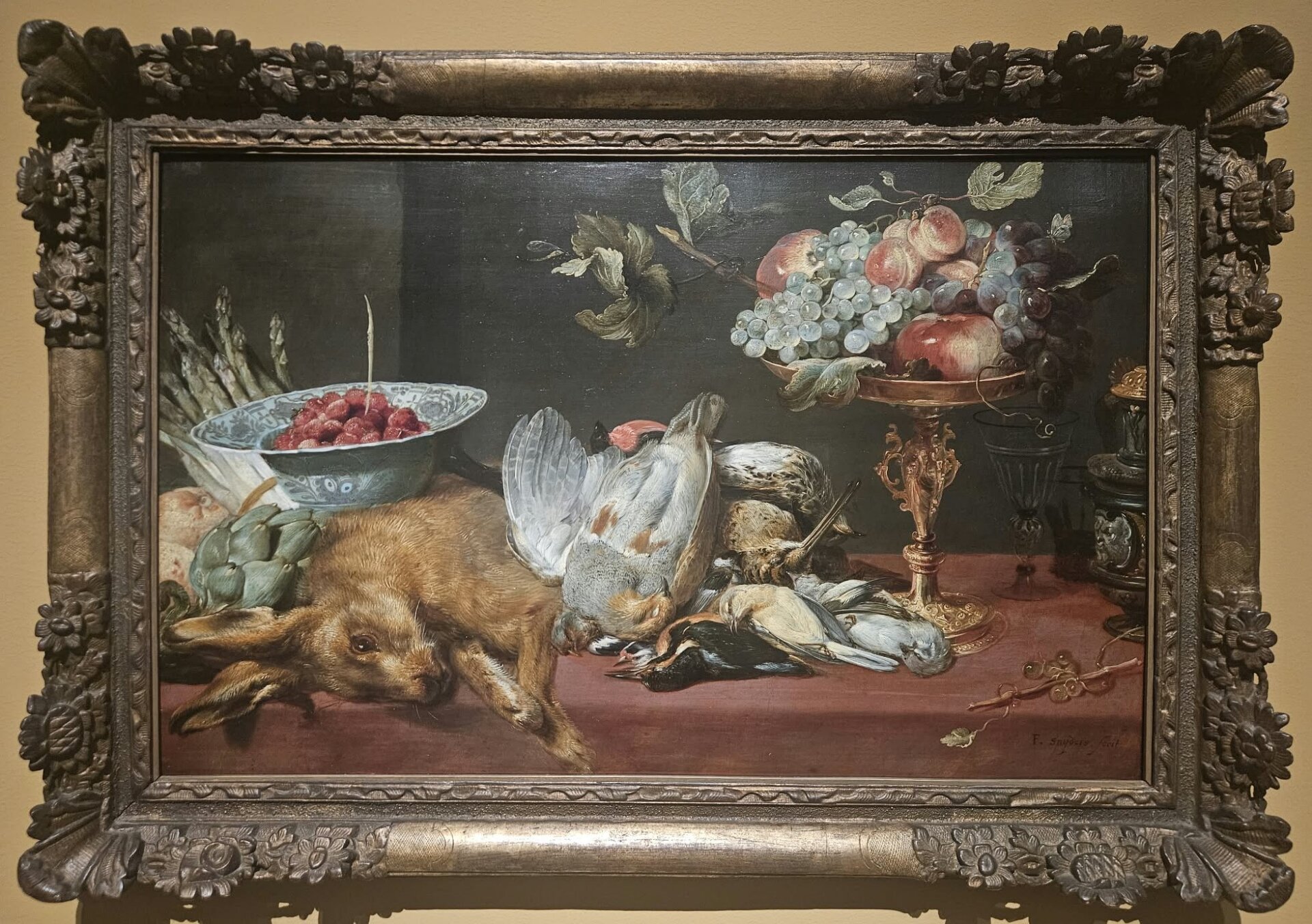
Frans Snijders: «Still Life with Small Game and Fruit», c. 1616–1620.
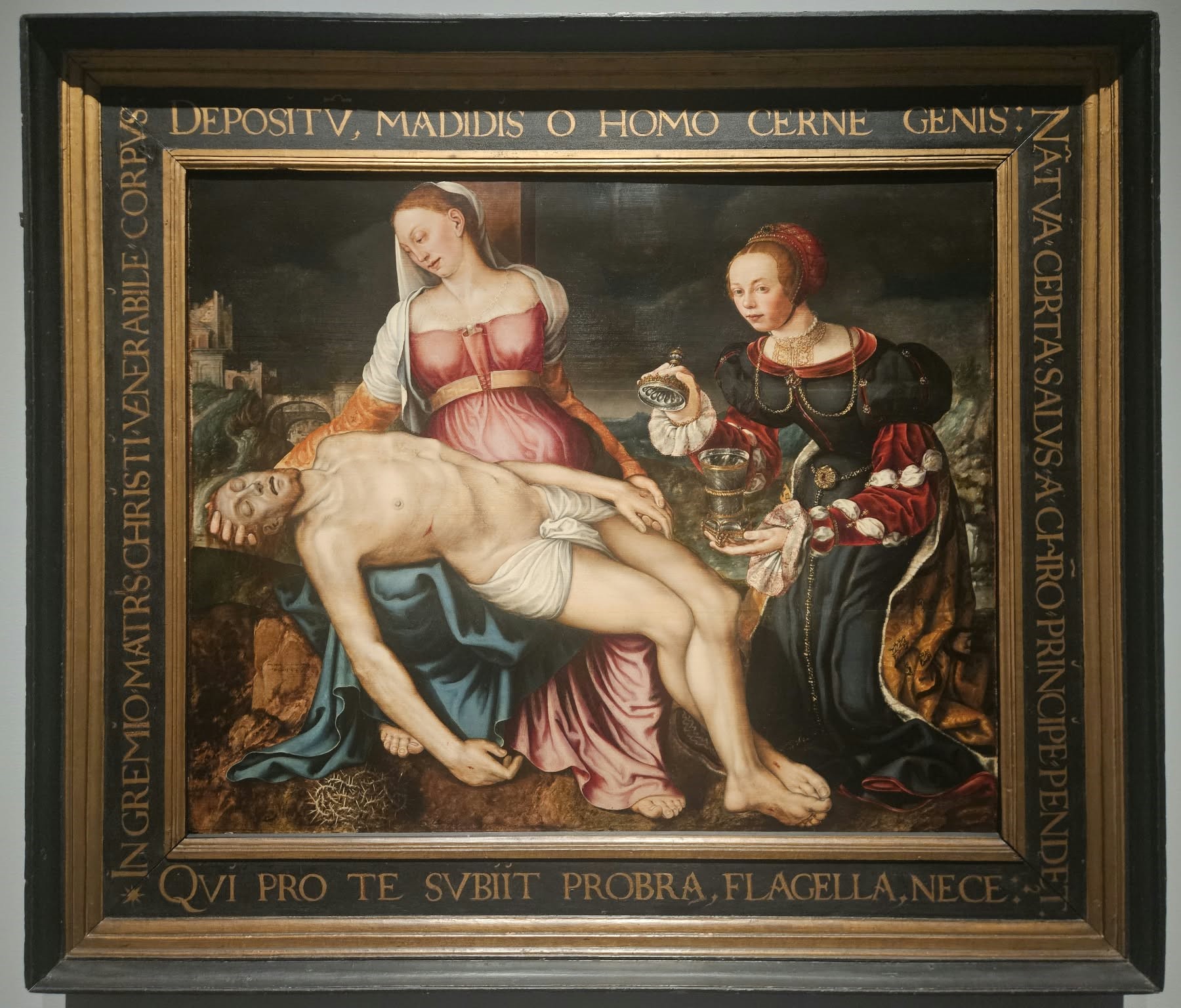
Mechtelt van Lichtenberg toe Boecop: Pietà with Mary Magdalene, 1546.
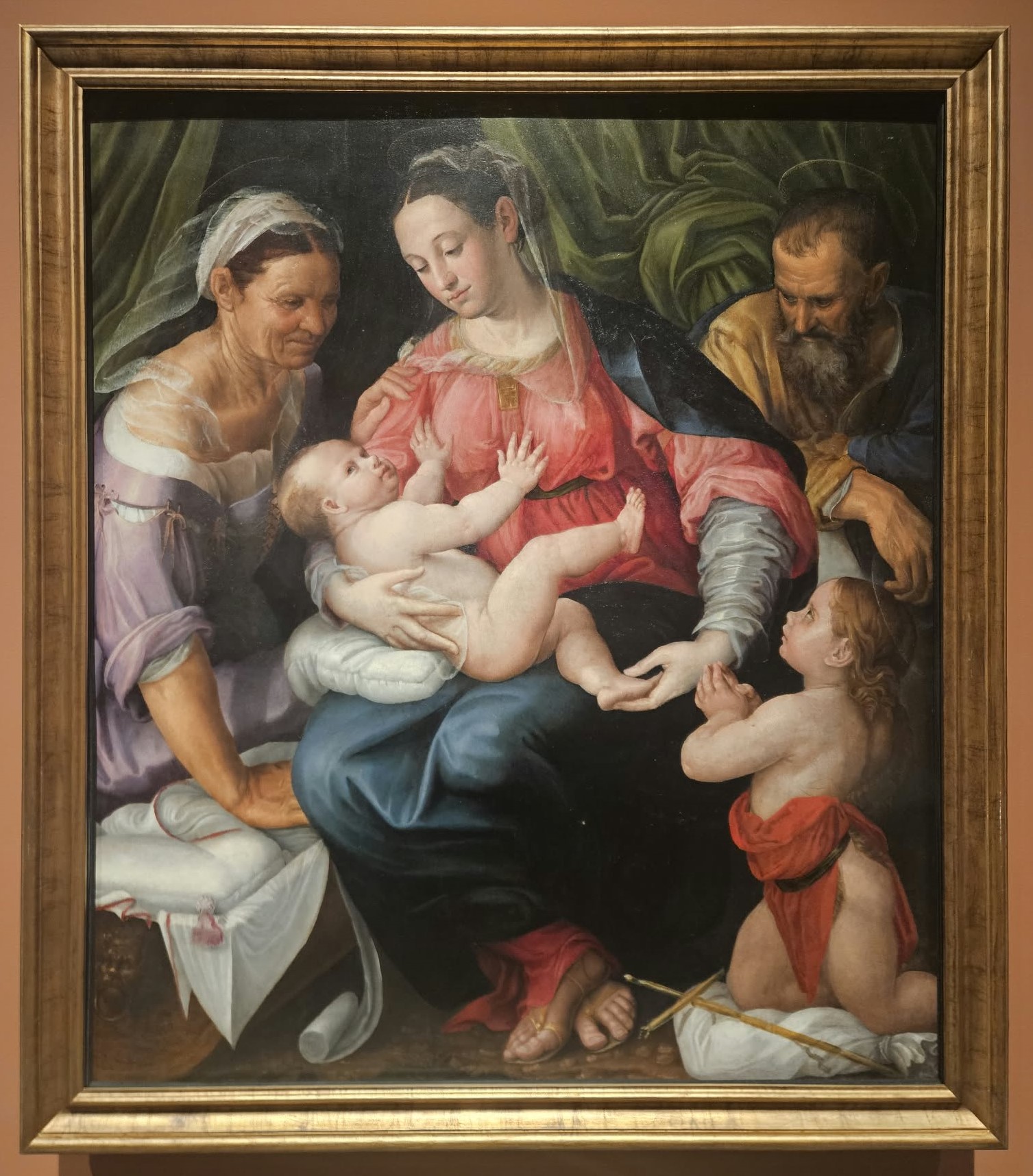
Prospero Fontana: «The Holy Family with St Elizabeth», 1549–1550.