Paul Grøtvedt
  Odd Nerdrum: «Sanatorium», 2024.
Nerdrum Museum is located just outside Stavern, in an area called «Sjøparken» (The Sea Park), with old industrial buildings, new residential development and an inviting shoreline. The museum building is a disused match factory on several floors with great development potential. Much has been done with rooms, stairwells and entrance areas. In a smaller building right next door an inviting museum café has been established with tempting pastries and refreshing drinks.
When the Nerdrum Museum was established in 2023 and officially opened to the public on 6 April 2024, a change occurred in the hegemonic art power in Norway. The artist Odd Nerdrum then became an institutionally anchored visual artist with his own museum based on a tradition-historical aesthetics and standard. The Nerdrum Museum thus represents a radical break with the dogmatic and hegemonic modernism that for decades has opposed professional tendencies towards classical figuration.
It is not the museum’s institutional status that threatens the modernist hegemony, but the artistic tradition thinking. That there exist timeless norms of quality in every historical epoch that artists can revitalise and deepen in accordance with their own time horizon. One can call it a tradition-anchored view of art, which was placed on the index when modernism’s negative aesthetics at the end of the nineteenth century opposed any professional tradition thinking in art.
Modernism in art had two radical objectives: 1. to oppose all tradition thinking in art, and 2. to establish hegemonic control over the national and international art field. The hegemony strategy is a post-Marxist power thinking that gradually took over control of the modernist art project. In that perspective the Nerdrum Museum is an art-political counter-project, while the classical-aesthetic tradition thinking represents a full-scale revolt against the modernism hegemony.
After the opening of the Nerdrum Museum 2/3 years ago the influx of an art-interested public has been impressively large. The museum building is also continually expanded with new rooms and new works. The artist is still productive with brush and palette, although the motifs shift according to historical / thematic centre of gravity and philosophical issues. The most striking feature of Odd Nerdrum’s motifs is their focus on universal human conditions, whether they are illuminated emotionally or from philosophical reflection.
This complex motif fullness is strengthened through a painterly formal development that gives the picture’s totality a visual richness of high quality. This artistic foundation, anchored in classical figuration and in the great masters of the Renaissance and the Baroque, has given Odd Nerdrum an eye for a thematic and painterly professionalism that is unique within the modernist forced hegemony. But not only unique in an artistic sense, Nerdrum is to an equally high degree a warning of decline for all types of nihilistic value thinking.
I met Odd Nerdrum for the first time in 1973, in the café at Kunstnernes Hus, together with some other artist sprouts from the academy. Nerdrum was the centre of the conversation, which revolved around other artistic anchorings than the academic formalism. According to Nerdrum the figurative tradition was our only way to go in order to create art with quality and human content. The words did not fall entirely in that order, but the perspective had something prophetic about it, as if the artist thought and spoke from a vision.
After having followed Odd Nerdrum’s production from that time up to the museum project, his various motif types and philosophical ambitions have always created unrest and debate in the art field, even among other figurative artists. There is something thematically and painterly demonstrative about Nerdrum’s pictures, as if brush and palette always follow an implemented colouring and fill the pictorial space with the desired chiaroscuro effects from Caravaggio and Rembrandt.
They are two important sources of inspiration in Odd Nerdrum’s pictorial production. In the first decades the light metaphysics from Caravaggio’s distinct formal precision dominates, while towards the end of the 1980s Rembrandt’s more light-diffuse body figuration appears in the pictorial space. The bodily expression’s sensual surface here tends towards dissolution, as if the skin is no longer a specific boundary against the surroundings, but a painterly project in itself.
It is a development that motif-wise is linked to strong emotional exposures, in general situations of anxiety, fear, despair and mental confusion. Here one gets the impression that the artist’s painterly grip is so involved in strong feelings that the body formation itself becomes an artistic combat zone, which makes it difficult to assess whether the painterly grips are aesthetically relevant. In any case it is an important phase in Nerdrum’s artistic work, which far more clearly than earlier challenges his tradition-anchored aesthetics, not in a modernist direction, but more focused on the classical premises of figuration in the personal production.
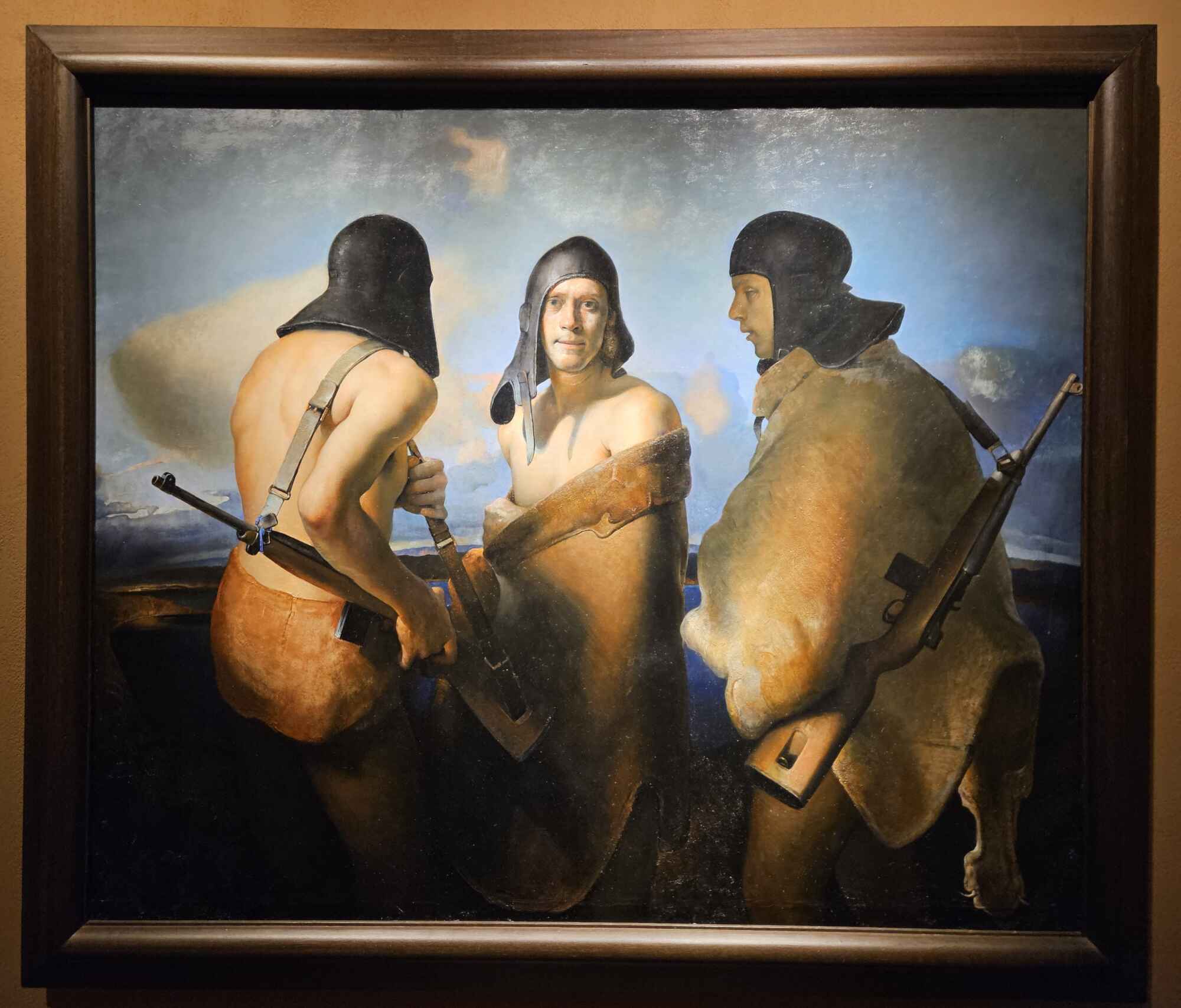 Odd Nerdrum: «The Water Protectors», 1985, 1993.
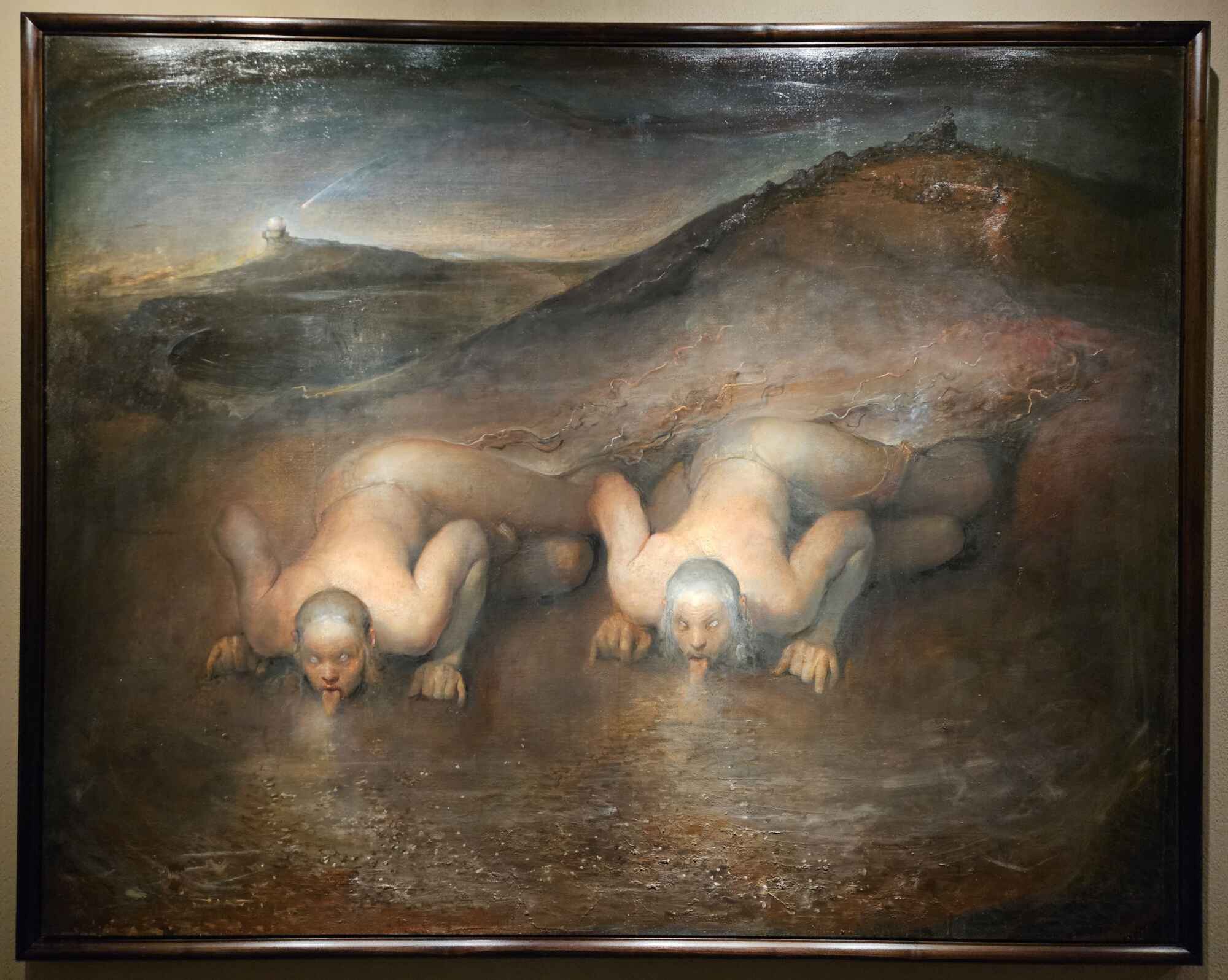 Odd Nerdrum: «Dustlickers», 2005.
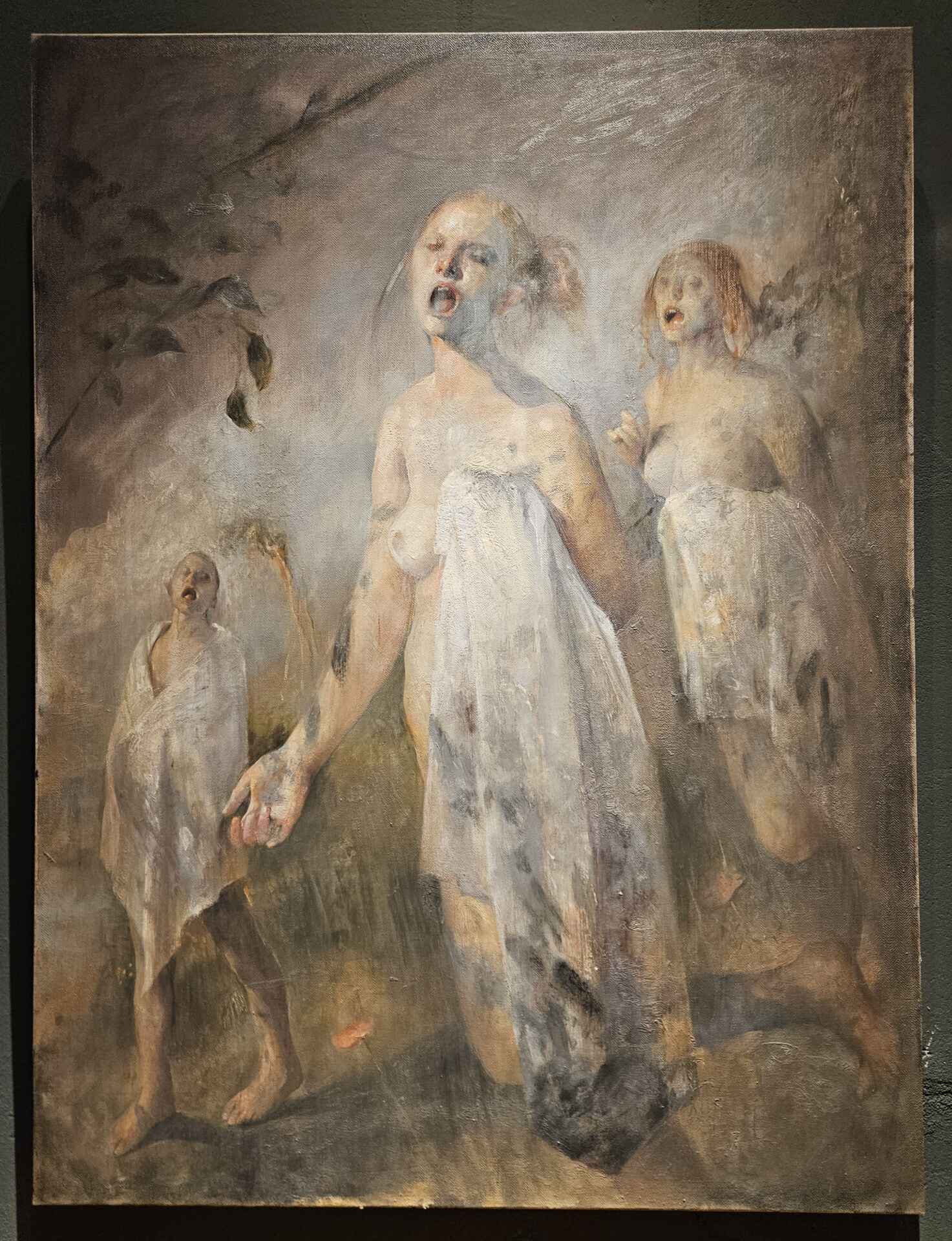 Odd Nerdrum: «Sanatorium Bath», 2023.
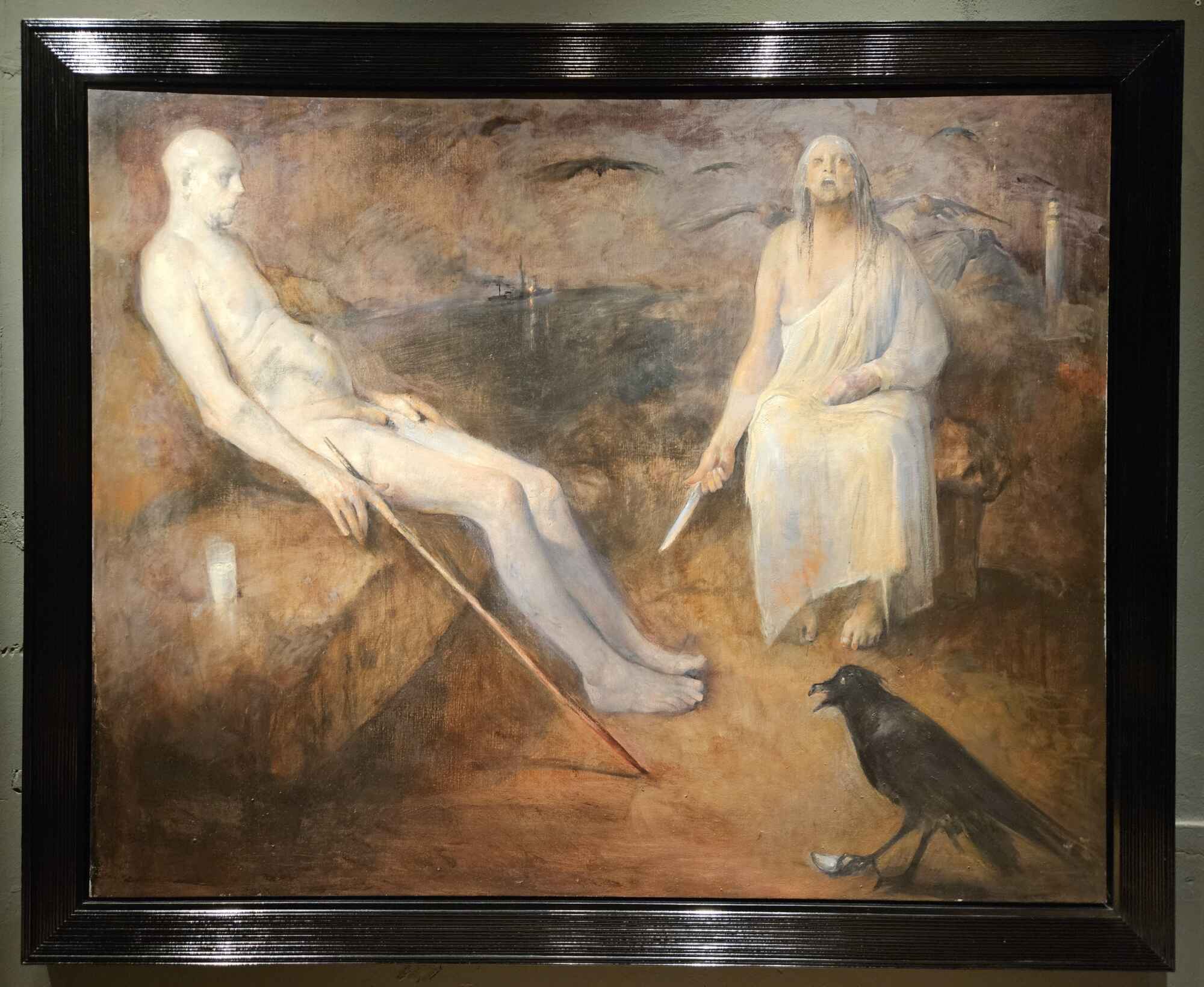 Odd Nerdrum: «Crows», 2025.
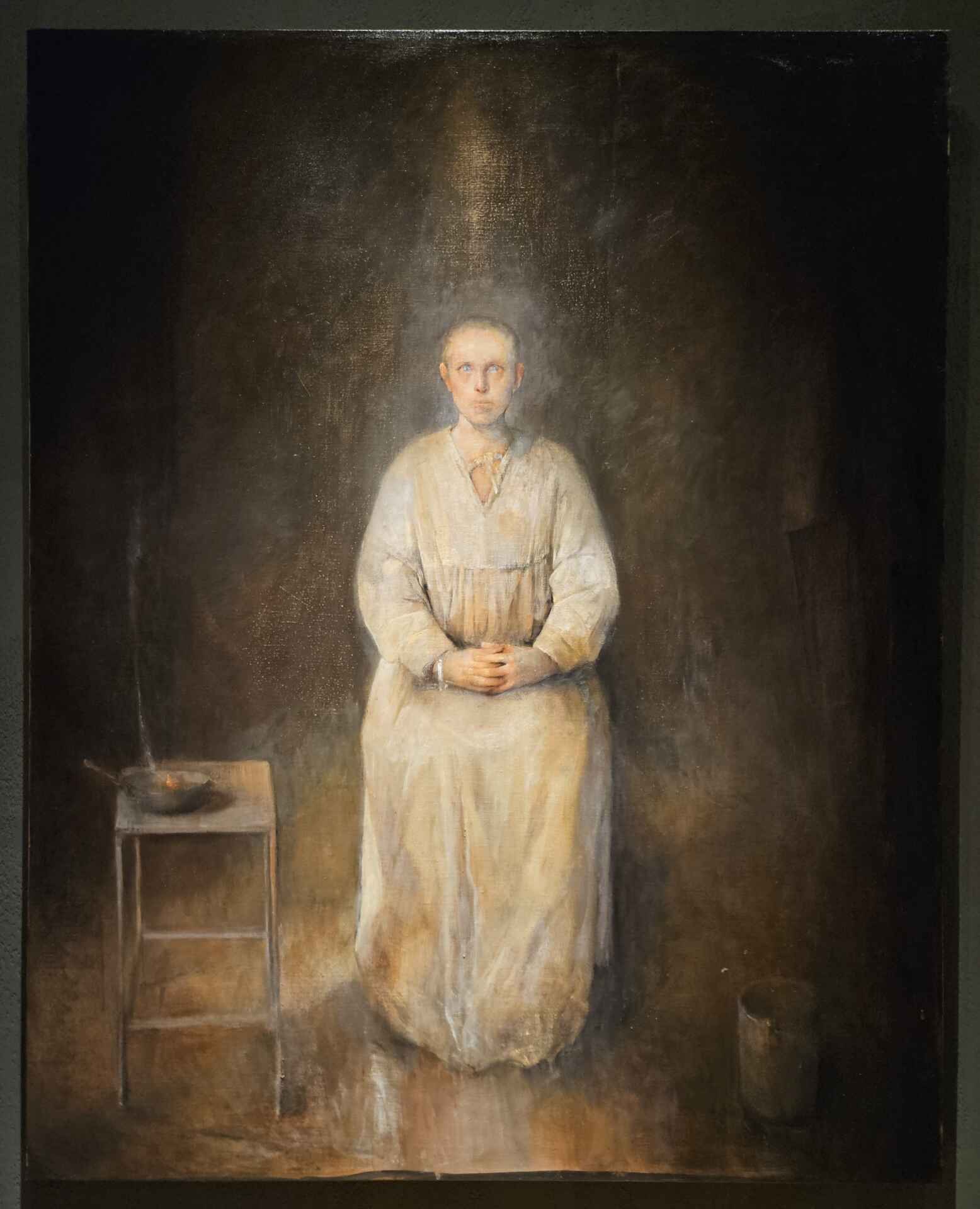 Odd Nerdrum: «Death Row», 2023.