

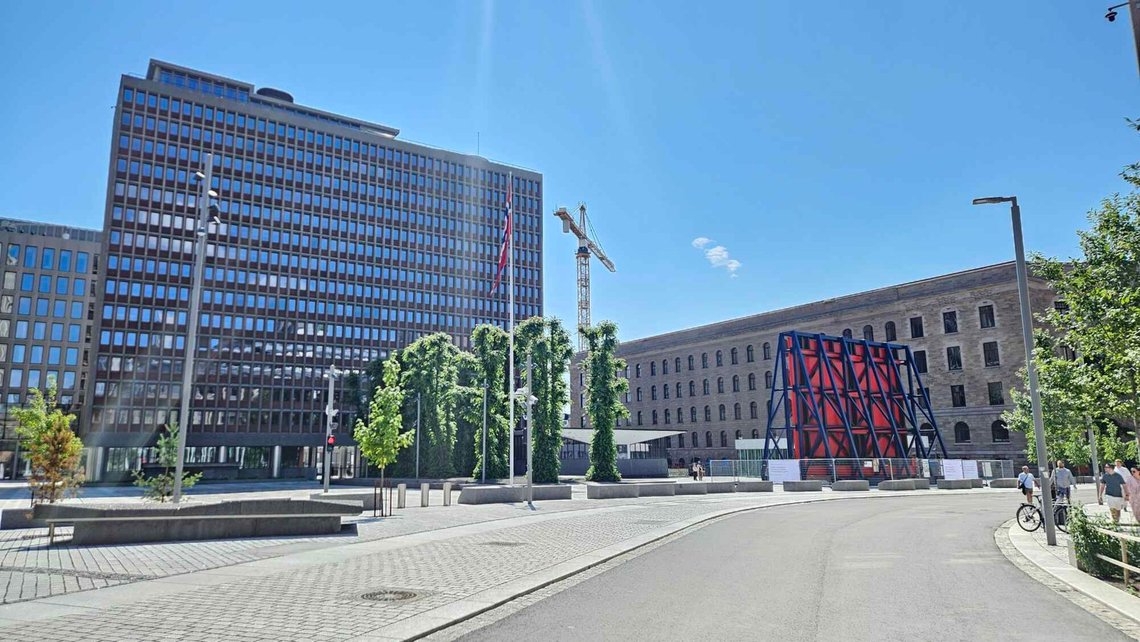
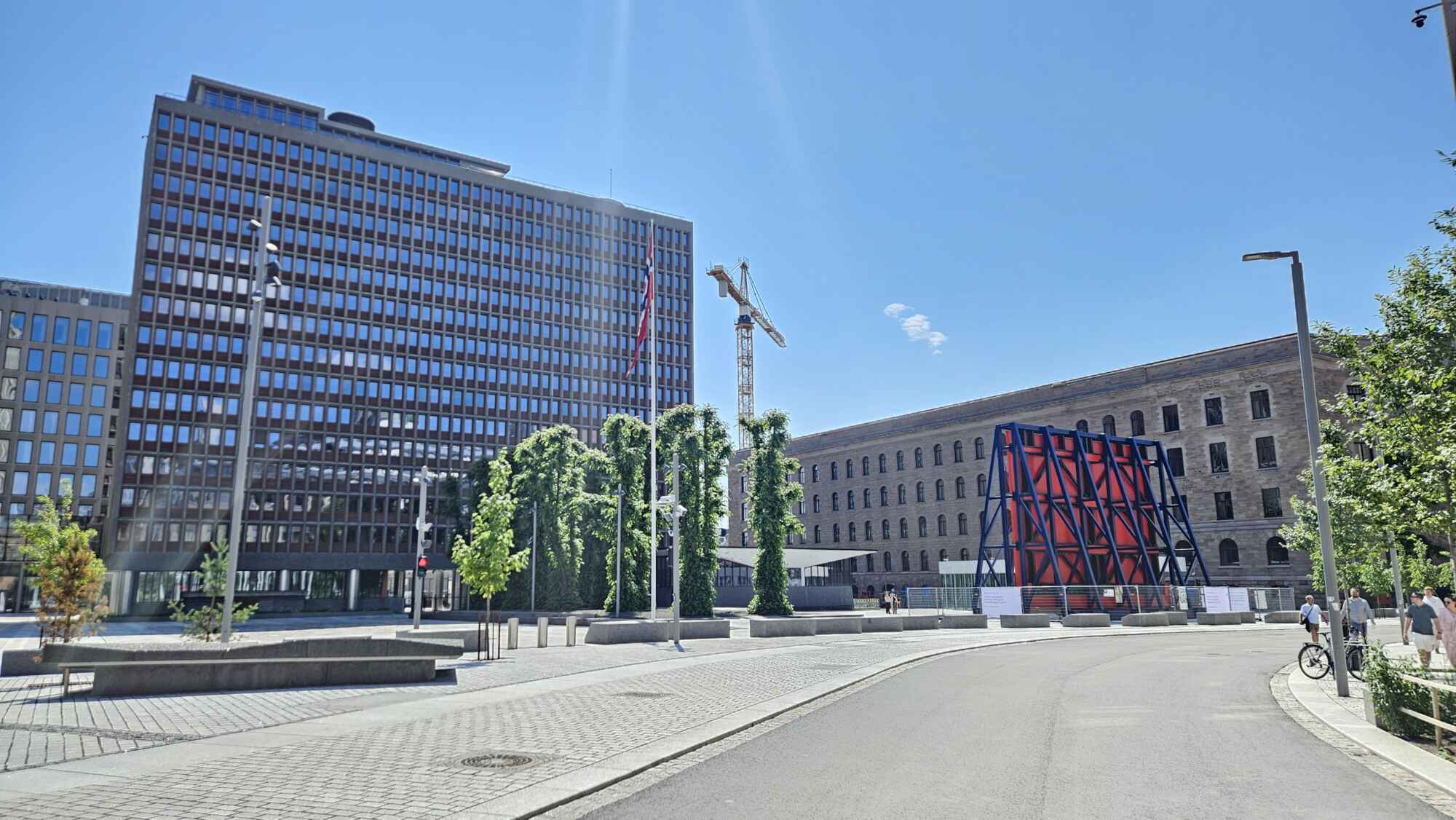
 The Government Quarter with Matias Faldbakken’s An Upholding (En opprettholdelse). Photo: Private.
The time is now approaching for the unveiling of the memorial monument for the Utøya tragedy. It will take place on 19 July in the Government Quarter. But Matias Faldbakken’s design of the monument has long been known. The artist has repeatedly altered its formal expression, although he has held fast to the main structure: a gigantic and alien-looking steel skeleton. It is a system of steel beams, a steel rig, copied from the one that was used when Picasso’s mural was lifted down from the end wall of the Y Block.
At the time, it was weight and load-bearing capacity that determined the steel rig’s practical value. The aesthetic qualities of Picasso’s artwork naturally did not transfer to the steel rig itself. It remained entirely untouched after the job was done, though not in the mind of Matias Faldbakken. There it was bubbling over with creativity and conceptual strategies for using this type of steel rig in a self-created work of art, in the form of a memorial monument to the Utøya terrorist attack.
No sooner conceived than done. But the steel rig possessed no inherent references to the tragedy on Utøya. Its dominant structure and steel character point in an entirely different direction, even though Faldbakken covered the front with a figurative motif—two birds and some reeds from Utøya—rendered in mosaic. It is precisely in this motif that we glimpse a trace of the artistic. Not because it is figurative, but because it expresses something natural and site-specific, whereas the entire massive steel rig merely underscores Faldbakken’s fixation with conceptual abstractions.
We should note how Faldbakken places greater emphasis on the rig structure than on the Utøya motif. Ordinarily, an artist would have emphasised the motif itself and its reference to Utøya. After all, that is why a memorial monument to the tragedy and the deaths of so many young people was desired. But Matias Faldbakken has other ambitions. His fixation with the steel rig also means that the Utøya motif itself is dominated by the rig’s vertical steel beams, which cut through the motif from top to bottom. Here, the hideous steel beams function as a brutal negation of the natural landscape of Utøya and the memory of the young people who were killed.
The theme of remembrance is thereby displaced by the steel rig’s dominant beams, which insist that the rig’s construction is more worthy of remembrance than the Utøya tragedy. In that respect, Faldbakken’s memorial monument is both a political and an aesthetic catastrophe. It does not help that the artist has painted the entire reverse side red. Perhaps this is intended as a reminder of the monument’s roots in political radicalism, in Labour Party thinking. But the colour effect is banal, both in its red hue and in its monumental commemorative function.
Matias Faldbakken has never created an authentic work of art; one need only look at what the National Museum has acquired. It is conceptual drivel entirely devoid of artistic quality and aesthetic value. Nor does his memorial monument, An Upholding (En opprettholdelse), testify to anything other than an oversized steelwork construction demonstrating the disproportion between physical load-bearing capacity and a tragedy worthy of remembrance. It is hardly a monument that honours the dead and the bereaved, merely a mediocre artist who radically misunderstood his commission.
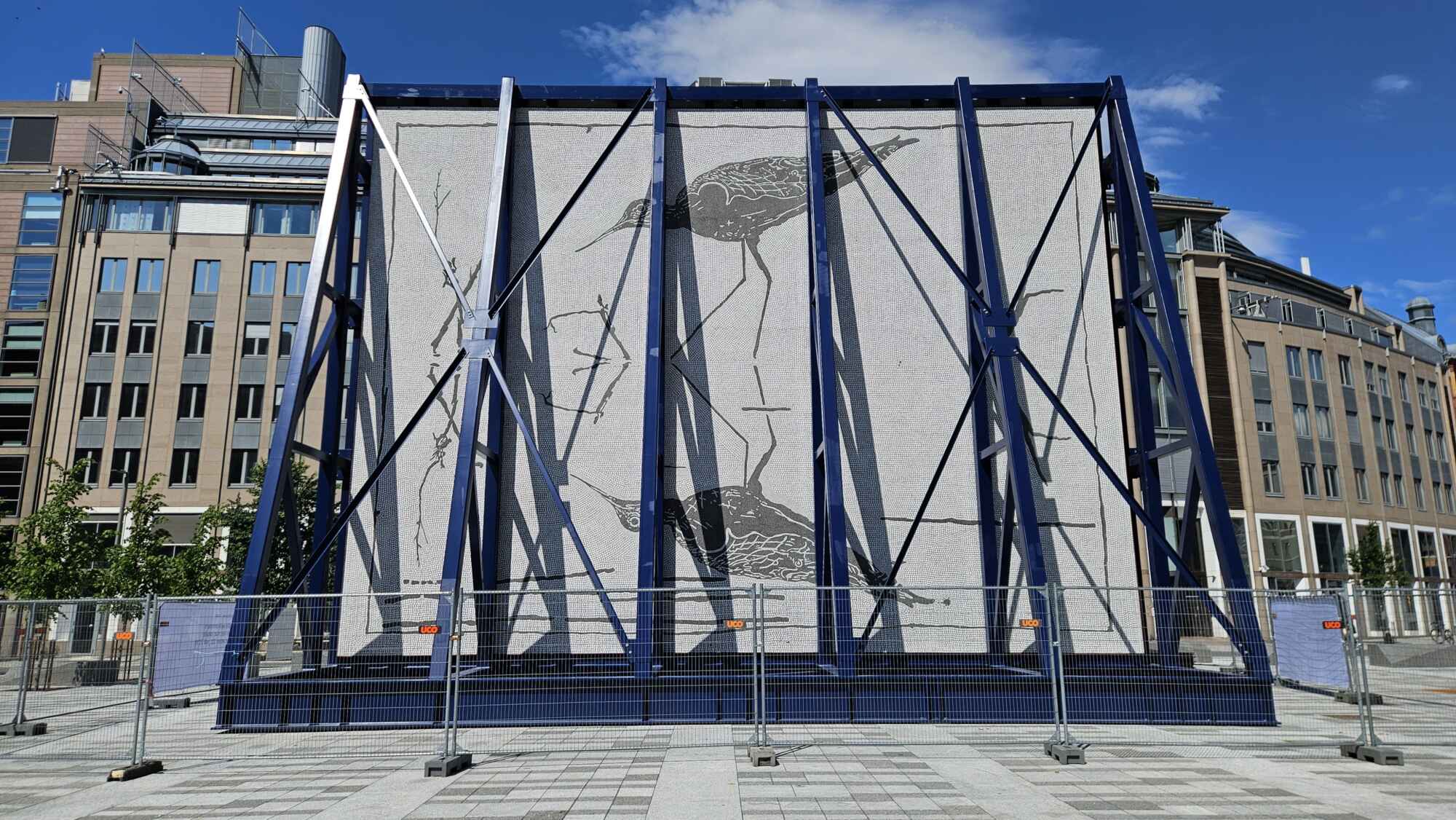 Matias Faldbakken: the front of An Upholding (En opprettholdelse). Photo: Private.
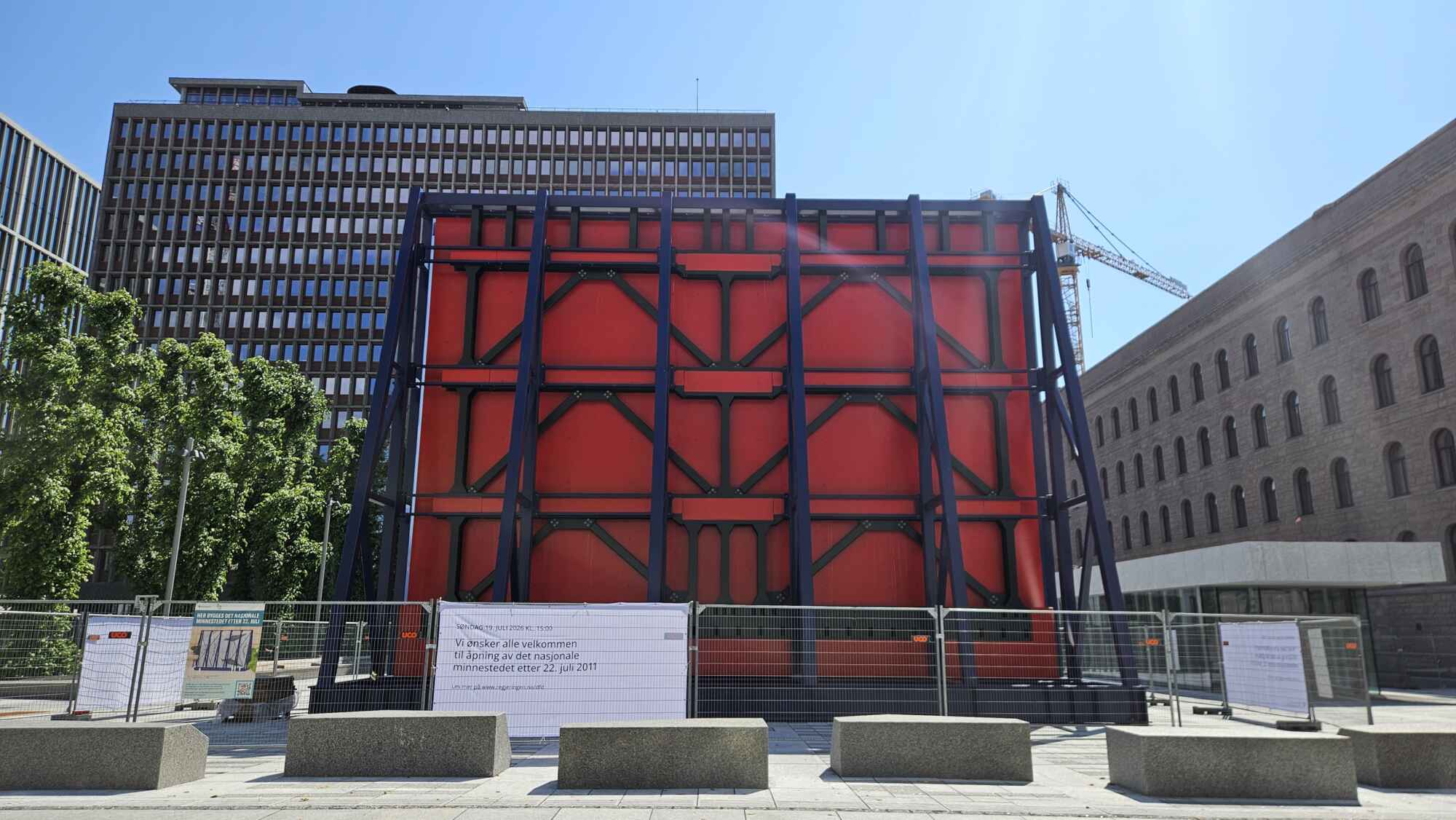 Matias Faldbakken: the reverse side of An Upholding (En opprettholdelse). Photo: Private.


