



When you watch and listen to Fox News and read Norway’s formerly conservative Aftenposten, you are presented with two diametrically opposed versions of reality. Both cannot be right. In Fox’s America, the United States has degraded Iran’s military capabilities to the point where it is making its last desperate attempts to strike back. In Aftenposten, it is the United States that is being defeated.
The summary Aftenposten presents is the same as that offered by Fox, except that in Aftenposten’s version it is Iran that is winning.
The United States’ ability to attack Iran while simultaneously defending itself and its allies in the Middle East is weakening day by day. Iran is systematically targeting what keeps America’s air war going:
- radars
- air defence systems
- command centres
- communications systems
When such targets are knocked out, it becomes more difficult both to detect incoming missiles and to protect one’s own bases.
There is an almost schizophrenic gulf between the world Aftenposten describes and the one familiar from coverage of the war in the United States. Not even the American media most hostile to Trump go so far as to claim that Iran is, piece by piece, destroying America’s ability to defend itself and its allies.
The attacks follow a clear pattern. Iran is seeking to blind the region’s early warning systems, split air defence networks and weaken the United States’ ability to continue its air campaign. America’s integrated early warning chain and missile defence around the Persian Gulf are beginning to crack.
These descriptions bear no resemblance whatsoever to what is being written in the American media. Aftenposten sounds like the Iranian media.
The same applies to NTB’s coverage, which quotes Iranian media as though they were credible and could be accepted at face value.
Trump, Rubio and Hegseth have explained that Iran says one thing behind closed doors and something entirely different in public. Rubio said on Thursday that the Iranians are using intermediaries to beg for a ceasefire. But what they are doing on the ground tells a very different story. They are attacking civil aviation. The Islamic Revolutionary Guard Corps has sent personnel to Yemen and wants the Houthis to close the Bab el-Mandeb Strait, which marks the entrance to the Red Sea. Iran wants to maximise the crisis.
The Trump administration gave Iran an opportunity in the form of the ceasefire. Iran used it to wear down the United States while rebuilding its own capabilities.
The Wall Street Journal writes that Iran has committed substantial resources to digging its way back into facilities inside the mountains. That is where it keeps its centrifuges and missiles. Both the United States and Israel have been surprised by how quickly this has been accomplished. That says something about Iran’s priorities, but also about the regime’s capabilities.
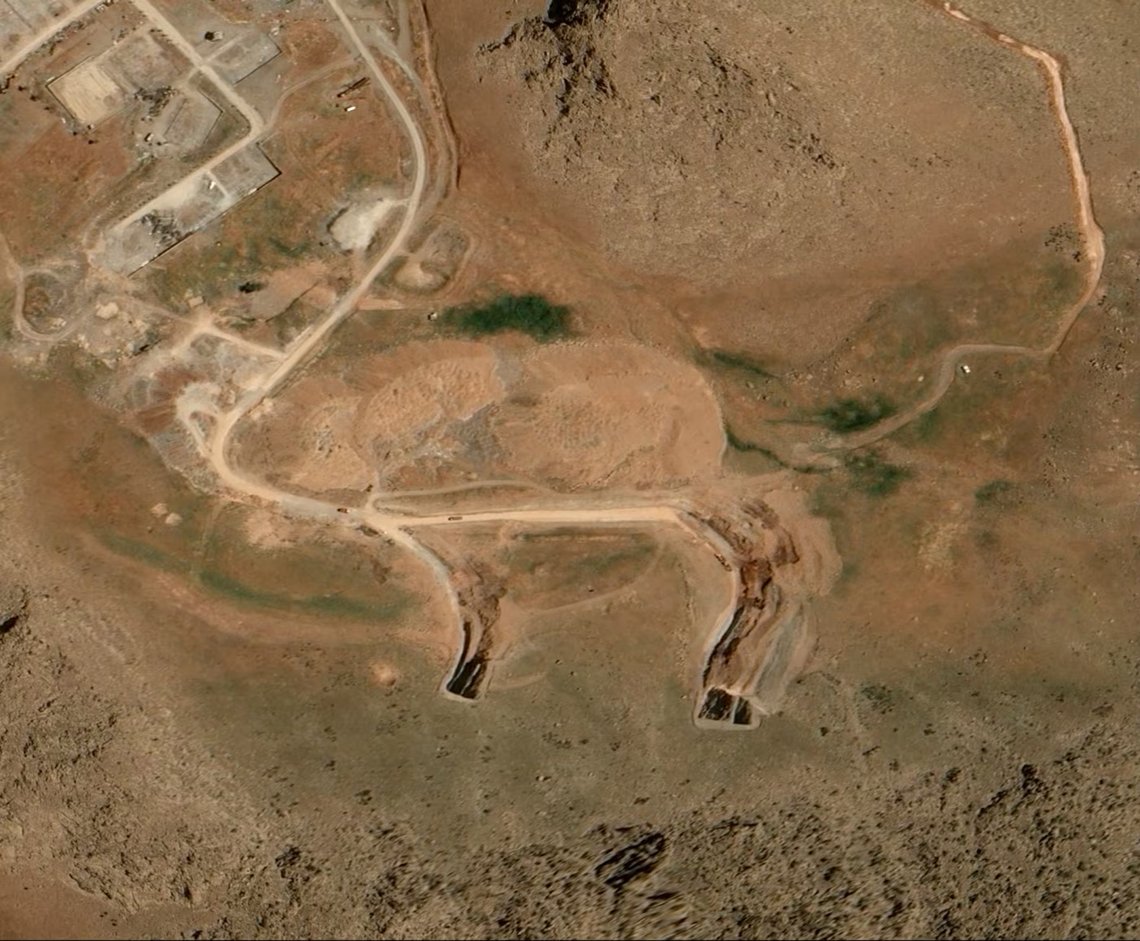
Near Kangavar, in western Iran, satellite images from Planet Labs in March showed two tunnel entrances and an access road damaged by air strikes intended to block access to an Iranian missile base. Within a matter of weeks, images from Airbus revealed a neatly paved road leading to newly excavated entrances.
In another case, an Israeli military spokesman said that Iran had repaired a bridge struck by three Israeli bombs within just a few days, surprising the Israeli authorities and prompting them to question the effectiveness of their target selection.
Satellite images from Planet Labs from early July also showed partial reconstruction work at a shipyard in the port of Bandar Anzali on the Caspian Sea linked to the Islamic Revolutionary Guard Corps, the paramilitary force tasked with defending the regime. Israel said it attacked dozens of targets there in March, including warships, the port, a command centre and a shipyard used for repairing and maintaining vessels, with the aim of disrupting a supply route between Russia and Iran, describing it as one of its most important strikes of the war.
The Wall Street Journal quotes Israeli officials who have an interest in exaggerating the threat posed by Iran. They want a new bombing campaign.
Iran has threatened to attack Tel Aviv. If it does, Israel will respond.
Iran holds the weaker hand. It has no possibility of matching Israel and the United States.
But Aftenposten, NRK and NTB want us to believe that it is the United States that is losing.
Which side are they actually on?


