
 Hans Rustad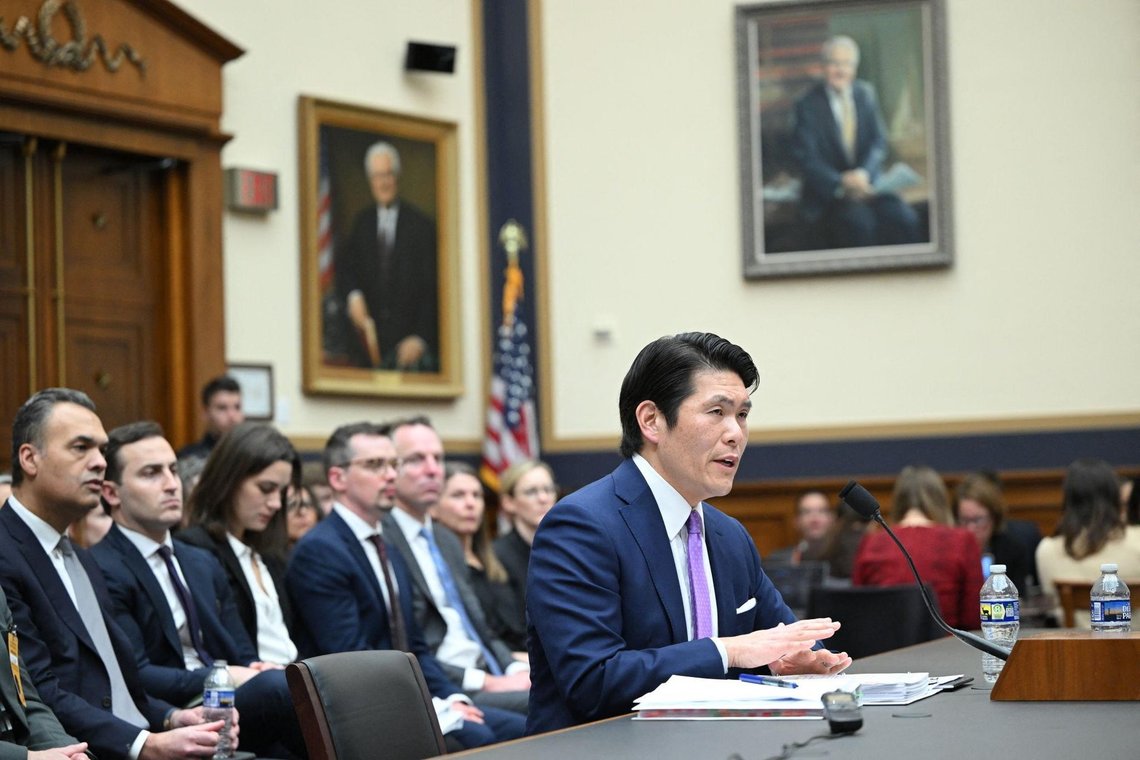
Joe Biden’s 2018 audio recordings with his ghostwriter have finally been released, documenting why Special Counsel Robert Hur concluded that Biden could not be held criminally liable for his handling of classified documents: he was a confused old man who did not understand what he was doing. Yet at the time, he was the 46th President of the United States.
The interviews with ghostwriter Mark Zwonitzer took place in 2016 and 2017. Hur’s investigation was conducted in 2023, after it emerged that Biden had allowed classified documents to be left lying around in his garage in Wilmington.
The starting point was the FBI raid on Mar-a-Lago, during which agents carried document folders marked “Top Secret”. But the problem for the Biden administration was that Trump had been President and, as such, had the authority to declassify whatever he wished. Biden, as a senator and vice president, had no such authority.
Hur investigated Biden’s handling of classified documents from his time as vice president in the Obama administration and as senator for Delaware. He declined to bring criminal charges because he concluded that prosecutors could not prove beyond a reasonable doubt that Biden had wilfully retained or disclosed the material.
Hur’s conclusion was utterly devastating for Biden.
In his report, Hur wrote that Biden’s conversations were “painfully slow” and that Biden “struggled to remember events and at times had difficulty reading and reciting his own notes.”
“Biden’s memory was significantly limited, both during his recorded interviews with the ghostwriter in 2017 and in his interview with our office in 2023,” Hur wrote.
He also stated, in a startling justification for declining prosecution, that Biden would likely appear to a jury as a “sympathetic, well-meaning, elderly man with a poor memory” rather than someone who had knowingly violated the laws governing classified documents.
The interview recordings contain instances in which Biden pauses for long periods, forgets names, and cannot remember specific dates.
While discussing a Situation Room meeting in 2014, Biden warned Zwonitzer: “Some of this may be classified, so be careful,” adding, “I’m not sure. It’s not marked classified, but…”
On one occasion, 24 April 2017, Biden struggled to remember the names of two economic advisers.
“I’m trying to think of his name,” Biden said, before adding: “I ought to write down the names, because I keep forgetting them.” A long pause follows before Zwonitzer mentions the name Alan Krueger.
On the same day, Biden was unable to remember where he had been on a particular date, but later recalled that he had attended a memorial service for a fallen soldier – and forgot his name.
This is what Hur wrote about the sitting President of the United States, and at the time it passed without consequence. The mainstream media did not sound the alarm; on the contrary, they protected Biden. When he fell, stumbled, and wandered away from the rest of the G7 leaders during a group photograph, they claimed it was malicious press coverage and deepfakes.
Everything changed during the debate against Trump on 28 June 2024. It was what is often called a watershed moment. The whole world saw that Biden was a mumbling fool. The moment when Biden spoke about Medicare, together with Trump’s facial expression and comment, “I’m not sure he even knows what he said,” became immortal.
Not long afterwards, Biden announced that he was withdrawing from the presidential campaign. That opened the door for Kamala, who proved to be wholly unprepared.
But it also raised the question of how the United States could have had a senile president for three and a half years without anyone noticing. Who was making the decisions?
That was when the story of the autopen emerged. Biden did not personally sign the executive orders. He was asleep. The machine did.
Doubts have therefore been raised as to whether those executive orders are legally valid.
Interestingly, it is the Oversight Project that persisted and ultimately succeeded in obtaining the audio recordings. It is led by Jeff Clark, one of Bill Barr’s Assistant Attorneys General, who, after the 2020 election, took part in examining the possibility of delaying certification of the election result. He was therefore among those prosecuted by the Biden administration.
“Joe Biden didn’t want these tapes released. But now they have been – after two years of painful delay. There is no joy in Bidenville today. Robert Hur’s and Merrick Garland’s decision to let Biden off the hook for retaining and disclosing classified information must now be reviewed again from beginning to end,” Jeff Clark, Vice President of Litigation at the Oversight Project, told Fox News Digital exclusively.
https://www.foxnews.com/politics/bidens-classified-docs-narrative-crumbles-amid-release-ghostwriter-tapes


