

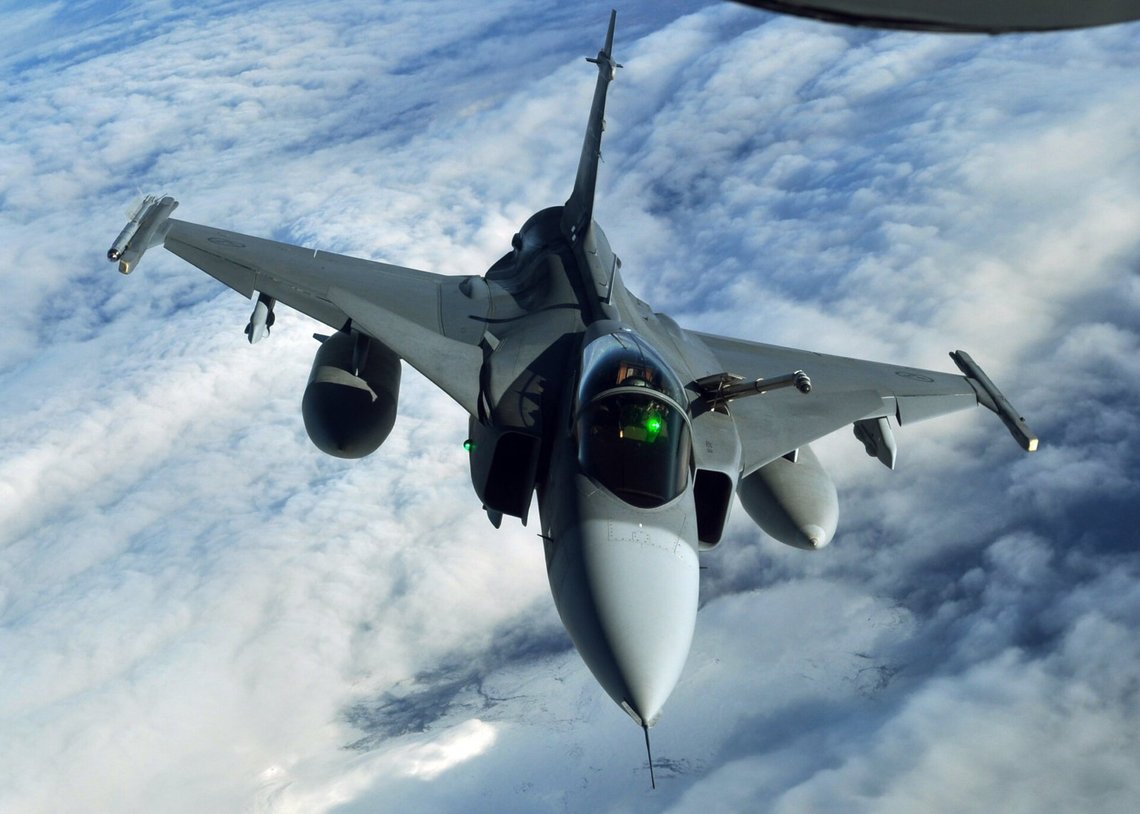


Three Russian cruise missiles crashed in Poland on Friday. Swedish fighter pilots had locked onto one of the missiles but decided not to shoot it down.
The Chief of the Swedish Air Force, Major General Jonas Wikman, told SVT about the operation.
– We had the target under observation, and our pilots were ready. It’s not the same as firing a weapon; we have very strict requirements to ensure the weapon is correctly identified, and these conditions were not met on this occasion, but we were in position and in control,” Wikman told SVT.
The incident occurred on Friday, when three Kh-101 cruise missiles entered the airspace of the NATO member state Poland and crashed on Polish territory. No one was injured.
– Conditions were extremely difficult; it was dark and the weather was very bad. It was a close call; it was a tense situation.
Two Swedish JAS 39 Gripen fighter jets were scrambled as part of a NATO airspace surveillance mission, but the weather conditions were not ideal. Polish F-16 fighter jets, as well as a Dutch aerial refuelling aircraft, also helped to secure the allied airspace, writes the Swedish Armed Forces.
The aircraft were flying under NATO command, but according to Wikman, the decision to shoot them down rested with Sweden. Incidents of this kind over the territory of allied nations are subject to strict security protocols to prevent damage and misidentification on the ground.
However, the Polish government is disappointed by the lack of a US statement on the incident. “There does not appear to be any reaction as we had expected,” Defence Minister Wladyslaw Kosiniak-Kamysz told the radio station Rmf.fm.
According to SVT, the Swedish Air Force was also operating in Finnish airspace that same weekend. Following a Ukrainian attack on the Russian cargo ship ‘Sparta II’ in the Gulf of Finland, the burning vessel drifted into Finnish waters. Swedish fighter jets then secured the airspace under Finnish command, the broadcaster reports. Both missions were flown from bases in Sweden.
“I am very pleased that we have been able to organise our operations in both Poland and Finland and operate from our home base; this enables us to act in two directions simultaneously,” says Wikman.
NATO is stepping up airspace surveillance on its eastern flank. The Supreme Allied Commander Europe, General Alexus Grynkewich, has approved the deployment of an AWACS early warning aircraft to Lithuania.
Grynkewich is also considering deploying further military capabilities on the eastern flank. The Alliance has not yet specified which systems or forces are under consideration.


