

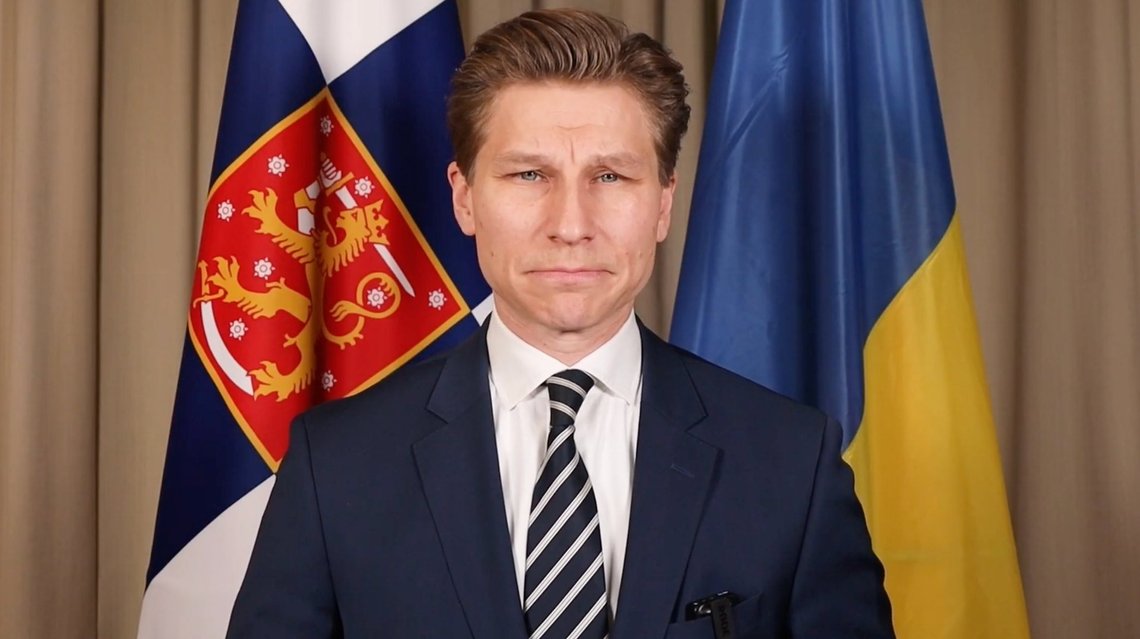
The shift in NATO policy and the war in Ukraine lead Finland to lift the ban on nuclear weapons on Finnish soil.
The Finnish Parliament voted earlier in June to lift the total ban on nuclear weapons in the country. This is intended to bring Finland into line with NATO’s deterrence policy. The decision was passed with 125 votes against 61.
The decision paves the way for Helsinki to receive, transport and facilitate the transport of nuclear weapons on its territory as part of allied defence operations, writes Politico.
By lifting the country’s 40-year-old ban on nuclear weapons, Helsinki marks a significant change in security policy, in line with Finland strengthening its integration with NATO.
Defence Minister Antti Häkkänen praised the measure as “decisive” for Finland’s security, but stressed that the country has no plans to station nuclear weapons permanently on its territory.
On X, Häkkänen wrote:
“Parliament passed the amendment to the Nuclear Energy Act with a solid two-thirds majority. This historic reform strengthens the security of both Finland and NATO as a whole.”
He further wrote that the matter had required several years of discussions with allies and nuclear powers on how Finland could best strengthen its security within the alliance, and thanked parliament for the decision.
Eduskunta hyväksyi vahvalla 2/3 enemmistöllä ydinenergialain muutoksen. Tämä historiallinen uudistus vahvistaa Suomen ja koko Naton turvallisuutta.
Ydinasepolitiikan kokonaisuus on ollut tämän vaalikauden haastavimpia kokonaisuuksia puolustusministeriössä. Vuosien perehtyminen,…
— Antti Häkkänen (@anttihakkanen) June 17, 2026
Finland had been a neutral country since the 1950s. The country is vulnerably located, with a border with Russia both at sea and on land. Russia’s invasion of Ukraine in February led both Finland and neighbouring Sweden to reassess their relationship with NATO.
Finland was admitted as a member of the alliance on 4 April 2023. Due to a conflict with Turkey, the Swedes had to wait a little longer, but Sweden finally became a member of NATO on 7 March 2024.
After the outbreak of the war in Ukraine, Finland’s concern for its security has increased. In May Finnish authorities deployed fighter jets after a suspicious drone entered the country’s airspace near Helsinki.
President Alexander Stubb later stated that Finland was not facing “any direct military threat”, while military officials revealed that they had received intelligence information in advance warning of the incident.
The vote on nuclear weapons comes at the same time as Helsinki is also considering participating more actively in French President Emmanuel Macron’s plans for a broader European nuclear deterrence system.
Prime Minister Petteri Orpo signalled interest in the initiative during his meeting with President Macron at the Élysée Palace in Paris on 3 June, but told Yle at the time that Finland had not yet taken a final decision.
Norway joined the French initiative at the end of May, when Prime Minister Jonas Gahr Støre (Ap) signed a defence agreement with France. This included Norway also linking up to the French idea of strengthening nuclear defence of Europe.
Norway has not signed or ratified the UN Treaty on the Prohibition of Nuclear Weapons. But since the NATO summit in Paris in 1957, Norwegian security strategy has been that nuclear weapons shall not be stored or stationed on Norwegian soil in peacetime.


