

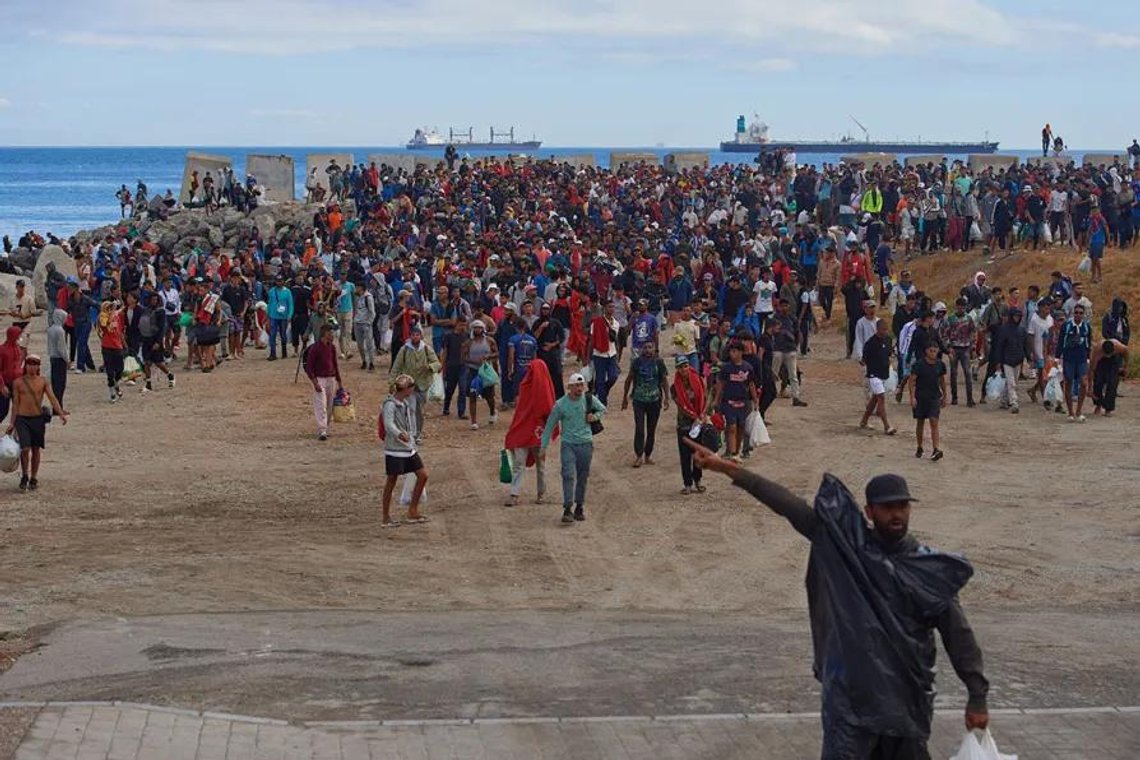


Following the influx of 80,000 migrants from Morocco into the Spanish enclave of Ceuta at the end of July, crime has skyrocketed. Recent figures from the emergency services show a 650 per cent rise in sexual assaults, with over half of the cases involving minors.
Documents from the 112 emergency services, to which the Spanish newspaper El Español has gained access to, reveal a dramatic deterioration in the security situation in the Spanish coastal town in North Africa.
The figures compare the three-month period from 30 July to 29 October this year with the same period last year.
The number of reported sexual assaults rose from four to 30 – an increase of 650 per cent. Sixteen of this year’s cases involved minors. During the same period in 2025, not a single such case involving children was reported.
Residential burglaries have almost thirty-folded
Serious violence, robbery and the use of weapons have also skyrocketed since the wave of migrants hit the enclave. In total, the number of cases recorded by the emergency services rose from 2,233 last year to 11,286 this year – more than a fivefold increase.
Figures from the 112 emergency call centre show the following trends from 2025 to 2026:
- Burglaries: Increased from 35 to 1,018 cases.
- Attacks with knives and other stabbing weapons: Increased from 23 to 268 cases.
- Attacks with firearms: Increased from 8 to 56 cases.
- Robberies involving violence or threats on the street: Increased from 11 to 115 cases.
- Disturbances of the peace: Increased from 85 to 618 cases.
- Abandoned minors: Increased from 15 to 265 cases.
- General violent incidents (‘assaults’): Increased from 209 to 1,777 cases.
– “The figures from the 112 emergency services are extremely worrying,” says a source in the regional government of Ceuta, who describes the development as a “serious deterioration” for the city.
– “We are not just talking about illegal immigration.” This is a crisis situation that directly affects the safety and welfare of our residents, as well as the city’s normal functioning,” says the spokesperson.
Faeces on the beaches and clashes
The crisis began when around 80,000 people entered Ceuta from Morocco over a few days at the end of July. Although the majority left the city shortly afterwards, many have remained – several of them minors who have been living in makeshift tent camps and in poor conditions.
At the end of October, the city was also hit by a sanitation crisis. A severe storm caused drains and sewage pipes – which migrants had been using as makeshift toilets – to overflow. The beaches and the sea were filled with rubbish and human faeces, leaving a strong stench in the city.
Tensions between migrants, the police and the local population have risen sharply in recent months, with repeated violent clashes. This summer, local residents stormed a makeshift migrant camp and set it alight.
In October, over 350 police officers and soldiers were deployed to clear a large camp on the El Guano esplanade just before a visit by the Spanish royal couple, King Felipe and Queen Letizia. According to the Spanish Ministry of the Interior, this was the fifth police operation in a matter of weeks to clear public areas in the city. Several migrants fled into the hills to avoid being put on buses to reception centres.
A fierce showdown with the Prime Minister ahead of the election
The situation in Ceuta has become a highly contentious political issue throughout Spain ahead of the decisive election on 29 November. Prime Minister Pedro Sánchez is on the verge of losing power, under intense pressure from the migrant crisis, house prices and corruption scandals.
On Tuesday, Ceuta’s conservative president, Juan Jesús Vivas, launched a scathing attack on the Prime Minister. He describes this summer’s events as an ‘invasion’ and demands an explanation as to why the government in Madrid failed the enclave.
– He took the decision not to intervene and not to use the deterrent measures at the state’s disposal. It was Morocco that decided how many people were allowed in, and when the influx was halted, says Vivas.
– The safety of Ceuta’s residents must take precedence over all other considerations. It is an absolute duty of the state to guarantee this, he adds.


