

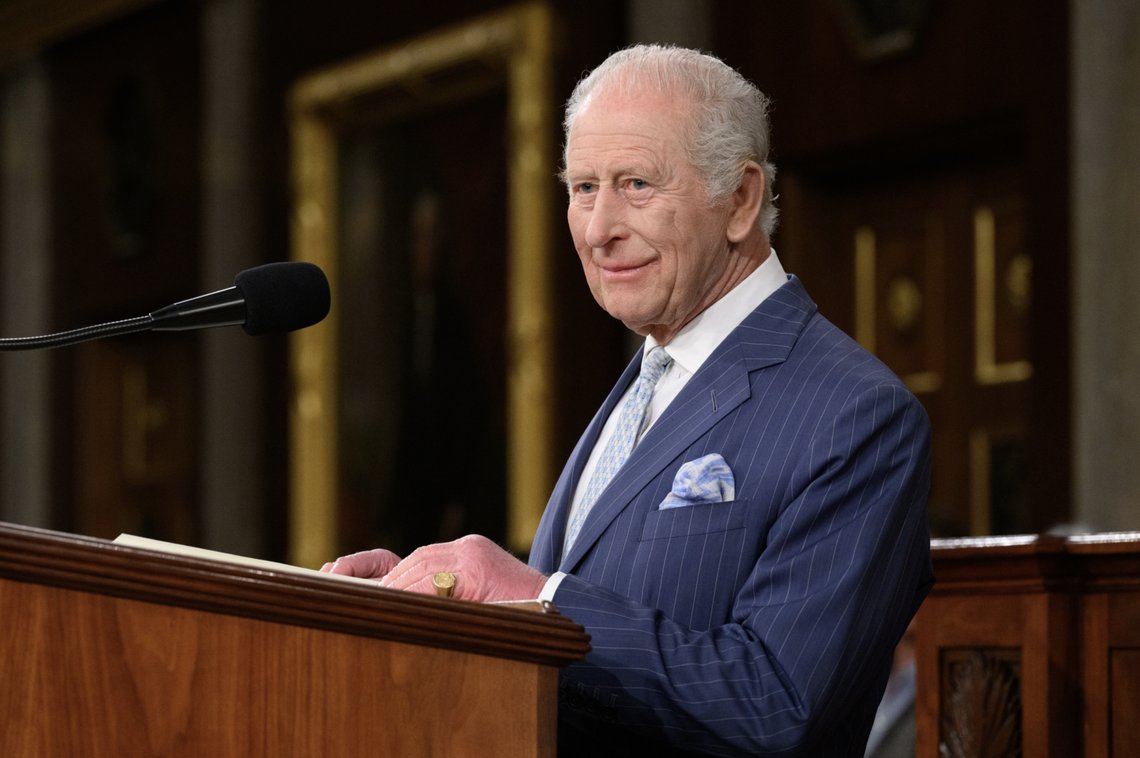


King Charles III is once again causing a stir. The British monarch has declared that the Church of England should protect not only Christianity, but all faiths. This has not gone down well with Christian Britons, who point out that the King has sworn to defend precisely their faith. And this is far from the first time Charles has caused controversy with his views on religion.
It was during the opening of the Church of England’s General Synod in London on Tuesday that the King made the statement.
During the opening of the Church of England’s General Synod in London on Tuesday 17 November, the King emphasised that the Church has an important role to play in a society characterised by religious and cultural differences.
– “The Church protects not just the Christian Faith of all of us gathered in this room, but the very space for Faith itself – of every belief – within our whole society and national discourse”, Charles explained to the ecclesiastical assembly.
He also argued that Christianity can contribute to a society in which other religions are allowed to flourish.
But what about the coronation oath?
When Charles was crowned at Westminster Abbey on 6 May 2023, he made a solemn pledge before God and the British people. With his hand on the Bible, he swore to uphold the Protestant faith and safeguard the doctrines and traditions of the Church of England. The King also bears the title Defender of the Faith – and is the supreme secular head of the Church of England. These are not merely fine words from an ancient ceremony. The coronation oath is enshrined in British law and has its roots in the 17th century. Charles therefore has a very special responsibility towards the Christian church. He has not taken any equivalent oath to protect Islam, Hinduism or other religions.
Would rather defend ‘faith’ than ‘the Faith’
Even as a prince, Charles made it clear that he wanted a different approach to religion than his predecessors. In 1994, he said that he would rather be Defender of Faith than Defender of the Faith. The difference is subtle in English, but significant in substance: he wished to be a defender of faith in general, not just of Christianity.
The statement sparked debate. In 2015, Charles clarified that he believed it was possible both to defend the Christian faith and to protect the right of other religions to be practised. In the period that followed, Charles continued to promote the idea of a monarchy that represents multiple religions, not just Christianity.
The Palace amended the text
In June this year, there was yet another sign of the direction things are taking. Buckingham Palace amended the official description of the King’s religious role in the Royal Family’s annual report. Previously, Charles was referred to as the head of the Church and the ‘defender of the faith’. Now, instead, it stated that he should ‘safeguard the space for faith in a multi-faith nation’.
The change prompted a reaction from the Christian organisation The Christian Institute.
– “Christianity, not some multi-faith mish-mash, is the bedrock of our nation’s laws and culture”, stated the organisation’s director, Ciarán Kelly.
He believed that the Palace’s new wording gave the impression that Christianity was merely one religion amongst many.
– They are not. The Bible states that no one comes to the Father except through the Son.”
A keen eye on Islam
It is Charles’s relationship with Islam in particular that has attracted attention over the years. As early as 1993, he delivered a comprehensive speech on Islam and the West at the Oxford Centre for Islamic Studies. In it, he praised Islam’s contribution to European culture and science and highlighted what he described as Islam’s tolerance throughout history. He also believed that the West had much to learn from Islam’s view of humanity, nature and God. Sharia law was also spoken of in positive terms. Charles believed that Westerners often misunderstood Islamic law.
More than 30 years later, his interest has not waned. In July 2025, the King once again visited the Oxford Centre for Islamic Studies to mark the institution’s 40th anniversary. There, he was presented with a new wing named after him.
During the coronavirus pandemic in 2020, Charles also sent a special video message to Muslims to mark Ramadan. He praised Muslim healthcare workers and highlighted the festival’s message of charity and generosity.
Ramadan yes – Easter greeting no
This year, too, the King’s priorities have sparked reactions. In February, the Royal Family sent a warm Ramadan greeting to Muslims in the UK and the rest of the world. But when Easter came, there was no personal Easter greeting from the King, as there had been the previous year.
GB News reported on criticism from British Christians who questioned why the King marked Muslim holidays but did not send a similar personal greeting on Christianity’s most important festival. The Palace countered that personal Easter greetings are not a fixed tradition. Instead, the Royal Family published a general Easter message, and Charles attended the Easter service in Windsor.
For critics, the episode became part of what is beginning to look like a pattern. Even in his 2025 Easter message, Charles had highlighted Islam and Judaism when speaking of love as a value shared by the religions.
Can the King break his own oath?
The King’s latest statement has prompted a fresh reaction from Christian voices. Bishop Ceirion H. Dewar of the Confessing Anglican Church, a denomination outside the Anglican Communion, believes that Charles is conflating the Church’s mission with the state’s responsibilities.
– The Church of Jesus Christ was not established to protect every belief. It was established to proclaim the Gospel, defend the truth, call sinners to repentance, and bear witness to the exclusive Lordship of Jesus Christ, said Dewar. – It is the Body of Christ!”
This is a fundamental tenet of Christianity. The Church is not merely a building or a public institution. It is the community of those who believe in Jesus Christ. And the Bible speaks of one true God and one way to salvation. Not a menu of alternatives. ‘You shall have no other gods before me’, reads the first commandment. Freedom of religion means that people can believe whatever they wish. It does not mean that the Church should teach that all religions are equally true. This seems obvious to many who now believe that Charles is going too far. He insists on a royal family that embraces all faiths, and now he believes that the same should apply to the Church of England.
On social media, some critics have gone so far as to demand that Charles should abdicate if he is unwilling to fulfil his pledge to defend the Christian church. Others are asking whether the King is attempting to secure the future of the Royal Family in a Britain where Islam is gaining an ever-greater foothold. This concern is justified in a country heading into an ever-deepening identity crisis: if not even the Christian Church is to defend Christianity first and foremost, who then is to do so?


