

Jo Heinum (57) is a communications adviser for the Labour Party in the Storting. For over two years, he allowed at least 795,000 kroner from the sale of sex to pass through his private bank accounts, and according to the court, he helped to make the purchase of sex more difficult to detect and more profitable.
Jo Heinum (57) is a communications adviser for the Labour Party in the Storting. For over two years, he received at least 795,000 kroner from sex buyers into his private bank accounts. He has now been sentenced to prison.
On Thursday 8 October, Oslo District Court sentenced Heinum to 30 days’ immediate imprisonment and 15 days’ suspended imprisonment for facilitating a woman’s prostitution. He made a full confession, and the case was settled as a guilty plea under Section 315 of the Penal Code, the so-called ‘pimping clause’.
Dagens Næringsliv reported on the verdict on Monday evening, but anonymised the adviser. Neither VG nor TV 2 have named him either. Document identifies Heinum because he holds a political position within the governing party’s parliamentary group. On Tuesday, he was still listed on the Labour Party’s website as a communications adviser responsible for transport.

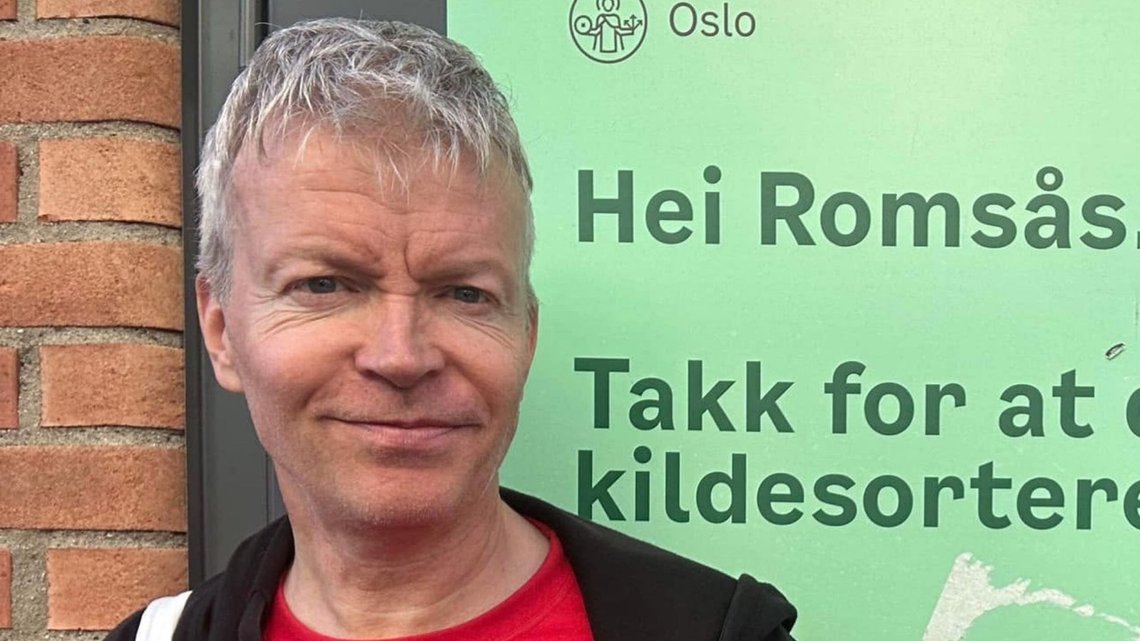
Labour Party adviser Jo Heinum (57) has been sentenced to prison for pimping. Photo: Labour Party
According to the judgement, Heinum made two bank accounts available to the woman from 1 January 2024 to 5 March 2026. The sex clients paid via instant transfers directly into his accounts.
He also accepted cash and deposited it. He then forwarded the money to the woman and to her son’s father. According to the charge, funds were also transferred to third parties’ accounts via the Revolut payment service.
The Chief Constable of Oslo charged him on 13 August this year.
The court compares Heinum’s role to that of receptionists at a massage parlour where sexual services were offered. In a 1999 judgement, such receptionists were convicted of facilitating prostitution, because their work facilitated the business. The court considers that Heinum similarly facilitated the woman’s prostitution.
‘By accepting and handling the payments, the defendant made it easier for clients to pay for sex and, at the same time, more difficult to uncover the purchases of sex,’ the court writes.
The court does not find that Heinum intended to conceal the purchases, but establishes that this was the effect: “The defendant’s actions have thus contributed to concealing the customers’ purchases of sex.”
The purchase of sex has been a criminal offence in Norway since 2009. The ban was introduced under the Stoltenberg II government, led by the Labour Party.
Heinum himself explained in court that the woman profited from the arrangement, partly because she avoided unfavourable exchange rates. According to the court, this made prostitution both easier and more profitable.
The District Court found that Heinum did not make any money himself, and that his actions did not constitute exploitation or abuse of the woman. The case therefore falls into the lower end of the scale. However, the long duration and the relatively high sum involved are considered aggravating factors.
The court based its sentencing on a term of around 65 days’ imprisonment. Because Heinum cooperated with the police from the outset and confessed, he received a sentence reduction of around 30 per cent. The deadline for appeal is 23 October.
Speaking to DN, Heinum defends his actions.
– “I stand by this with my head held high and a clear conscience,” he writes in a statement to the newspaper.
He emphasises that he has neither purchased sex, acted as a pimp nor made money from others. According to Heinum, it was an attempt to help the woman. He says he must accept the consequences of the fact that this help was illegal.
The judgement reveals more about the relationship between the two. For a short period prior to the criminal offences, Heinum and the woman had a sexual relationship. He also received nude photographs of her on a number of occasions.
The court did not take this into account when determining the sentence.
‘The court cannot see that the nude photographs or the sexual relationship have any direct connection to the subsequent payments handled by the defendant,’ the judgement states.
Document has contacted Heinum to seek clarification on three points.
- Is it not disingenuous to portray oneself as having a ‘clear conscience’ when one has concealed the purchase of sexual services, promoted prostitution and made it more profitable?
- Is it right to portray the case as ‘fair treatment of a lady’, when you have previously had a sexual relationship with the woman and been sent nude photos of her?
- Have you ever paid for sexual services yourself?
Heinum has not responded to our questions.
The Labour Party has confirmed to VG that the party is aware of the verdict.
– “We will follow up with our colleague,” says Martin Ulvestad Østerdal, head of the secretariat for the Labour Party’s parliamentary group, in an email.
Beyond that, he will not comment on the matter.
Heinum has a long history with the party. From 1989 to 1993, he was a deputy member of the Storting for the Labour Party in Sogn og Fjordane.