




The criminal network recruited young women from Colombia by offering false job opportunities in Norway. Once in Norway, they were held captive, deprived of their passports, and exploited for prostitution.
The suspected leader of the traffickers is César Humberto Ozlan Nilgar, for whom an international arrest warrant is said to have been issued.
According to the Colombian prosecution authorities, he was arrested by Norwegian police during a raid on an address in Oslo on 22 November 2023. The man holds dual citizenship from Colombia and Norway.
According to Document’s understanding, he has escaped from the police in Norway.
The Norwegian press has so far not reported on the case.
After the police shared information about the arrest with Colombia, three individuals in the network were apprehended in Cali and Bogotá. One of them is said to have functioned as the gang’s armed wing and threatened the women’s families with firearms.
It was also he who received orders from the network in Norway to kill two women who managed to escape back to Colombia.
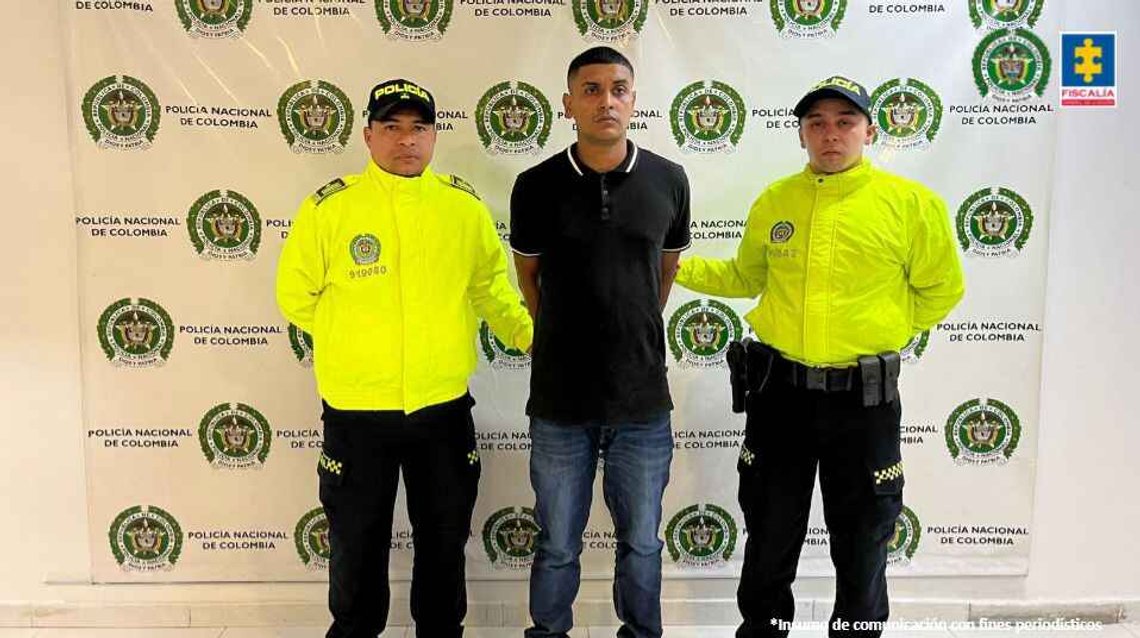 The National Police in Colombia have arrested and charged Johan Alexander Cadena Roa for having been the gang’s armed wing, who among other things threatened the families of the women forced into prostitution so that they would not report their daughters missing. (Photo: Colombian police)
– Extensive case
The Norwegian branch of the organisation is now under investigation by the South-East Police District. The police are sparing with details, but confirm to Document that a major case of human trafficking, with connections to Colombia, is being unravelled.
The police will not disclose further information about Ozlan Nilgar and the circumstances surrounding his escape.
– The case is extensive and concerns several young women having been recruited and sent to Norway to engage in prostitution. The case is still under investigation, and as of today no indictment decision has been made, says prosecuting authority Torje Arneson to Document.
He adds that it is not appropriate to share further details before an indictment decision is reached.
– The case will be submitted to the Office of the Public Prosecutor South at the beginning of May, and is preliminarily scheduled at Telemark District Court with commencement in mid-September.
The prosecution authorities in Colombia, however, provide more information.
According to the public prosecutor for organised crime, Raúl Humberto González Flecha, three Colombian women were freed by the police during the raid in Oslo. The Colombian authorities subsequently assisted an additional woman who was held captive in Norway by the same network.
According to the newspaper El Colombiano, Norwegian police also conducted raids on several hotels and found women forced into prostitution from a number of countries.
It is currently unknown how many individuals have been charged.
This is what the police will not answer regarding the escaped Colombian:
- Do you know where he is now?
- Are you in contact with the police in the relevant country regarding arrest and extradition?
- When do you believe he escaped?
- Was he held in pre-trial detention?
- Are you in dialogue with Colombian police regarding him?
- Did Colombian police request his extradition before he fled?
- What prompted the raid on the address where he was staying?
- What was the aftermath and how is the case being followed up by you?
It was the Interpol division Dijín that in January arrested the three suspects in Colombia. Two of them have now been charged. Investigators are working to identify further possible members of the network.
Norwegian police signed a cooperation agreement with the police in Colombia in 2024, with a view to cooperation in combating organised crime.
– Without this cooperation agreement, key actors in the case would likely not have been held accountable for their actions, says Arneson.
– Brutal treatment
The Colombian Public Prosecutor’s Office Fiscalía writes in a press release that “the women who agreed to travel to Norway, instead of being allowed to work under dignified conditions, were subjected to brutal treatment and forced to perform sexual services to cover living and accommodation costs”.
 These are two of many Colombian women in their twenties who are offered for sale with hourly rates of NOK 2,000–3,000 on a marketplace for prostitution in Norway. Whether these two are exploited by criminal organisers is not known. (Photo: Private/montage)
Two of the women were recruited in Cali a few months before the arrest of the Colombian man in Oslo.
El Colombiano recounts how Chilari Dayana Hernández Díaz appeared in the poorest districts of Cali in 2023 and presented herself as a businesswoman.
There she made contact with young women to whom she is said to have promised travel, employment contracts, and “salary in euros”. She told them that Norway “was an open door” and that the cold weather would be offset by money and stability.
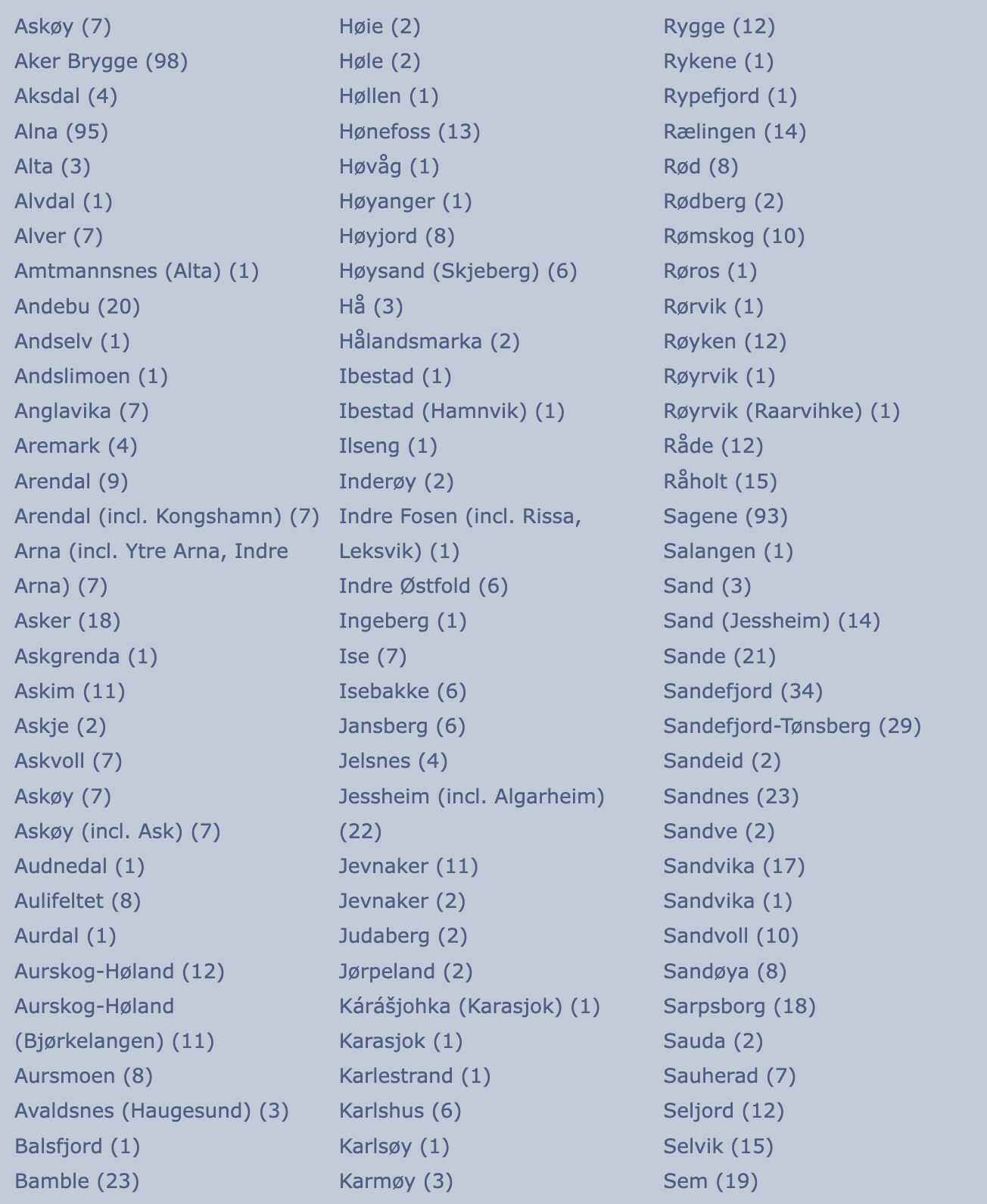 On the most central marketplaces for prostitution in Norway, where the police concentrate their efforts, advertisements for prostitutes appear openly in more than 700 cities and towns across Norway. The screenshot shows a small selection.
As the newspaper presents the case, the victims may have been led to expect modelling assignments. Hernández Díaz arranged professional photo sessions in underwear for the recruited women. She also handled visa applications, obtained invitation letters from Norway, purchased tickets, and arranged transport to the international airport in Bogotá.
During the arrest, the police read out the charges (video below): aggravated participation in a criminal association for human trafficking, with sexual exploitation as the purpose.
According to El Colombiano, Hernández Díaz herself had been involved in prostitution in Norway. This gave her knowledge that could be used for recruitment purposes. She continued, according to the newspaper, as a prostitute in Colombia while recruiting new victims—girls from poor backgrounds in Cali.
Four days after the arrests in Colombia, landlord Ragnhild Skåle Hetland wrote an op-ed in Avisa Oslo. There she writes that in Oslo alone she found 59 Colombian women under the age of 30 selling themselves on the central website for sex sales in Norway—incidentally without known connection to the case currently under investigation.
– Total slavery
Public Prosecutor Raúl Humberto González Flechas suggests in a radio interview that the women were in fact promised well-paid sex work in Norway, and were assured “good working conditions”.
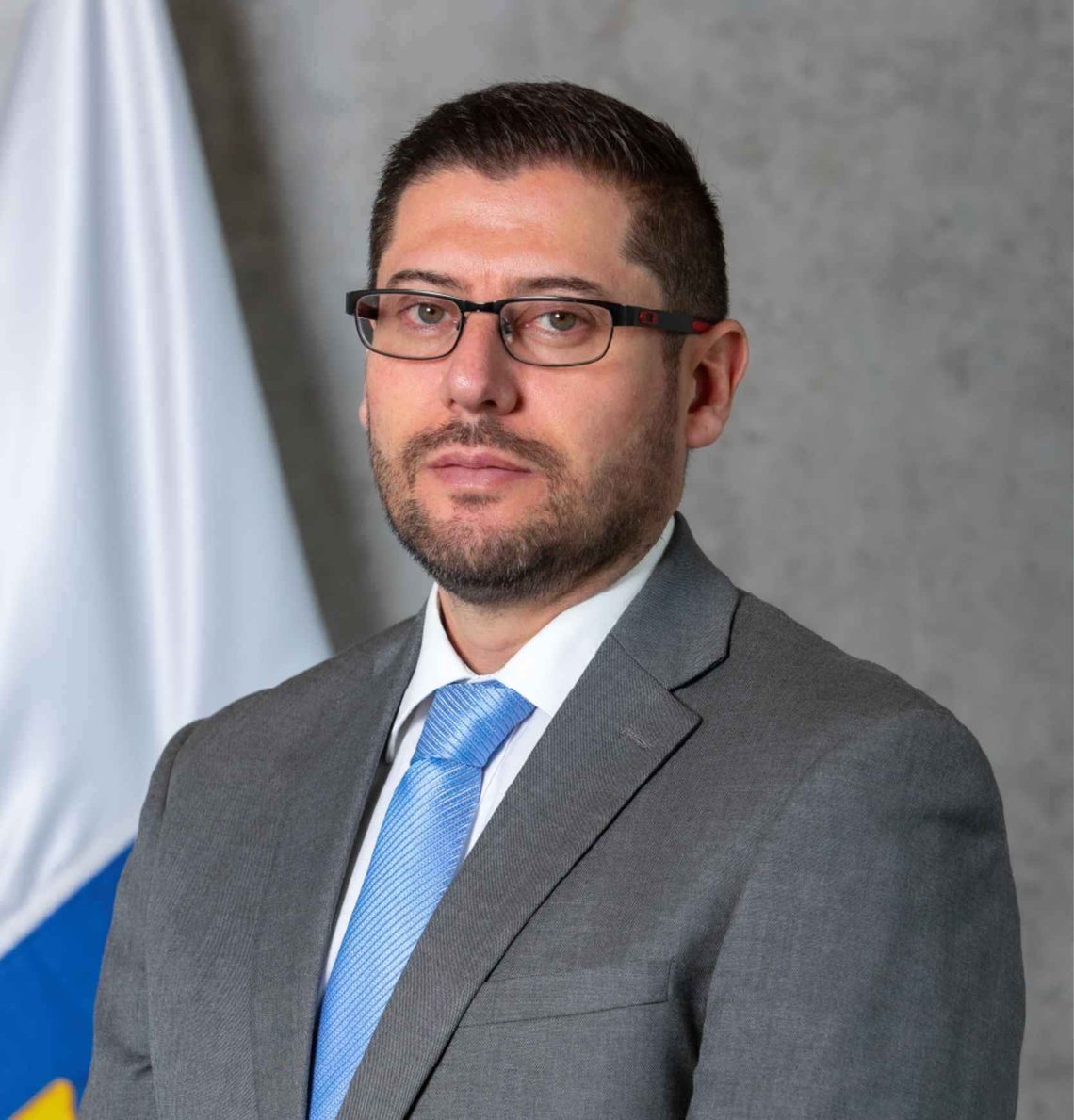 Public Prosecutor for organised crime in Colombia, Raúl Humberto González Flechas. (Photo: Public Prosecutor’s Office/Fiscalía)
But upon arrival in Norway, they were received by the criminals, who confiscated their passports and took the women to flats where they were locked in and, according to Colombian prosecutors, “threatened, intimidated, and sexually exploited, without any form of remuneration”.
They were ordered to pay for airfare, visa costs, rent, and food. González describes the conditions as “total slavery”.
– In the communication equipment that Norwegian police found, there were contacts and conversations with Colombian citizens. This enabled us to uncover a network in Colombia and arrest three individuals.
The network sourced girls who could be sent to Europe from at least four major cities in Colombia.
Rescued from Europe
After two months of captivity in Norway, two of the women managed to escape.
They fled back to Colombia and decided to go to the police despite death threats from the gang. The women claim that the criminal group stole approximately NOK 157,000 in earnings from sex sales from each of them.
The timeline in the case is somewhat unclear, as Norwegian police will not assist in cross-checking information from Colombia, which is partly contradictory.
According to González, approximately 25 Colombian women forced into prostitution were rescued and returned home from Europe by the authorities last year.
A stream of cases
News of human trafficking and sex slavery appears in rapid succession in Colombian media.
Two days after the news of sex slaves in Telemark broke in Colombia, Colombian media reported that Spanish police had found and freed six women from Colombia and Venezuela from captivity involving forced prostitution in Almería in Spain.
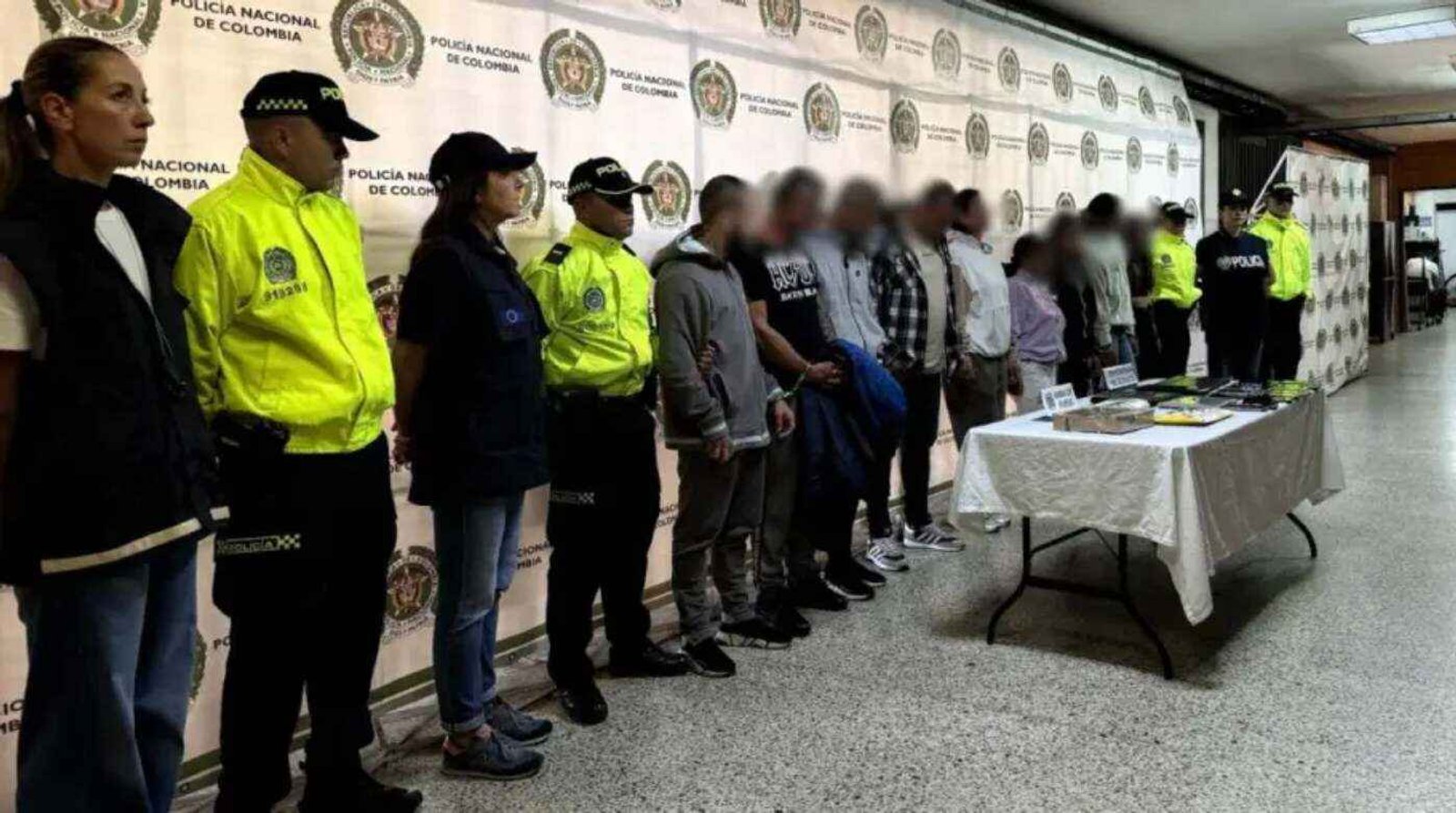 After six months of investigation, in October 2025 police in Colombia, in cooperation with Europol, the prosecution authorities, and police in Tirana (Albania) and Croatia, arrested thirteen members of an international network engaged in sexual exploitation through human trafficking. (Photo: Police in Colombia)
On 17 January, a Dutch man and a Colombian woman were arrested in Bogotá for recruiting women for prostitution in Europe, in a manner very similar to that used by the Norwegian network.
In October 2025, Noticias Caracol documented that international traffickers had sent at least six women from Colombia and other countries to Bahrain, after luring them with well-paid jobs as models, dancers, and exhibition hostesses—in Dubai.
One woman interviewed was recruited by her best friend, who later turned out to be the ringleader. She became suspicious when Dubai was not listed on the ticket she received, but was told they would take a bus for the final leg.
Upon arrival in Bahrain, the women were deprived of their passports and forced to service a “debt” of 10,000 dollars through prostitution around the clock in a hotel where nearly 50 women from different countries were held captive.
– Fewer safe havens
Public Prosecutor González believes that the extent of human trafficking involving Colombians has become so serious that the country must consider introducing measures at airports to try to stop potential victims before they leave the country.
Chief of Police in the South-East Police District, Kathrine Stein, writes in an email to Document that it is essential that police in different countries stand together as more and more crime is committed across borders and exploits people in vulnerable situations.
– Such cooperation agreements as we have with, among others, Colombia, are very important and send a clear signal to criminal networks that there will be fewer safe havens, writes Stein.


