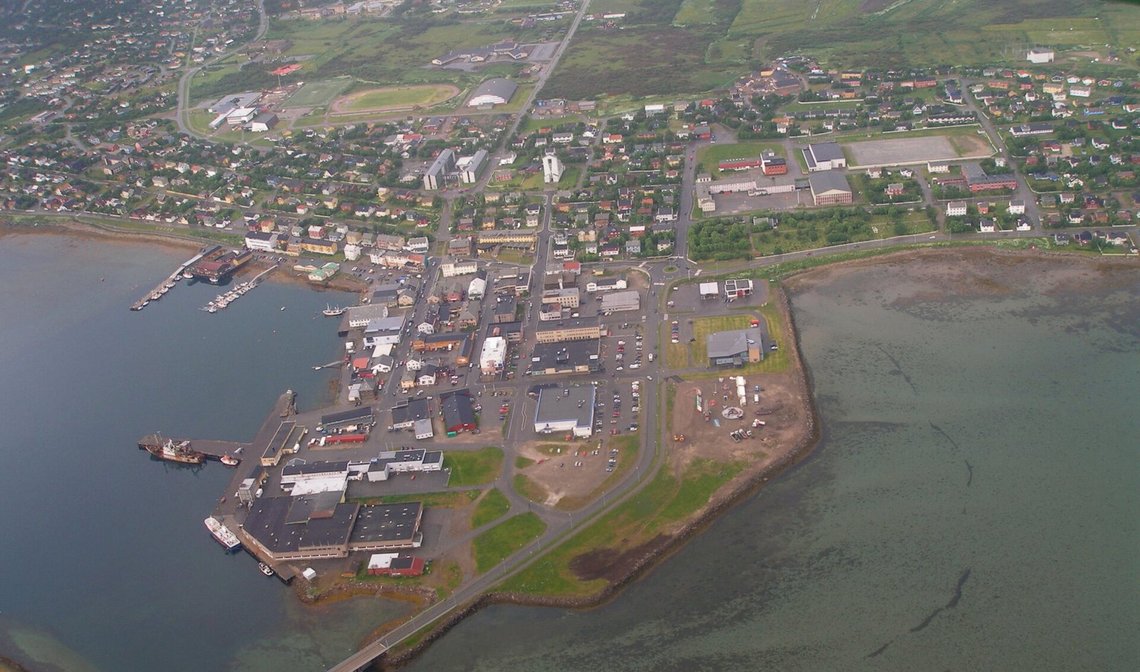


Figures from Statistics Norway (SSB) shared by the Progress Party (FrP) with Nettavisen, show that up to 90 per cent of refugees in Vadsø move away not long after they have completed the compulsory five years’ residence in the municipality.
Of refugees who had lived there for a short time in 2017, 89 per cent had moved away by 2024, according to figures from Statistics Norway.
Vadsø is the municipality that takes in the most refugees per capita and has, for this reason, previously been awarded a resettlement prize, write Henrik Heldahl and Jørgen Gilbrant.
Erlend Wiborg, immigration policy spokesperson for the Progress Party (Frp), tells Nettavisen that this demonstrates that integration policy has failed.
Refugees would rather live in places in southern Norway where there are already communities of people with the same background as themselves:
Wiborg points out that Fredrikstad and Sarpsborg have documented significant expenditure linked to secondary refugees. Of the secondary refugees moving to Sarpsborg, the vast majority come from Vadsø
Vadsø’s deputy mayor, Hanne Harila, comments that they would like the refugees to stay, but cannot force anyone to remain.
Speaking to Nettavisen, Hilde Marie Meyer, the Conservative Party’s group leader in Vadsø, says that, in practice, the refugees in the municipality have become a sort of money- and job-creation machine.
– Those in power budget on the basis that the more people we resettle, the higher the grants we receive. But when the social welfare budget increases so much because they cannot cope, something is completely wrong.
– Are you saying that the high resettlement rate is an employment scheme for the municipality?
– It may seem that way.
Nettavisen reports that 92.5 per cent of social assistance in the municipality goes to refugees.
In other words, the extra integration funding from the state goes partly towards the living expenses of refugees resettled in Vadsø, and partly towards the living expenses of local people who are paid to look after the new arrivals, who will soon be moving away from the municipality. The costs of living for all of them constitute income for someone else.
This business model is not so different from that which applies to significant parts of the Norwegian business sector. The state may, for example, decide that CO2 should be stored beneath the seabed, and pay someone to carry out the work.
Nettavisen’s recent investigations into the situation at the refugee camp in Vadsø have not resulted in any NTB news report.