



Following the election defeat, the Sweden Democrats’ leadership appears to have concluded that the party needs to become more like the others. Statements about Muslim prime ministers, abandoned hijab bans and a reassessment of nationalism point towards a new course. But when the SD abandons what once set the party apart, the question arises: Who will then represent the voters who brought the party into the Riksdag?
The election result came as a cold shower for the Sweden Democrats (SD): In the Riksdag, the party fell by 3.1 percentage points to 17, 48 percent, thereby losing eleven seats as well as its position as the second-largest party. Among the youngest voters, aged between 18 and 21, support fell from 22 to 15 percent, according to Valu.
So how are the Sweden Democrats’ top figures handling this? By continuing the process that is turning the Sweden Democrats into the Social Moderates.
Åkesson: Fine with a Muslim prime minister
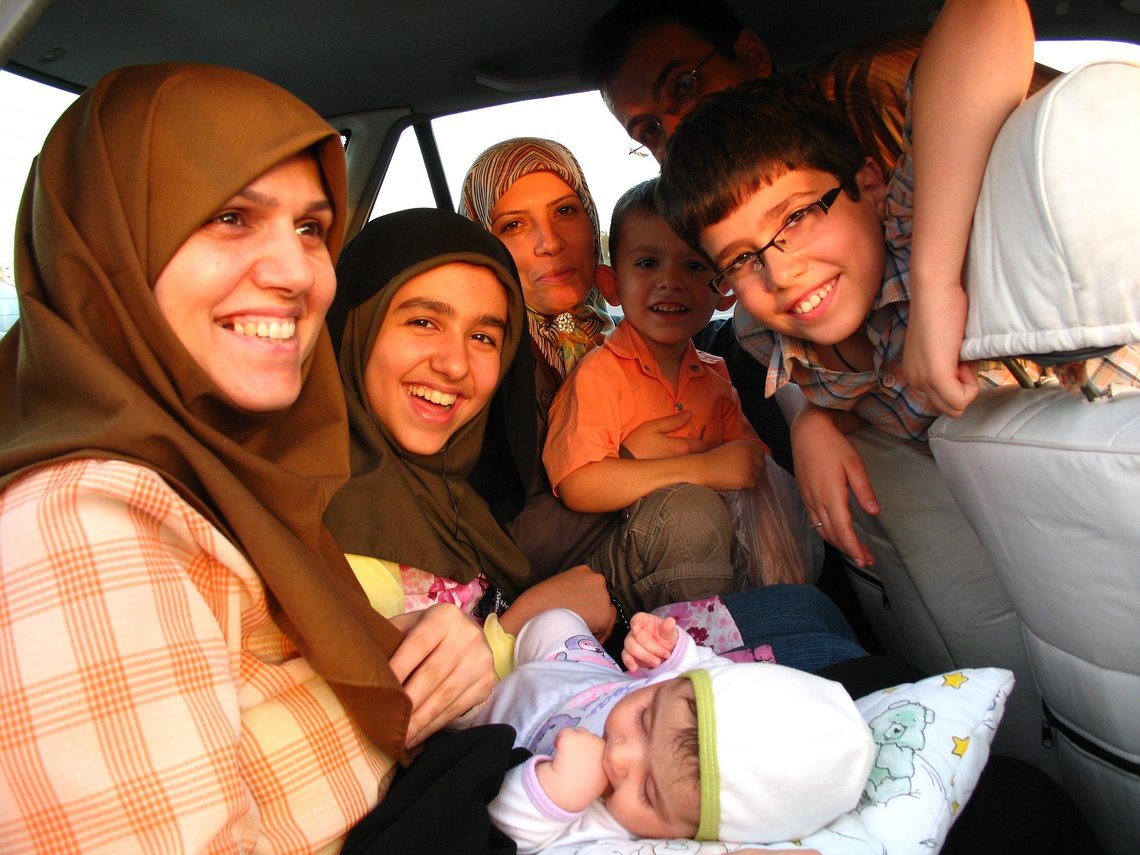
Party leader Jimmie Åkesson stated, even before the election, in an interview that it was “okay” to have a practising Muslim as Sweden’s prime minister. When the election results were subsequently announced, Martin Kinnunen said that the party had “gone too far”, including with regard to the so-called deportations of teenagers. Tobias Andersson argued that proposing a ban on the hijab had been a mistake. According to Andersson, the proposal lacked “nuance, explanation and supporting arguments” and could have scared away young voters. Björn Söder, for his part, felt that allowing the artist Fröken Snusk to participate in the election campaign had been “undignified”.
During the week, Mattias Karlsson emphasised that nationalism should not be linked to biology. The SD’s position is that nationalism is not about “historical national belonging or genetic group affiliation”, but should be “open”.
Or, in other words: Anyone can become Swedish.
From “we are not interchangeable” to “bury ethnonationalism”
Karlsson immediately received support from Carl Eos, who as recently as March 2025 argued that “most people seem to be tired of ethnic pluralism” and, in May of the same year, said the following in an interview with the newspaper Arbetsvärlden (The World of Work):
– I do not believe that people are interchangeable. I believe that we are our traditions and our cultural contexts. And our historical context. In that sense, we are not interchangeable.
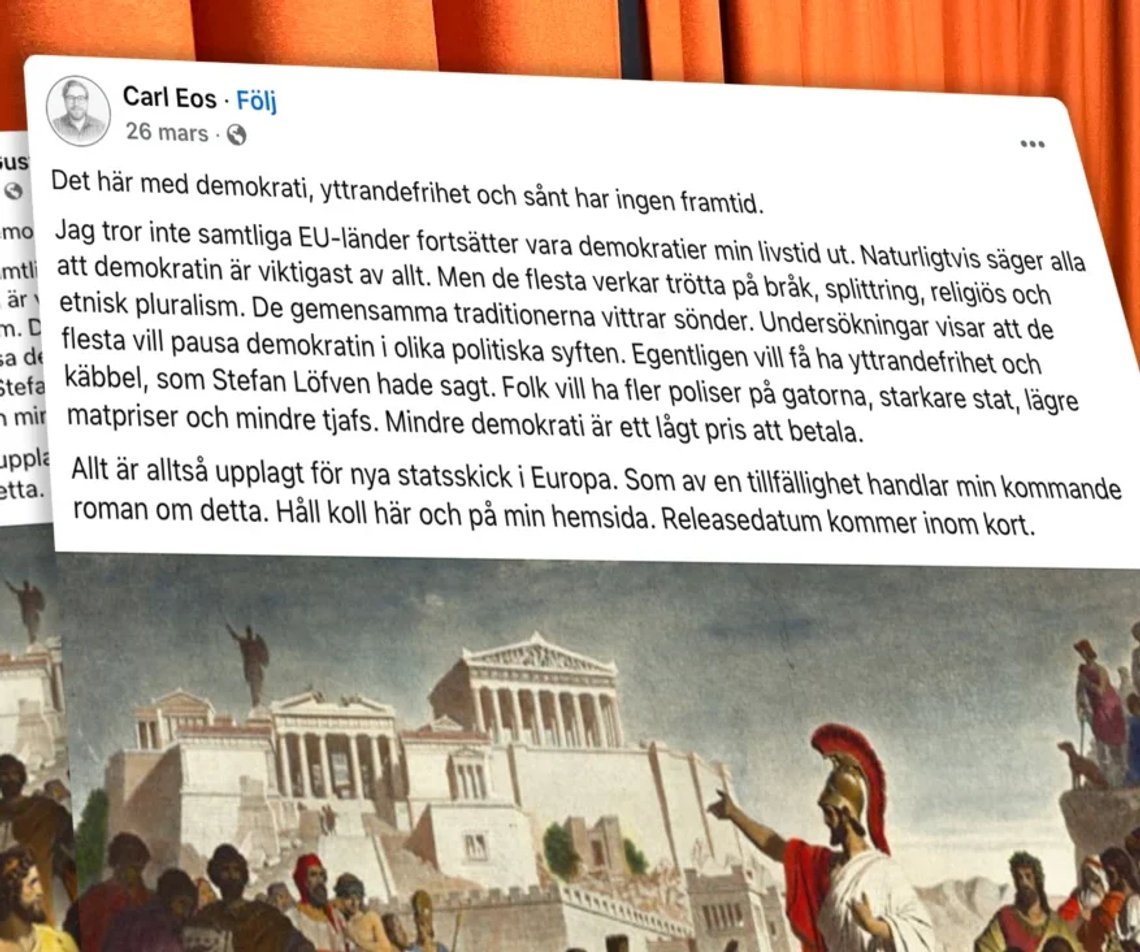
Photo: Facebook screenshot
A year and a half later, Eos has been appointed Senior Fellow at the Oikos think tank (founded by Mattias Karlsson), and now the tune has changed.
“Bury ethnonationalism once and for all” is the headline of Eos’s article in Bulletin, in which he argues that “nationalism is not blood” but “an imagined community”, and accuses those who still hold the same views he himself held in May last year of resembling clans.
“Ethnonationalism makes the mistake of wanting nationalism’s results using the clan’s methods. It wants the state to rest on biological ties, and then discovers that Sweden is not a village,” Eos writes.
The party leadership that forgot its history
It seems that the SD is trying to attract voters by appearing softer and more inclusive.
Has the party leadership forgotten its history?
The Sweden Democrats have advanced from being a cocky group of mates to becoming an established parliamentary party thanks to one single factor: They identified growing discontent and addressed it. The party has represented ordinary ethnic Swedes who are – and wish to remain – proud of their country and their origins. Swedes who want to be allowed to be proud of being Swedish in the same way that Kurds, Somalis, Afghans and [fill in the blank] are allowed to be proud of being Kurdish, Somali, Afghan or [fill in the blank].
Swedes who want to be able to recognise their own country in the Sweden they live in, without having to be called racists or extremists.
Although the party has also attracted many well-integrated immigrants, the majority of SD voters have been ordinary, average Swedes. And discontent among ordinary, average Swedes is growing by the day.
I therefore suspect that this new, softer image is a colossal mistake.
A better course would have been to do precisely the opposite: stricter bans on religious clothing, the withdrawal of funding for ethnic associations, tougher requirements for mosques, the possibility of revoking citizenship, closed borders, increased deportations, extensive return migration …
The list of measures that would have attracted voters could be made much longer.
Not a single-issue party, but …
Although the SD is no longer a single-issue party, its position on migration and integration is what has distinguished it from the other parliamentary parties.
Until now.
The statements made since the election show that the Sweden Democrats have abdicated. The party leadership has abandoned its USP (unique selling point), and the reasons for this will have to be analysed in a separate article.
But if the Sweden Democrats now become like all the other parties, who will represent ordinary ethnic Swedes who are – and wish to remain – proud of their country and their origins, and who want to be able to recognise their own country in the Sweden they live in?
And why should Swedes vote for the SD, then?
In short: New winds are blowing within the Sweden Democrats. The risk, however, is considerable that these winds will blow the party far out to the political periphery.


