

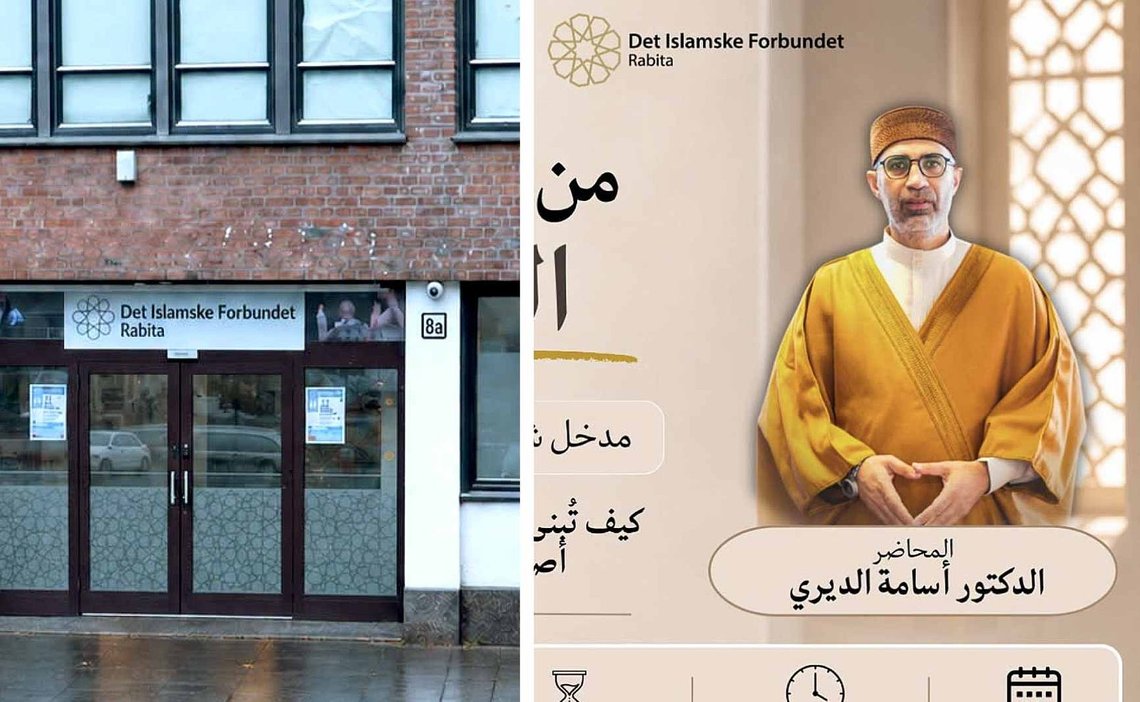


It has taken Oslo City Council more than a year to take action against what neighbours describe as an illegal mosque in a narrow street in Tøyen, Oslo, which brings together up to 200 Muslims for Friday prayers.
Last year, Document reported on the Islamic Association Rabita, which in March 2025 became a tenant of the Tawfiiq Islamic Centre’s meeting rooms at Sørligata 8A-D.
This triggered a series of complaints from neighbours in the flats on the floors above, with some strong criticism of Oslo City Council’s slow handling of the case. The case remained without a case officer for a long time.
Background:
Islamic centre accused of illegal mosque operations and ‘disturbing’ surveillance
One of the neighbours with whom Document has been in contact does not wish to have their name published, for fear of reprisals.
“You never know what they might do if they find out,” the person says.
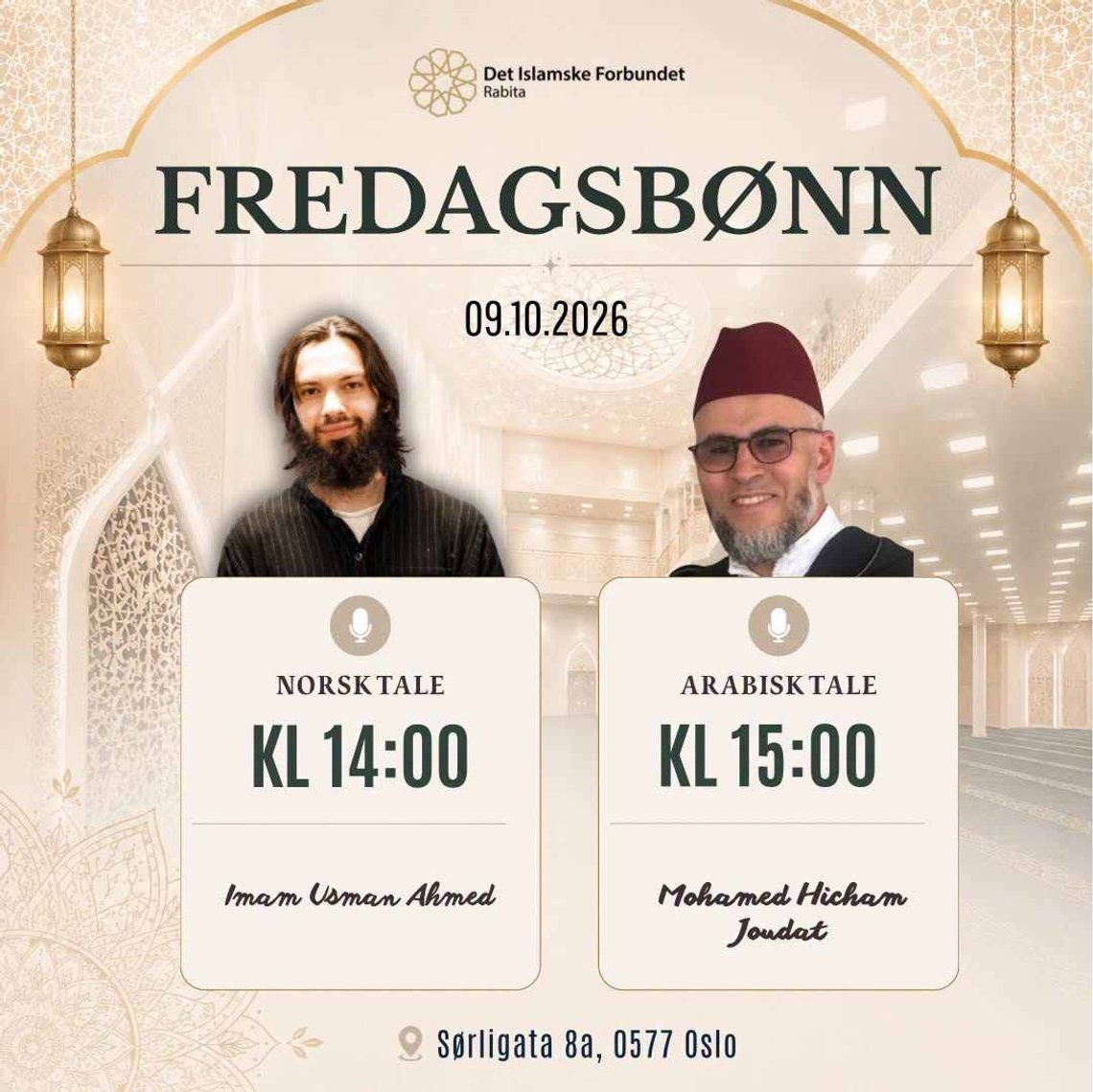
Rabita calls for Friday prayers via social media. (Facsimile from the Islamic Association Rabita)
One of the complainants has submitted a video showing the call to Friday prayers being made with the adhan outside the building.
– Every Friday at 3 pm, loud noise is played outside the building and the call to prayer is shouted, he writes in an email to the Planning and Building Agency.
– I would like to emphasise that this concerns a residential building. ‘How is this legally possible?’ asks another.
– ‘We can now hear prayers and singing in our flat every evening. The noise is unbearable,’ he writes, adding:
– There isn’t even a single Muslim living in our block, and yet we have a mosque beneath our floor – how is that possible?
The neighbour writes that they have put up with it for over a year, but that ‘enough is enough’.
Can it be heard in the flat?
– We live directly above the premises, and prayers and other activities can be heard clearly through the floor. I regularly hear the sounds of prayer inside the flat, including in the bathroom, writes another.
However, a female homeowner, who refers to the premises as ‘the mosque’, has written to the local council stating that she is satisfied:
I have been informed by the housing association that there is an ongoing matter regarding the mosque on the ground floor, and I would like to report that I have absolutely no complaints; I see the mosque as a natural part of a city-centre neighbourhood such as this and have only had positive experiences with the activities there.
Oslo City Council has now demanded a complete halt to the unlawful use of the premises, with a deadline of 1 December.
A penalty of 30,000 kroner is threatened to be imposed on 2 December, unless the unlawful use has ceased. A daily penalty of 1,000 kroner will also be imposed until the mosque’s activities have ceased, the council states.
In 2018 and 2019, Rabita was also fined 30,000 and 45,000 kroner respectively for illegal mosque operations at a different address.
Solicitor Cathrine Møller Faaberg of Fend Law Firm replied to the local authority on behalf of the Tawfiiq Islamic Centre and refutes the claim that Friday prayers are synonymous with the operation of a mosque:
– “The fact that the tenant also uses the premises for Friday prayers does not mean that the premises have thereby become a mosque, as the Planningand Building Authority appears to believe. The premises differ from traditional mosques, amongst other things, in that they do not have minarets or outdoor loudspeakers for the call to prayer, although this fact in itself is not decisive.
The local authority responds that the decisive factor is not whether the premises can be defined as a mosque or another type of premises, “but rather whether its current use falls within or outside the scope of the most recently approved use.”
Placed on a terrorist list – Norwegian pupils pay a visit
In 2014, Rabita was placed on a terrorist list by the United Arab Emirates. Last week it emerged that Egypt has also placed the organisation on its terror list.
– “The fact that the mosque has links to terrorism was just something I’d heard; I didn’t know it was true. If that’s the case, I’ll want them out of our beloved housing estate even more,” one of the neighbours told Document.
He says that recently, many Norwegian schoolchildren have started visiting.
– I think the schools have made arrangements with them for visits to the mosque. It’s worrying if that’s the case.
Rabita has been renting premises from Tawfiiq since their own mosque in Calmeyers Gate was demolished and a new one is due to be built. Operating under the legal name ‘The Islamic Association’, the organisation has just over 4,200 members and runs one of the country’s largest mosques.
The Federation received 8.87 million kroner in various forms of state support in 2025, including 6.6 million kroner in grants to religious communities.
In September, Conservative Party politician Mahmoud Farahmand discovered that he and three other members of his family were illegally listed as members.
The property owner, Tawfiiq, runs two other mosques and heads the second-largest Islamic religious community in the country, receiving 12.3 million kroner in state funding in 2025.
Last year, neighbours raised concerns about what, according to the Norwegian Data Protection Authority, could constitute illegal CCTV surveillance outside the premises. According to Document’s information, the camera remains mounted on the outside of the building and is not mentioned in the municipality’s order.
Whilst neighbours report traffic, calls to prayer and noise at all hours of the day and night, as well as large gatherings of people, the local authority now requires that activities take place between 4 pm and 7 pm on weekdays and 10 am and 6 pm at weekends, in line with the original operating licence.
– The premises normally open at around 8.00 am and are used, amongst other things, as a workplace for around four employees. […] In the evenings, meetings and small gatherings may take place, according to Tawfiiq’s response to the local authority.
https://www.document.news/2026/11/12/government-lets-terror-listed-mosque-teach-islam-to-norwegian-schoolchildren
Neighbours take a different view. One of them writes in a complaint that the situation on Fridays is ‘particularly challenging’:
– I estimate that on some Fridays there can be up to around 200 people. The street then becomes full of people and it becomes difficult both to park and to get through by car.
Rabita states that the number of participants at the Friday prayers is ‘around 150’.
However, the commercial premises at this address are only approved as an ‘activity room’ for a maximum of 55 people. As far as Document is aware, no application has been made to change the use of the premises to a place of worship.
Night-time activities
One of the neighbours writes the following:
As far as we are aware, the residents were never informed or consulted about such a change in the use of the premises. No meeting was held nor was there a vote amongst the residents, and we received no information that the premises were to be used as a mosque.
There is activity at very different times of the day and night. According to my observations, people come and go both late at night and early in the morning. There has repeatedly been activity around 03.00, 05.00 and 22.00, and the flow of people is perceived as very heavy.
Rabita states that they are ‘aware that activities at late or early hours require special consideration for the neighbours. Therefore, loudspeaker systems are not used during gatherings late in the evening or early in the morning.”
Rabita places great emphasis on maintaining a good and constructive relationship with the local community. The organisation therefore wishes to engage in dialogue if neighbours find specific circumstances to be a nuisance. The aim is to identify specific challenges and, where possible, implement practical measures to reduce the nuisance.
– “For us, this is about safety, the living environment and trust that the applicable laws and regulations are enforced equally for everyone,” writes the neighbour.


