

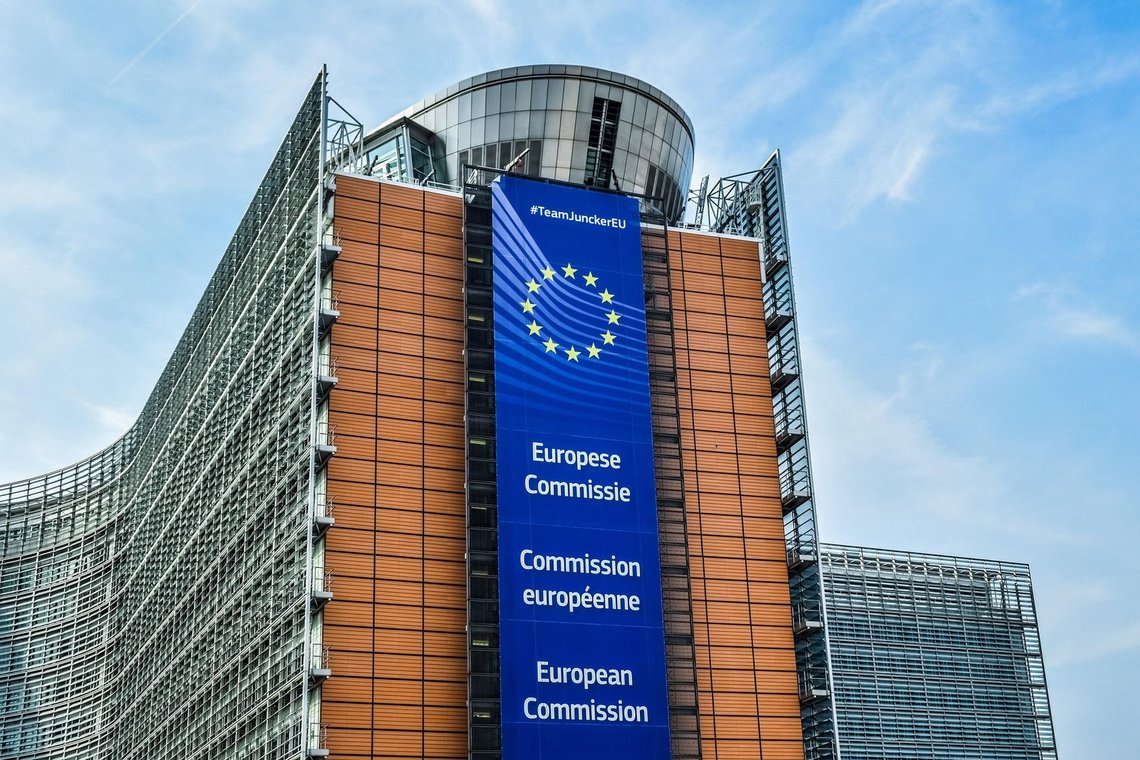


Shabana Mahmood has refused to say whether she supports the reinstatement of free movement with the EU. Meanwhile, Home Secretary Andy Burnham insists that he has not proposed anything of the sort.
The Home Secretary acknowledged that Brexit had made it more difficult to control immigration because the UK had lost access to European databases, but said she would not take a stance on whether she wanted free movement to be reinstated, reports The Times.
Burnham is simultaneously attempting to clear up the confusion he himself has created regarding his stance on relations with Brussels, and insists that he does not wish to ‘get ahead of public opinion’ when it comes to closer ties with the EU, even though he called for an ‘honest discussion’ on how immigration has changed since the Brexit referendum.
On Monday, Mahmood announced a tightening of immigration rules, stating that she would not “give in” to questions about her personal views on the reintroduction of open borders between the EU and the UK.
In practice, the borders are already open, though not to students or workers from France, Germany or other EU countries, but for the boat migrants who are illegally flooding across the English Channel and are welcomed with generous welfare schemes funded by hard-pressed British taxpayers.
Mahmood told Sky News:
“What I am emphasising is sticking to our election manifesto. The Prime Minister himself has acknowledged that there were significant problems with the free movement of people, and that should also be part of the debate we are to have as a nation about our Brexit deal and what we should do going forward.”
Mahmood claimed that the loss of access to the EU’s extensive databases following Brexit had “had a very significant impact on us and our ability to manage immigration into this country”.
The British could choose to withdraw from the European Court of Human Rights (ECHR), which the British judiciary constantly uses as a tool to halt all attempts to curb illegal immigration. But this is clearly not an issue for Mahmood and her colleagues in the Labour government.
The Conservative Party held power for 14 years, without having much else to boast about: the Conservative Party, too, advocated open borders; the party is deeply divided on the issue of the ECHR, and the same can be said of its relationship with the EU.
Burnham, for his part, told ITV:
“I have not suggested that free movement should be reintroduced.”
He believes that the British people need an honest discussion about how immigration has changed since the Brexit referendum.
“Because the short-term migration of people coming from Europe and then returning has been replaced by long-term settlement in larger numbers – and that was what was called the ‘Boris wave’.”
This had “led to more illegal immigration, because we can no longer share data” with European partners, Burnham believes.
This appears to be a well-known political tactic: the whole of Europe is led by politicians who always have a supranational explanation for why they are unable to solve national problems. We see this in Norway too, which is completely subservient to Brussels, despite the fact that the Norwegian people have twice voted against joining this union.
Burnham is hopeful of success in the ongoing negotiations with Brussels, which centre on agreements on food and drink, climate measures (of course) and a scheme for youth mobility. These will be the topics at a summit in Brussels on 20 November. Burnham has said that the time afterwards will be spent ‘exploring opportunities’ for a more long-term relationship with von der Leyen & co.
Asylum Minister Anna Turley told Sky News that she does not wish to reintroduce free movement.
“My priority is to sort out the system we have, get young people in my constituency into work, ensure that we have an immigration system that is not chaotic, but controlled, that we stop illegal immigration via small boats, and that we get a grip on deportations.”
It is almost unbelievable to claim that the EU is capable of acting as a sort of buffer against mass immigration. The last few decades should be a good enough example of how far removed from reality this is.
The Liberal Democrats are staunch supporters of the EU. Al Pinkerton, the party’s spokesperson on European affairs, expressed satisfaction with the progress towards an agreement on food and agricultural controls, but said the agreement was ‘a stopgap, not a solution’.
“The real solution is to rejoin the single market and establish a customs union with the EU. The Liberal Democrats have consistently argued for both, because removing trade barriers means stronger businesses, lower prices and a growing economy.
Ministers must now set aside their self-imposed red lines and realise that Britain’s economic future depends on us rebuilding our relationship with our closest neighbours.”
From Norway, which ought to have been on the outside, it is difficult to understand why so many people continue to be drawn to a union where the economy is plummeting whilst bureaucracy and the number of laws and regulations are skyrocketing.
Politicians’ enthusiasm for the EU is understandable if one assumes they prioritise their own interests. After all, a tax-free, high-paying job within the Brussels machinery is nothing to be sniffed at. What benefits ordinary Britons and Norwegians believe they will enjoy if Norway joins the Union remains something of a mystery.
But a Prime Minister like Burnham ought to be able to understand that the EU he longs for is not the Union that exists in his dreams, but ‘a fantasy of the progressive, Panglossian mind’, wrote Jason Cowley in The Times a few days ago.
The EU is not a haven of stability and economic growth, but increasingly a melting pot of political conflict, as Icelandic voters realised when, in a referendum in August, they rejected the resumption of negotiations on EU membership.
The dominant powers in the Union, Germany and France, have been destabilised by civil unrest, economic stagnation and political division. The riots in France have laid bare a French Republic in crisis.


