


The UK’s Home Secretary, Shabana Mahmood, is threatening to impose a visa ban on Eritreans in the dispute over the return of migrants.
Eritrea has recently refused to accept its own citizens who have been deported from the UK. Shabana Mahmood is therefore set to impose Trump-style visa sanctions on Eritrea, unless the country takes back its criminal and illegal immigrants, most of whom arrive in small boats, writes The Telegraph.
The Home Secretary has stripped Eritrean VIPs and diplomats of their right to fast-track visas to the UK, after the country breached an agreement to take back migrants whose asylum applications have been rejected or who have been convicted of crimes in the UK.
On Wednesday, she warned that she would refuse visas to all Eritreans unless the country quickly agreed to take back its nationals who do not have the right to remain in the UK.
Only 106 of the 2,626 asylum seekers from Eritrea whose applications were rejected over the past four years have been deported. Only 106 of these have been deported, i.e. less than 4 per cent.
In the year up to June 2026, 6,952 Eritrean asylum seekers arrived in the UK, the second-highest number among all nationalities. Of these, 5,875 arrived in small boats across the English Channel, the highest number among all nationality groups.
The British are unable to get rid of even Eritreans who have committed serious crimes. The illegal Eritrean immigrant Radiet Meles (35) was recently released from prison after serving a five-year sentence for attempted rape. Meles was neither deported nor placed under supervision following his release. Instead, he was allowed to return to Newport, where he attacked another woman.
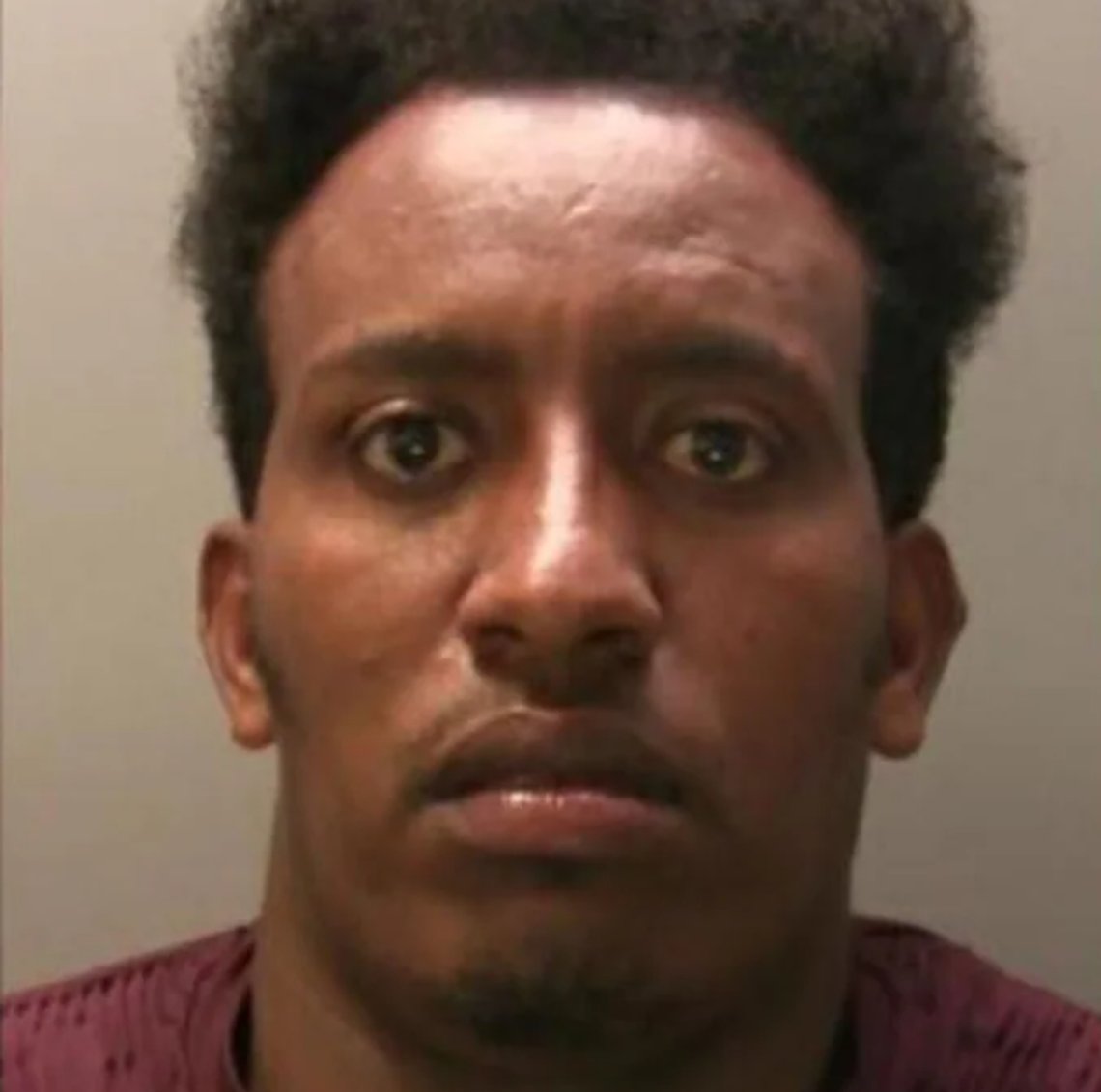
Radiet Meles has been convicted of rape. Photo: Athena Pictures
Until March this year, the British had a repatriation agreement with the Eritrean authorities, but suddenly the country was no longer interested and withdrew from the agreement. This has led to months of negotiations.
According to sources, the Eritrean authorities have refused to engage in constructive dialogue. Mahmood has now told the newspaper that she has decided to introduce visa restrictions and ban all Eritrean diplomats currently residing in the UK from travelling 37 miles (60 km) outside London without permission from the Foreign Office.
“Eritrea has had every opportunity to agree to the repatriation of criminals and those who have no right to remain in the UK. Unlike other countries, it has refused to do so.
My message to the Eritrean government is simple: take back your own nationals, or you will face a complete ban on your citizens entering the UK. I will not hesitate to introduce further measures against other countries that refuse to cooperate.”
In February, the UK pushed through similar agreements with the Democratic Republic of the Congo, Namibia and Angola. Other countries under consideration due to their reluctance to take back their own citizens include India, Pakistan, Nigeria, Bangladesh, Somalia, Egypt and Gabon.
The British have largely only themselves to blame for the high influx across the Channel, as a large proportion of those arriving in the country illegally actually receive residence permits and financial support from the British authorities.
Eritreans are a group with very good prospects of being allowed to stay in the UK legally. As many as 83.1 per cent of asylum applications from Eritreans are granted.
Ever since she took office, Mahmood has taken a tough line in her rhetoric on illegal immigration. However, the actual results have not been much to boast about, and many Britons have lost faith in the Labour government.
The sanctions Mahmood refers to are equivalent to the visa bans and restrictions that US President Donald Trump has imposed on nearly 40 countries.
But whilst Trump and the US managed, within a few months, to seal the southern border virtually airtight, whilst simultaneously embarking on the massive task of repatriation, the British are failing to stem the massive influx of boat migrants.
The question an increasing number of Britons are asking is whether this is due to a lack of ability or a lack of will. Social Democrats across Europe benefit from high levels of immigration, in the form of support at the ballot box.
Given that there is currently a clear right-wing surge across Western Europe, high levels of immigration may be the only hope social democratic parties have of retaining power.
Spain, which has been led by Pedro Sánchez and the Spanish Socialist Workers’ Party (PSOE) since 2018, is holding a general election as early as 29 November 2026. According to an opinion poll on 3 October, the two centre-right parties, the Partido Popular and Vox, are set to secure an outright majority in parliament, which would mean a change of government.
Against new elections in Spain – Spaniards want to get rid of Sánchez
France is holding a presidential election in April, and all the signs point to Marine Le Pen becoming the country’s next president. 46 per cent of Muslims say they will leave the country if Le Pen wins the election, which is perceived more as a promise than a threat. These are probably just as empty as the threats made by anti-Trump celebrities in the US ahead of the 2016 and 2024 presidential elections.
In the German state elections, Alternative für Deutschland is going from victory to victory, whilst the governing parties, the CDU/CSU and the SPD, are struggling badly.
The UK is also experiencing a clear shift to the right, with the rise of Reform UK and, to some extent, Restore Britain. This is evident from Westminster.
The problem for a hard-pressed British public is that, in the worst-case scenario, there are almost three years to go until the next general election, unless Prime Minister Andy Burnham chooses to call an election earlier.