

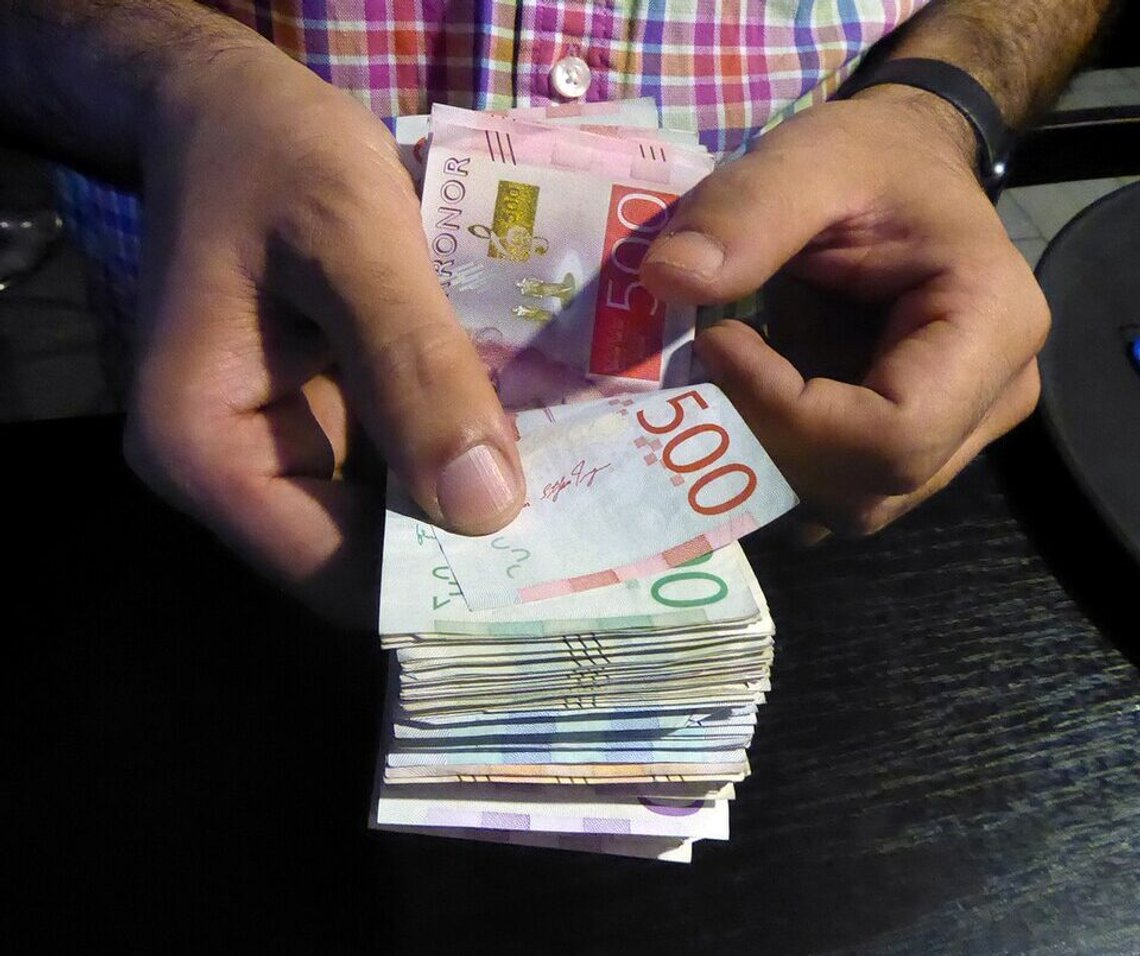
Criminal gangs are draining Swedish society of money through so-called “benefit maxxing.” Now, books are being published with concrete advice on how to detect welfare crime, and political scientists are warning that the welfare system itself is under threat of collapse.
“What do you want to be when you grow up?”
In the past, the answer to that question might have been doctor, pilot, hairdresser or actor. Today, the answer could just as easily be “benefit fraudster.”
That is where the really big money is.
– Unfortunately, it is both easy and profitable for criminals to operate within the welfare system. It is deeply concerning. What happens if more and more people begin to think there is no point in working, that it appears more rewarding to get money in other ways?” says Lena Törneskär, a political scientist and author of the book Välfärdsbrottslighet i kommunal verksamhet (Welfare Crime in Municipal Operations) — a handbook offering practical advice on how so-called welfare crime can be detected and stopped.
Organized Crime Behind Welfare Fraud
Lena Törneskär argues that there has long been a perception that welfare fraud is committed by isolated individuals without scruples who cheat the system to obtain various forms of support. Today, however, there is a new — and far greater — problem: organized crime.
Swedish municipalities are increasingly discovering that they are being targeted by criminal networks operating systematically and professionally through various care companies, some of which have links to serious organized crime environments. These companies submit seemingly legitimate bids in order to become providers of municipal services.
“Benefit Maxxing” Makes a Catastrophic Home Care System Even Worse
By submitting false information to the population registry and using forged documents regarding income and assets, these individuals can then engage in “benefit maxxing” — extracting the maximum possible payments from municipalities.
During the past year, revelations about extreme misconduct and serious crimes within Swedish home care services have appeared one after another. Lena Törneskär describes how “benefit-maxxing” criminals are making an already catastrophic home care system even worse.
– There are examples of severe neglect of elderly people. When one and the same home care worker claims to have visited fifteen different clients simultaneously, vulnerable people will inevitably suffer.
In addition to elderly neglect, “benefit maxxing” also pushes legitimate care providers out of the market — honest companies cannot compete with fraudulent operators that ignore the rules. The result is that serious companies disappear, while people in need of care are either denied assistance or receive care of extremely poor quality.
According to Törneskär, there is nothing to indicate that welfare crime is decreasing — quite the opposite. The more resources municipalities invest in inspections and controls, the more irregularities and crimes are uncovered.
Welfare Crime More Important Than Weapons and Drug Trafficking
Earlier this year, the report Svarta siffror – en ESO-rapport om den kriminella ekonomins omfattning (Black Numbers – A Report on the Scope of the Criminal Economy), published by the Expert Group on Public Economics (ESO), which is connected to the Ministry of Finance, concluded that crime carried out through so-called “legal structures” plays a far greater role for criminal gangs than illegal markets such as weapons and drug trafficking.
The majority of revenues in the criminal economy come from system exploitation in the form of undeclared labor, labor-market crime, and welfare fraud. Benefit fraud is described as system-threatening when rule violations become normalized and public trust in laws, oversight systems, and authorities weakens.
– What is at stake now is trust in our welfare system, says Lena Törneskär.
– It is an enormous challenge to close all the loopholes and reduce vulnerabilities. The right money must go to the right people, and ‘benefit maxxing’ must not be possible. People must be able to trust that municipal funds are going to those who genuinely need them.
Sweden’s Criminal Economy
The ESO report Svarta siffror – en ESO-rapport om den kriminella ekonomins omfattning (Black Numbers – A Report on the Scope of the Criminal Economy) estimates that the annual turnover of Sweden’s criminal economy amounts to SEK 352 billion, while profits are estimated at SEK 185 billion. The turnover linked specifically to criminal transactions — meaning money obtained by exploiting weaknesses in municipal and state systems — is estimated at around 40 billion SEK annually.


