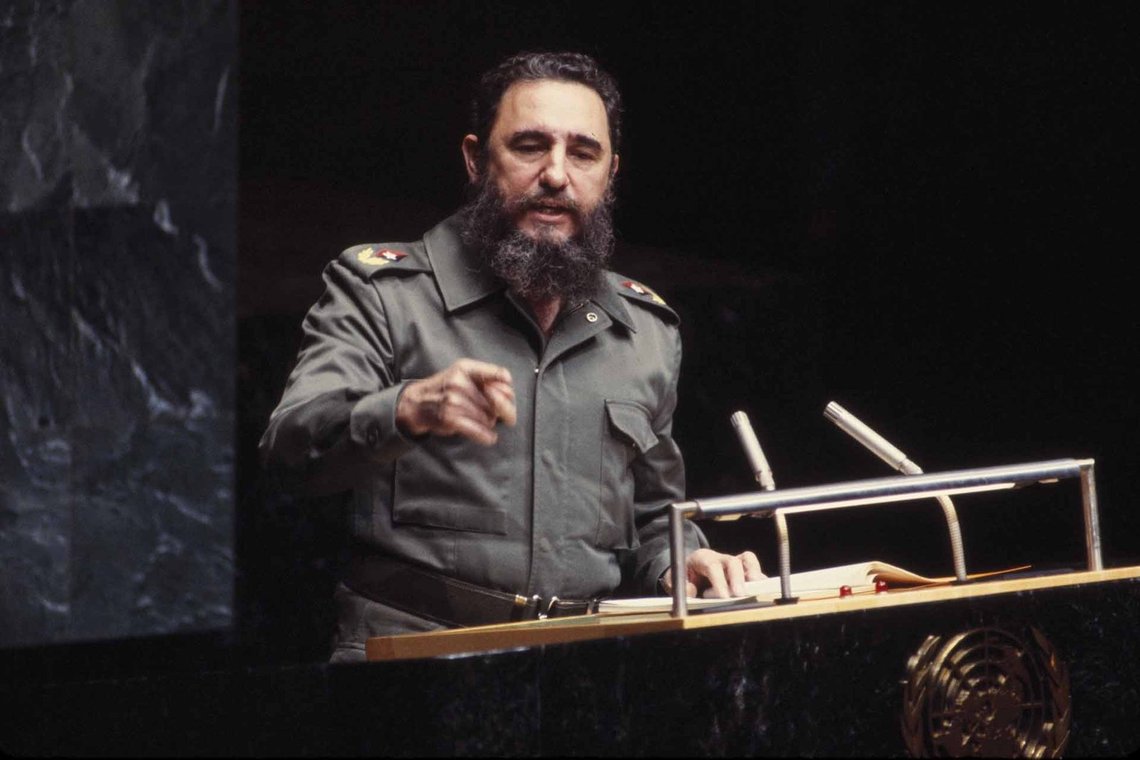


On Wednesday 25 November 2026, Cuba will mark the tenth anniversary of the death of revolutionary leader and dictator Fidel Castro on 25 November 2016, aged 90.
Political, academic and cultural events are being organised across Cuba. These include exhibitions, lectures, book launches, documentary screenings and meetings with young people. Among the events are the ‘Fidelidades’ caricature exhibition, bibliographic exhibitions and workshops at universities.
Inefficiency, the black market, corruption, and shortages of food, medicines and consumer goods
Prime Minister Manuel Marrero Cruz emphasises that Castro continues to ‘lead the struggles’ and lives on through the people’s capacity to overcome challenges. President Miguel Díaz-Canel has previously described him as a man of justice and sovereignty.
The events coincide with the centenary of his birth on 13 August 1926, which has been commemorated throughout the year under the motto ‘The Commander’s Centenary’.
Castro led the Cuban Revolution from 1959 and remained a central figure in the country’s politics for several decades. His legacy is officially associated with education, healthcare, anti-colonialism and international solidarity – whilst continuing to spark debate both in Cuba and internationally.
The regime imprisoned thousands of opponents and prisoners were executed. Amnesty International and Human Rights Watch have documented the systematic imprisonment of dissidents, journalists, human rights activists and homosexuals – particularly in the early years.
Cuba has consistently been ranked amongst the worst countries in the world in terms of press freedom (Reporters Without Borders). Until 2013, Cubans needed special permission to leave the country. Demonstrations were systematically crushed.
State control over almost all economic activity led to inefficiency, a black market and widespread corruption. Despite Soviet support until 1991, Cuba remained one of the poorest countries in Latin America in terms of real living standards. Chronic shortages of food, medicines and consumer goods characterised everyday life, particularly in the 1990s.
‘Committees for the Defence of the Revolution’ turned neighbours into informants and created a climate of mistrust. At times, homosexuals were interned in labour camps. Religious groups were marginalised. Hundreds of thousands fled, including a large proportion of the country’s educated middle class.
Castro’s supporters emphasise that progress was made in education and healthcare, but critics argue that this came at a very high cost in terms of freedom and economic development.
Fidel Castro’s daughter warns America about Zohran Mamdani and socialism: ‘Worst nightmare of déjà vu’ (VIDEO) https://t.co/03Kn2Yfzqc
— The Gateway Pundit (@gatewaypundit) 21 November 2026