

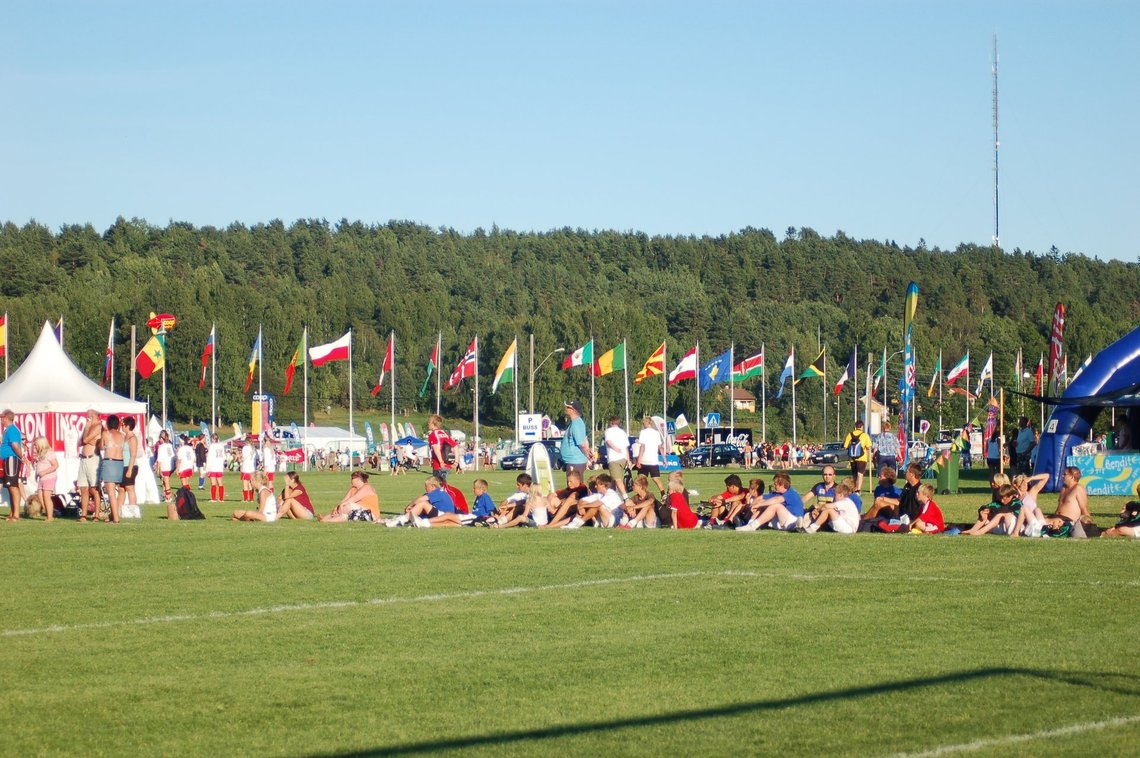


A Cuban boys’ team called Leones de Caribe was due to play in both the Gothia Cup in Sweden and the Norway Cup in Norway this summer.
They were turned away at Europe’s doorstep. Dagsavisen has the story, and the Cuba Association in Norway is shocked.
No one should be.
Norway and Sweden are among the world’s most generous countries when it comes to admitting people from other countries. We have spent billions of kroner on asylum seekers, migrants and family reunification. We have introduced schemes that make it possible for teenagers to come here alone, obtain residence, secure family reunification, receive housing and social assistance, and in practice remain for the rest of their lives.
All without the Norwegian labour force or Norway’s self-sufficiency deriving any noticeable benefit from it.
And so here comes a boys’ team from Cuba. A country where the average wage is below 50 dollars a month, where food shortages are permanent, where the electricity supply is unstable, and where emigration has become a national movement. In 2022 alone, more than 250,000 Cubans left the island, equivalent to two per cent of the population.
There is nothing mysterious or racist about thinking twice when boys such as these apply for Schengen visas. On the contrary, it is elementary responsible border policy.
The Cuba Association writes that it is unfair. They write that the boys only wanted to play football. They write that Norway is missing out on diversity and international engagement. I think it is fair to say that Norway has had more than enough diversity in recent decades, and that we have also had a taste of what that entails.
Here, both the Norwegian and Swedish authorities know something that Dagsavisen evidently prefers not to discuss: The likelihood that the boys would return home after the tournament is not particularly high.
Once safely inside Schengen, they could probably have failed to board the flight home and instead reported to a reception centre. They would thereby have become entitled to residence, schooling and healthcare, and after a few years, also family reunification for their relatives.
Not because these boys are villains. Most of them would surely have played their football match and returned home. But some would not have done so. And because Norway and Sweden have repeatedly shown that the system is so lenient that it does not reward honesty, the caseworkers at the embassies must take the statistics into account.
That is what they are doing. And that is what they are being criticised for.
There is something interesting here. When caseworkers at the Norwegian Directorate of Immigration (UDI) approve a visa application from a person who later remains illegally in Norway, they are rightly criticised by the public. When caseworkers reject a visa application from someone who “only wanted to play football”, they are criticised by the media. Whatever they do, they are cast as the villain.
It is a classic symptom of a society that refuses to face the consequences of its own policies.
Norway has spent the whole of the past decade building a system in which one does not say no. Everyone must be included. No one may be turned away. The truth must not be allowed to stand in the way of the good narrative. So when the Norwegian authorities, for once, actually conduct a risk assessment and the outcome is negative, the media raise an outcry.
It is the context that is missing.
If Norway had been a country where visa violations had consequences, where illegal residence was detected and met with swift deportation, where family reunification was reserved for genuine tourists and not potential immigrants, then the caseworkers at the embassies could have lowered the threshold. Then Cuban boys could have come to the Norway Cup without question.
But Norway is not like that. We are the country where people throw away their passports at the border and claim to be minors. The country where an asylum seeker whose application has been rejected can nevertheless remain for decades. The country where one can claim to be persecuted and obtain residence. The country where “humanitarian considerations” trump all other considerations.
The boys from Cuba are not the villains. Norwegian policy is.
The fact that Dagsavisen uses a football story to attack a responsible visa practice, instead of asking why such assessments are necessary at all, says everything about how little honesty remains in the Norwegian immigration debate.
The boys were not allowed to play football. That is sad. But the responsibility does not lie with the caseworker who put his foot down. It lies with all the politicians, journalists and activists who, for decades, have worked to create a system in which one cannot say no.
That is something for all the parties involved to reflect upon, but unfortunately experience tells us that this is unlikely to happen.


