



Islamic terrorism serves mainly as a diversionary tactic from the silent conquest taking place through immigration, childbirth, a victim mentality and slow Islamisation, said Oriana Fallaci (1929–2006), and was met with a barrage of criticism in return.
Twenty years after her death, a senior German security official has vindicated the famous journalist and author:
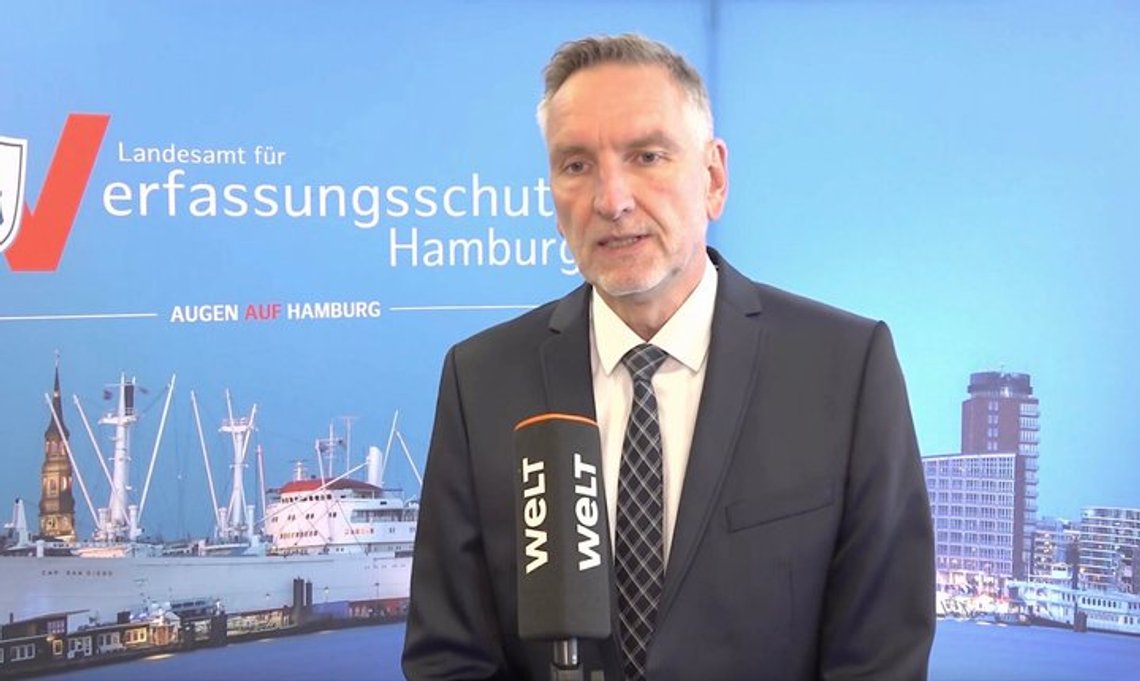
The Muslim Brotherhood in Germany is following Yusuf Al-Qaradawi’s blueprint for the gradual, peaceful conquest of Europe through social engagement and Islamisation ‘without the sword and without struggle’, says Torsten Voß, head of the German domestic security service, the Verfassungsschutz, in the state of Hamburg, in an interview with Die Welt.
Voß is not one to shy away from controversy. The statement comes just days after the Verfassungsschutz in the state of Bremen, in the same part of Germany as Hamburg, withdrew an information campaign warning against Islamism because some Muslims had taken offence at it.
Islamist groups “use associations, mosques and social media” to promote their aims, he notes. The Brotherhood is the most strategic of these, and according to Voß, “it presents itself as a dialogue partner on Muslim affairs” in order “to help shape social and political systems in favour of an Islamist outlook in the long term”.
Die Welt: Where does this influence take place?
Torsten Voß: Primarily within associations, mosques, educational institutions and online structures. This applies to various Islamist actors in Hamburg. The former Islamic Centre in Hamburg (IZH) had a nationwide network of contacts in Shia mosques and associations, and, in our assessment, exercised influence there that went as far as control. The Furkan movement seeks to attract followers through teaching, events and activities aimed at children, young people and students. Groups with links to Hizb ut-Tahrir, such as Muslim Interaktiv, addressed socio-political issues, fostered mistrust of state institutions and presented themselves as spokespeople for Muslim interests.
What distinguishes such strategically proactive Islamists from groups that openly call for a caliphate?
Organisations such as the Muslim Brotherhood focus on long-term social, political and institutional influence. They wish to be perceived as legitimate dialogue partners, often present themselves as moderate to the outside world, and make use of dialogue formats and institutional contacts.
If one wishes to identify the corresponding actors in Norway, one need only look at which Islamic officials were present when Prime Minister Jonas Gahr Støre presented the government’s ‘action plan against Islamophobia’ nearly two years ago.
Islamists who appear moderate are not necessarily any less dangerous than jihadists, who regard violence as a legitimate means to an end, says Voß.
They pose a different kind of threat. This threat is less directly linked to terrorism, but undermines democracy and society in the long term. Strategic Islamists can influence public debate, occupy key positions and establish themselves as points of contact for Muslim affairs. Groups with links to Hizb ut-Tahrir can undermine confidence in democracy and the rule of law and, in particular, influence young people in a direction that runs counter to the constitution. The fact that they appear less violent does not therefore automatically mean that they are less dangerous.
One hallmark of peaceful yet dangerous Islamism is the demand for Islam to take precedence; another is anti-Israeli activism:
A warning sign is the notion that religious norms must take precedence over democratically enacted law, or that Islam must determine politics and society at every level. The same applies to the rejection of popular sovereignty, the separation of state and religion, freedom of expression or gender equality. Another warning sign is the narrative that the German state or ‘the West’ systematically oppresses Muslims. Particularly strong indicators include anti-Semitism, the delegitimisation of Israel or the denial of the country’s right to exist.
Social media such as Instagram, TikTok and other platforms are a key recruitment arena, and this makes it difficult to keep track of the phenomenon, he continues.
The Salafist and jihadist communities also use short videos to reach out to young people. In addition, there are mosque and community organisation networks. Within the Salafist spectrum, the Al-Azhari Institute and the Taqwa Mosque are key points of reference. The Furkan Movement offers education and leisure activities for children, young people and students. Colleges and universities are also potential recruitment grounds. Supporters of Hizb ut-Tahrir specifically target people in academic circles, whilst the Furkan Movement recruits first-year students at the start of the semester.
Iran has played an important role in the Islamisation effort, Voß states.
Was the Islamic Centre in Hamburg an example of strategic influence?
Yes. The ‘Islamic Revolution’ is the goal set by Tehran, to which the IZH was also intended to contribute. This was expressly confirmed by the Hamburg Administrative Court in 2023. The IZH was an important pro-Iranian institution and a tool of the Iranian leadership. It was intended to establish an anti-democratic and anti-Semitic strand within Shia Islam, modelled on the Iranian example, in Europe. The centre had a nationwide network of contacts in mosques and associations, through which it exercised influence and control. Alongside the Iranian embassy, it was the most important representative body of the Iranian regime in Germany and a significant propaganda centre in Europe.
“Although this group is now banned in Germany, the same ideas live on through other structures,” says the head of the Verfassungsschutz in Hamburg.
Given the way the Støre government is pandering to Islam, is it not reasonable to say that it has sided with the Islamists in their attempt to conquer Europe?
Public institutions should be critical, Voß urges in conclusion. Good luck with that. In practice, they are complicit. Whether this should be called treachery or organised crime is almost a matter of taste.


