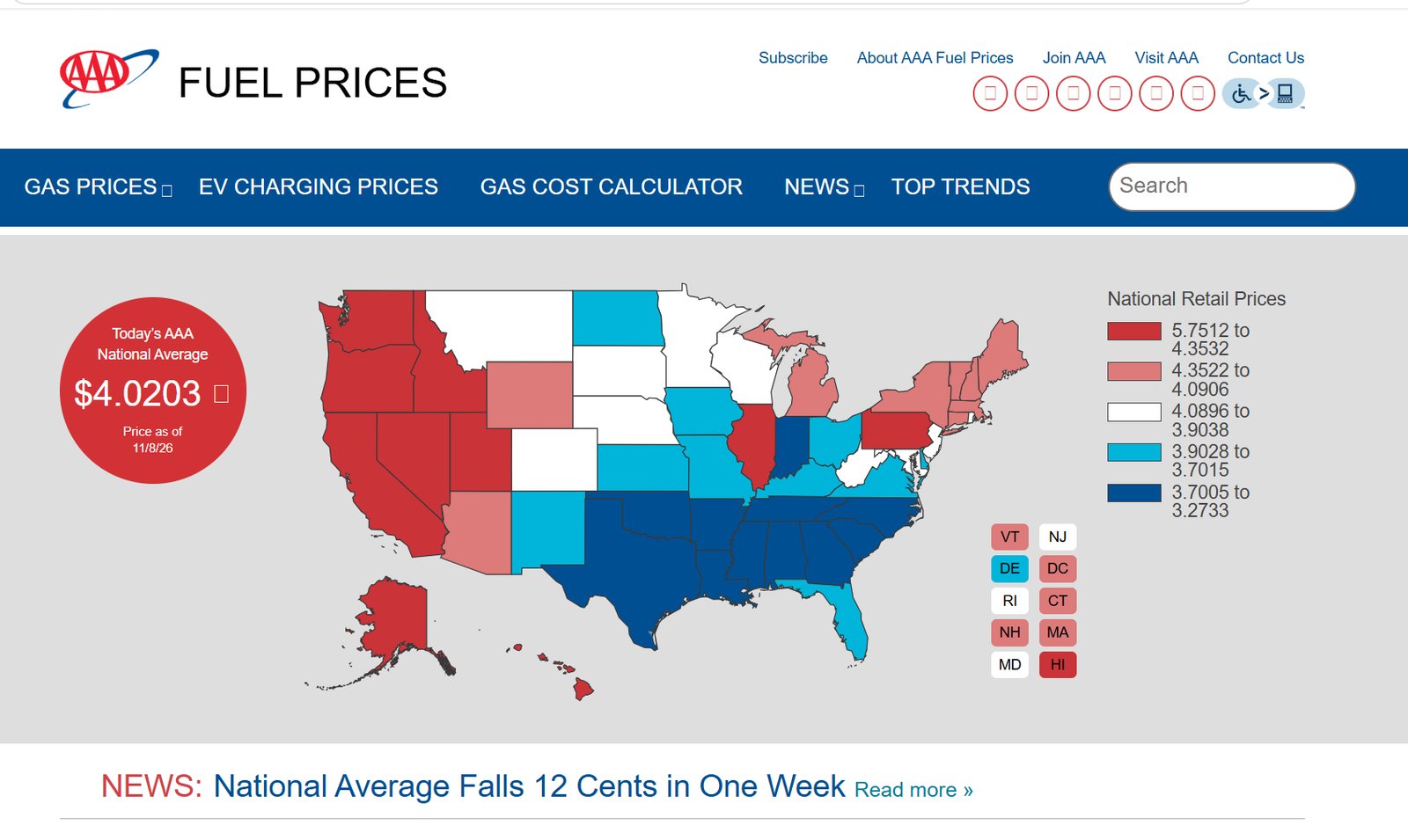


– “The petrol map is almost the opposite of the political map,” former Congressman Matt Gaetz wrote recently on Facebook.
He shares a post by Spencer Pratt, the reality TV star who stood for election as governor of California but lost.
Pratt shows a map from the American Automobile Association (AAA) of petrol prices in the US.
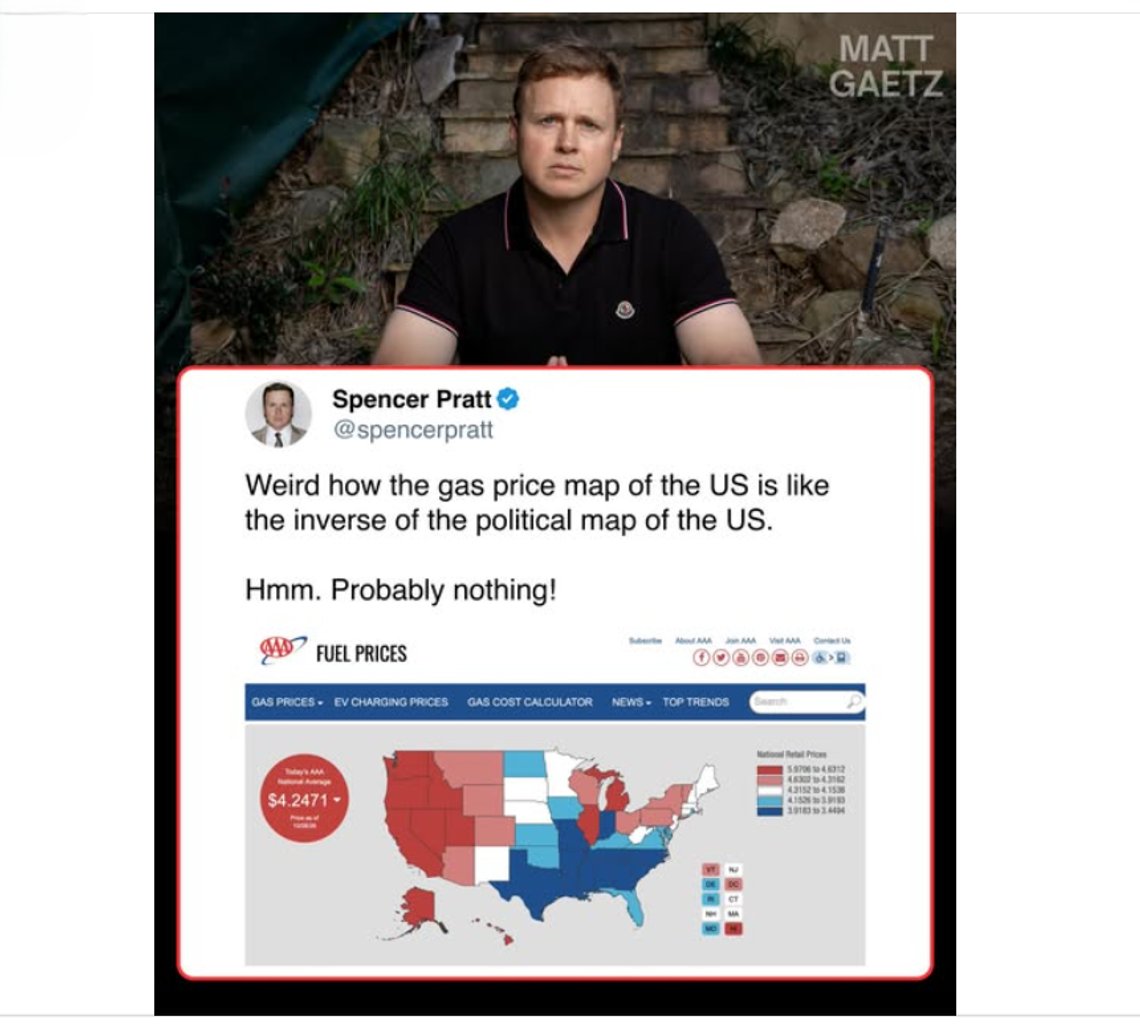
Gaetz writes:
Red states keep prices lower, whilst blue states impose taxes, regulations and special rules on fuel that drive prices up. Ordinary working people in California and New York pay the most, whilst states such as Texas and the Southern states keep prices lower.
Today’s AAA figures show a national average of around $4.25, with the biggest price differences occurring precisely where political differences are greatest.
– “How long are people going to pretend that state political leadership has no bearing on what they pay at the pumps?” asks Gaetz.
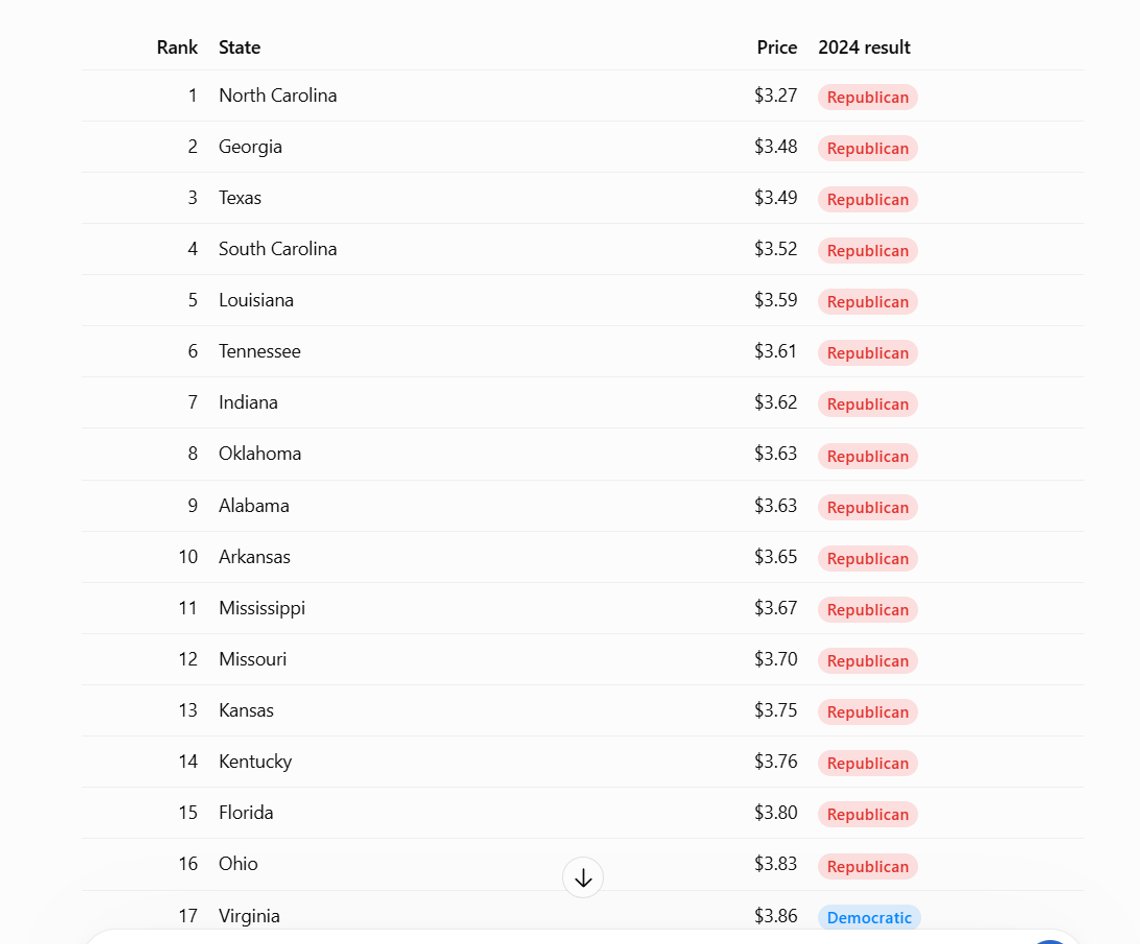
The price overview shows a clear pattern. This graph has been generated by AI based on the latest figures from AAA.
Conscious choices by politicians
An article in Forbes from July 2026 discusses a new study from the Institute for Energy Research which shows that petrol is, on average, more expensive in states governed by Democrats than in those governed by Republicans. The difference will be around 55 cents per gallon in 2026.
The study points out that most of the difference stems from specific policy choices made by the states themselves. The main factors are higher petrol taxes, carbon taxes and climate regulations, stricter fuel blend requirements, and fewer refineries on the west coast.
Almost the entire petrol tax is passed on directly to the price motorists pay. California has the highest rates, even higher than Hawaii. The state has the country’s highest petrol tax, mandates a specific, cleaner petrol blend that only a few refineries can produce, and has seen several refineries close.
A similar pattern can be seen in Washington and Oregon. According to the report cited by Forbes, the difference between blue and red states is the result of policies developed over many years at state level, not something decided in Washington.
– “For over a decade, politicians in blue states, particularly on the west coast, have made deliberate policy choices that have steadily increased fuel prices in these states,” says Tom Pyle, president of the Institute for Energy Research.
– Every time a petrol tax or carbon tax is passed at local level, it is passed straight on to consumers and directly affects what motorists pay at the pump. The point is this: state energy policy matters, and choices have real consequences.