




Thomas Seltzer has just returned from a visit to the US. He has not been back to his former homeland since the 2024 presidential election.
“MAGA is over and Trump will not accept defeat,” says Seltzer.

Screenshot: Nettavisen Facebook.
A lot has changed since then, he tells Nettavisen’s journalist Thomas Paust, who describes Seltzer as a capable and knowledgeable, but unconventional, US expert.
The choice between pork chops and a car
Firstly, it’s extremely expensive:
– It was absolutely ridiculously expensive. I was in California at a supermarket, and a punnet of strawberries cost 9 dollars – that’s more expensive than at Rema! And this is surely the world’s largest strawberry-producing region. And petrol at $6 a gallon!
Seltzer doesn’t hold back on the drama and tells Paust:
– A petrol price of $6 is a knife to the throat for a great many Americans and American families with children. We’re talking about the choice between being able to afford to drive to work or ensuring the children have enough to eat. They have to choose between pork chops and driving, he says.
– Norwegian commentators need to be a bit more cautious here. Petrol prices are the be-all and end-all for a great many Americans, and an existential problem for them in their everyday lives, he says.
Perhaps he should follow his own advice about being a cautious commentator. Seltzer isn’t just on a strawberry-picking trip in California, but also cherry-picking. He finds himself in the most expensive of all US states, both in terms of petrol and food.
Nowhere in the interview does Seltzer inform readers of this, and he thus paints an extremely skewed picture of price levels in the US. Which is, of course, the agenda of both Seltzer and Nettavisen.
Because this is just another hit piece about Trump’s America, which Seltzer is only too happy to play along with. Let’s take a look at just how extremely misleading and biased the article actually is.
Seltzer’s cherry-picking of strawberry prices
… And it cost 9 dollars for a punnet of strawberries – that’s more expensive than at Rema! …, says Seltzer. Nine dollars is equivalent to around 83 kroner.
In my home state of Florida, you can get a punnet of strawberries for around $3, give or take. At the discount supermarket Aldi, which we prefer to Walmart, the price was $3 on 1 November, whilst organic ones cost $4.85.
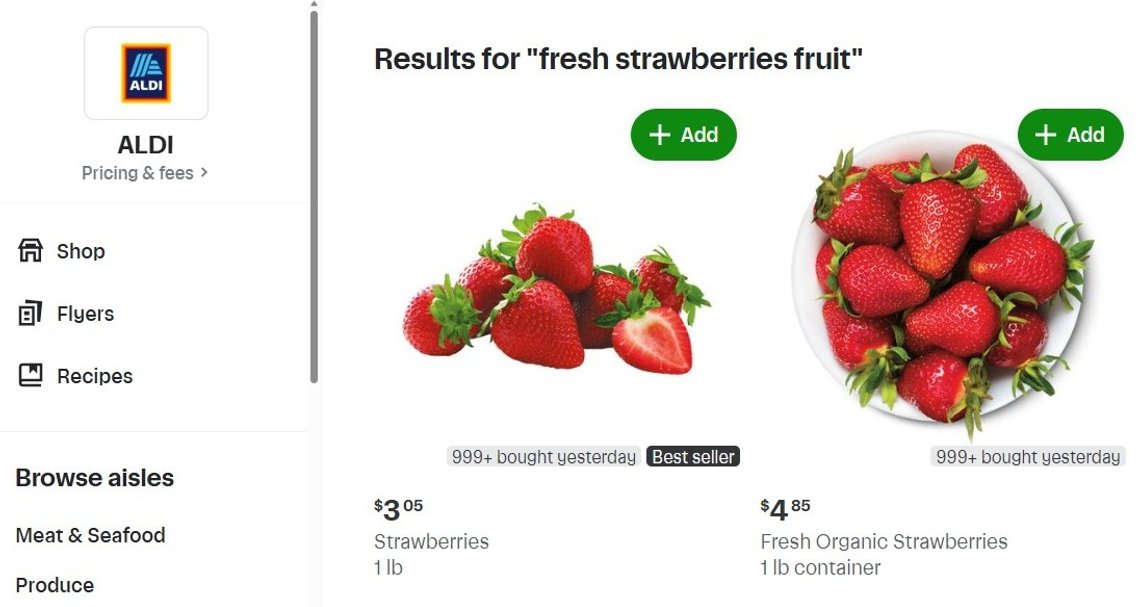
Furthermore, the strawberries we buy are often from California if they haven’t been grown in Florida.
Food monopoly in Florida
There is also every reason to question how much the President’s policies actually influence food prices, when the discount chain Aldi can sell groceries far more cheaply than the grocery giant Publix.
Publix holds around 40 per cent of the grocery market in parts of Florida and has continued to keep prices high in the wake of the pandemic. The chain has a virtual monopoly and therefore little incentive to lower prices, which has left many customers frustrated.
We usually shop at Publix, as there’s a shop on almost every corner, and the service is fantastic. But, like most other conscious consumers, a trip to Aldi saves us several hundred dollars.
Seltzer’s ridiculous portrayal of the US under Trump, where people have to choose between pork chops and driving a car, does not reflect reality.
The Great Depression 2.0
Of course, many people are struggling financially, as has been the case under every president. But he paints a picture of the US as if the country were in the midst of the Great Depression. The shops and restaurants are just as full as ever whenever we go out, at all hours of the day and night.
But the worst thing is that Seltzer has chosen to shop in California, which is the most expensive state in the contiguous US when it comes to groceries, and that Nettavisens Paust reports this without putting the state’s price levels into perspective
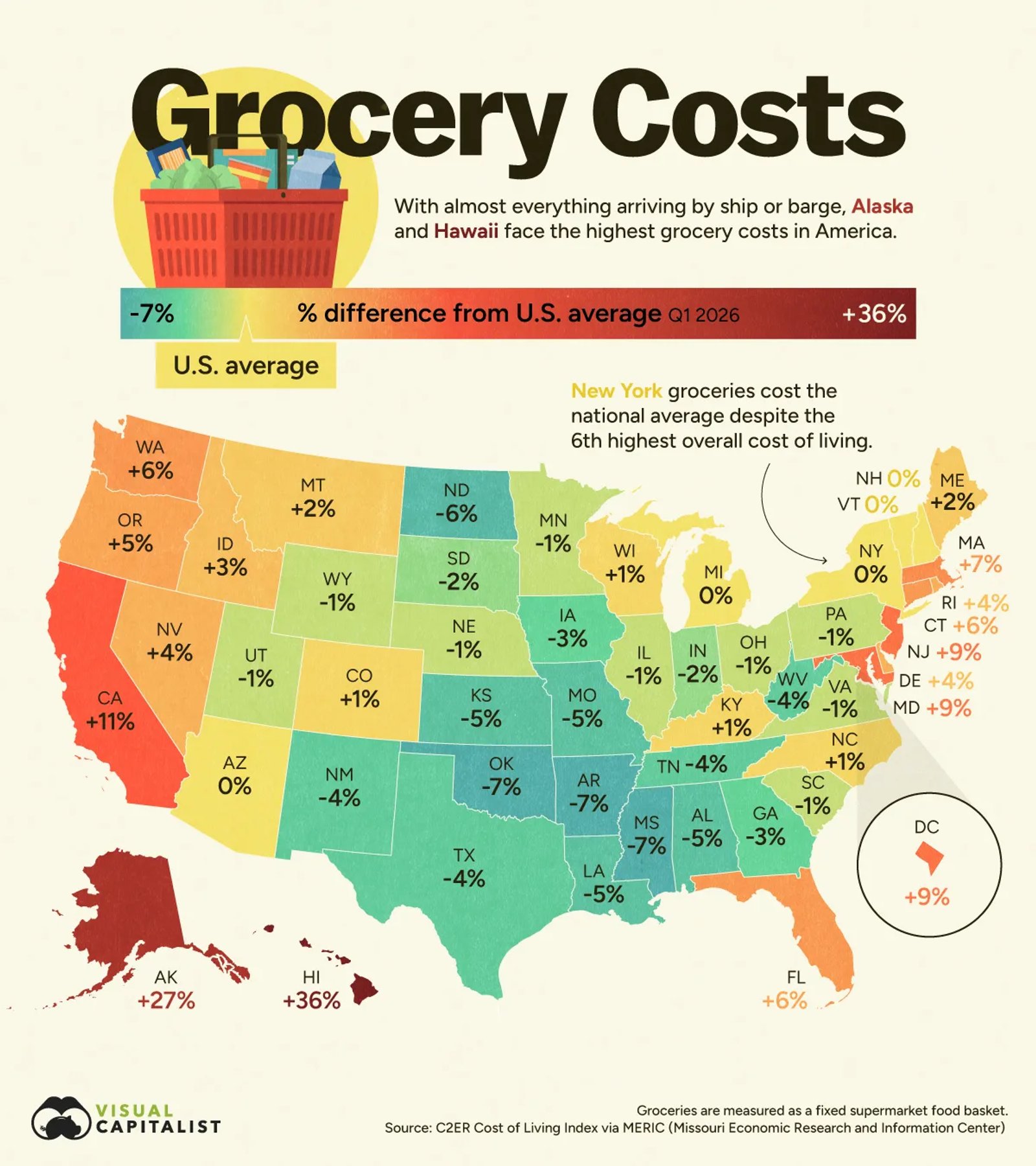
Visual Capitalist shows, using figures from the Missouri Economic Research and Information Centre (MERIC), that food prices in California are 11 per cent above the national average.
Florida is also above the national average, but significantly lower, at 6 per cent. Strawberries are nevertheless three times cheaper in Florida than in California.
Don’t California my Florida
Residents of the Sunshine State have a saying they use about people who move to Florida from Democratic states: ‘Don’t California my Florida’ – don’t turn our state into another California.
There are several reasons why California is so expensive, and the policies of Governor Gavin Newsom and the Democrats are a key part of the explanation. Seltzer and Nettavisen do not mention them at all.
The state has a very high cost of living, particularly when it comes to housing and commercial premises. High wages and a minimum wage of 16,90 dollars an hour from January 2026 also increase operating costs for shops and food producers.
Added to this are high energy costs.
According to California’s independent Legislative Analyst’s Office, electricity prices for households are almost twice as high as in the rest of the country.
This also contributes to higher costs for the production, refrigeration, storage and distribution of food. Transport, fuel and extensive regulations drive up costs even further.
Rema 1000 more expensive than Florida
It sounds like Norway, doesn’t it?
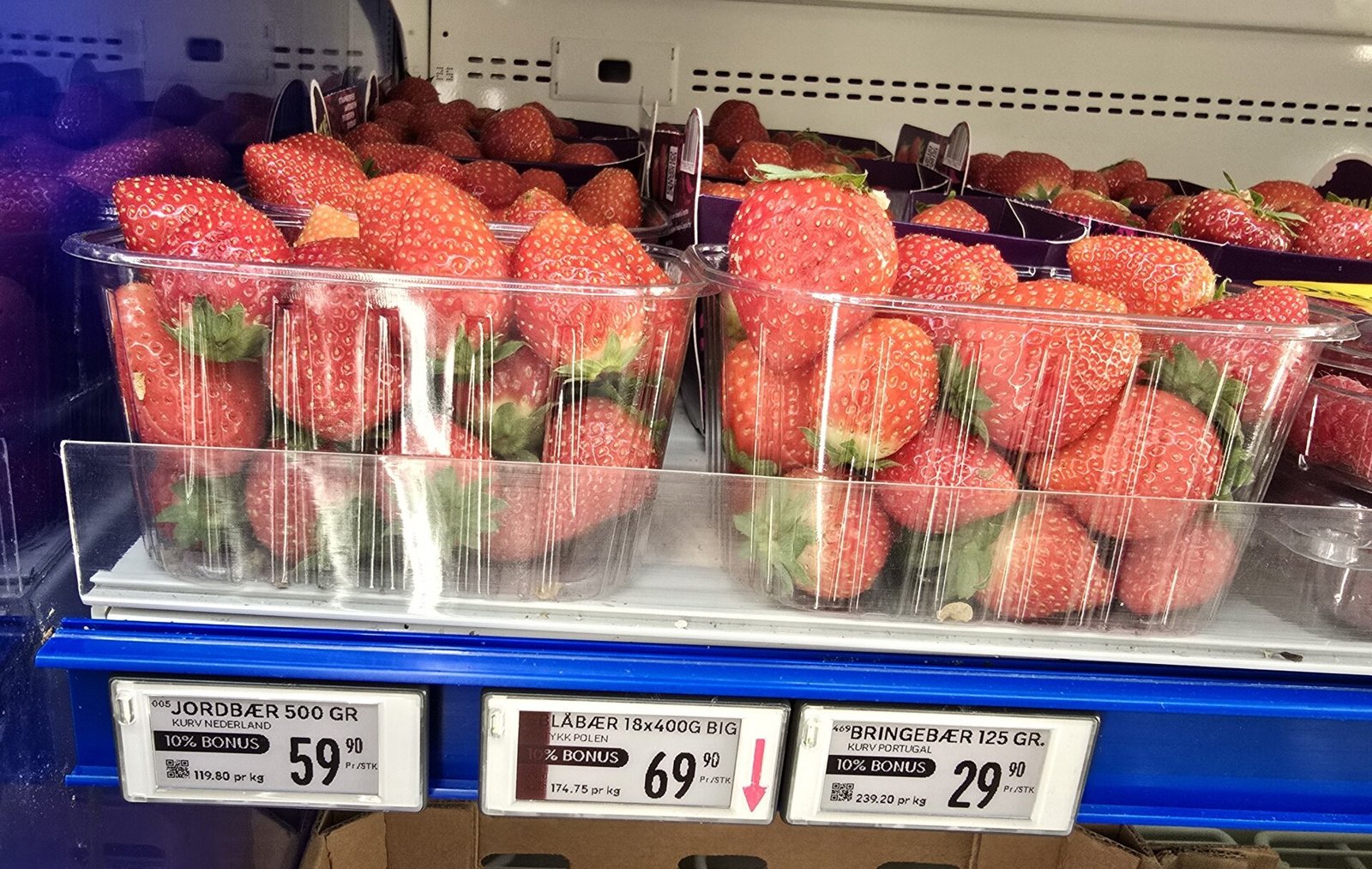
A friend of mine popped into Rema yesterday, 1 November, and took a photo of the price of strawberries: 59.90 kroner for a punnet. A little cheaper than in California, yes, but more than twice as expensive as in Florida.
Seltzer is also on a roll when it comes to petrol prices. Once again, California is the most expensive state to fill up in, and the policies of Newsom and the Democrats are largely to blame.
The AAA (American Automobile Association) reports an average price of around $5.90 per gallon in California. That equates to 14.39 kroner per litre.
In Florida, the price is $3.85, or 9.39 kroner per litre. The cheapest petrol is found in North Carolina, at $3.38 per gallon, equivalent to 8.24 kroner per litre.
Coincidentally, Seltzer fails to compare petrol prices with those in Norway, as he did with strawberry prices at Rema.
Perhaps it is difficult for him and others to appreciate the exorbitant petrol prices in oil-rich Norway, and not least the sky-high food prices.
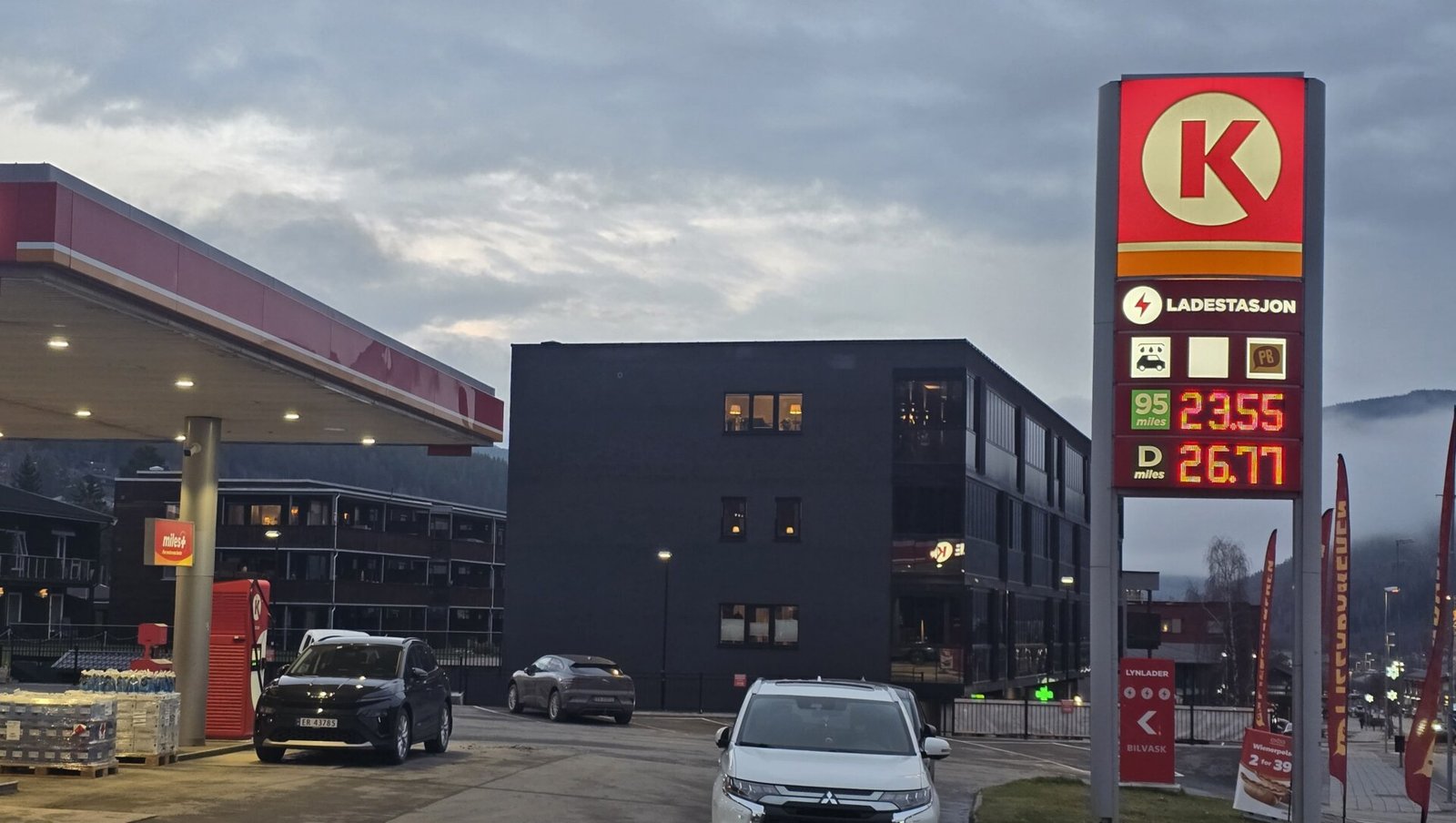
Photo: Private. Petrol price somewhere in Norway, 1 November 2026.
We can use Seltzer’s own words against him: Norwegian commentators (and politicians) need to be a little more cautious. Petrol prices are the be-all and end-all for a great many Norwegians, and an existential problem for them in their daily lives.
A competent and knowledgeable expert on the US would explain to the public that California’s high petrol prices are primarily due to the state’s own policies.
But that would cast Gavin Newsom and the Democrats in a bad light. This is clearly not an option in Seltzer’s world or in the Norwegian media’s coverage of US politics.
Motorists pay 90 cents per gallon in local, state and federal taxes and levies, compared with an average of 28 cents across the states.
Added to this are strict environmental requirements and mandates for a separate, more expensive petrol blend. California also lacks pipelines from other states and is dependent on its own refineries and imports by ship.
A journalistic disaster
The rest of Nettavisens and Seltzer’s coverage is so riddled with extreme claims and bias that it is difficult to know where to begin.
Normally, one would think that an editorial team would be reluctant to endorse such a journalistic disaster. But apparently nothing is quite normal in the Norwegian media when it comes to coverage of Trump’s America.
Pardon my language, but the ‘shithouses’ Trump is talking about aren’t outdoor toilets. They’re the editorial offices scattered across our long, narrow country.
In this article, Thomas Seltzer is given free rein to level extremely serious accusations against Trump and his administration. He compares Trump to Goebbels, speaks of a coup in real time and draws parallels with Nuremberg.
Kushner is accused of being bought and paid for by foreign powers. Paust allows these allegations to stand unchallenged, without any documentation to support them and without seeking comments from those accused.
Seltzer is presented as a knowledgeable US expert, but the result is that one of Trump’s most vocal critics is allowed to define the entire picture of reality.
At the risk of being threatened with yet another lawsuit, I have contacted both Seltzer and Thomas Paust with questions regarding the misleading portrayal of food and petrol prices.
I shall leave the rest aside. My experience of debating with these ‘experts’, including Seltzer, is that it is pointless.
If I receive a reply from them, I will update this post. Unless I am tied up in court.
Thomas Seltzer loves to tease Norwegian Trump supporters. But can he take criticism himself?


