

The Bolshevik Revolution of 1917 marked the beginning of one of history’s most brutal political experiments. From Lenin and Trotsky to Dzerzhinsky and Putin, there is a historical line that Europe must never forget.
7 November was a fateful day for many countries in Europe and the rest of the world. Today marks 109 years since the Bolsheviks seized power in Petrograd in 1917. Everyone who values freedom, democracy and human dignity should mark this day as a day of mourning. Perhaps the flags should have been flown at half-mast.
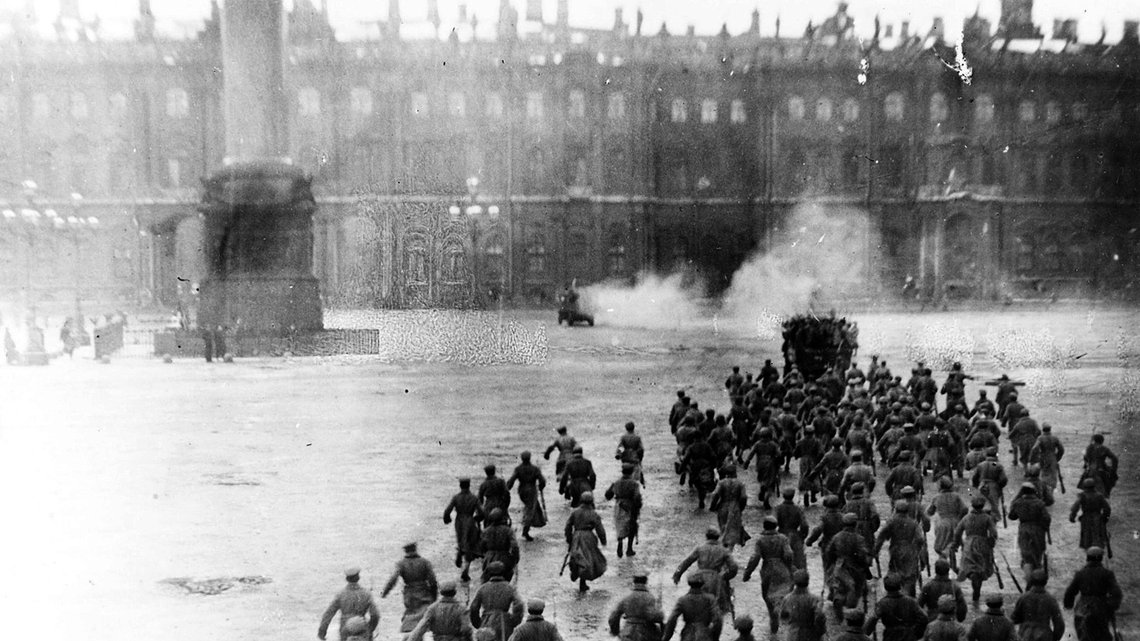
On 7 November 1917 (25 October according to the Russian calendar of the time), the Bolsheviks, led by Vladimir Lenin and Leon Trotsky, carried out a coup d’état that was to have catastrophic consequences far beyond Russia’s borders.
What was portrayed as a revolution for the workers and the people developed into one of history’s most brutal totalitarian political systems. Communism promised equality, justice and liberation. Instead, the result was political terror, oppression, mass arrests, labour camps, famines and the loss of millions of lives.
This was not a democratic takeover. The Bolsheviks seized power by force of arms and then set about systematically dismantling political freedom and democratic institutions.
The tsar’s family was executed
Nor was the Russian tsar’s family to survive the new regime.
Tsar Nicholas II, his wife Alexandra and their five children were executed by the Bolsheviks in Yekaterinburg on the night of 17 July 1918. The children were Olga, Tatiana, Maria, Anastasia and Alexei.
The entire family was brutally murdered. Several members of the household staff who had accompanied the family into captivity were also executed.
It was a symbolic and gruesome demonstration of what the new regime was prepared to do to consolidate its power. No one would be safe if they were perceived as a threat to the revolution.
Lenin, Trotsky and the establishment of the apparatus of terror
Lenin and Trotsky were key architects of the new apparatus of power. They did not build a democracy, but a one-party state in which political opposition was crushed by violence.
The secret police, the Cheka, was established in December 1917 under Felix Dzerzhinsky. He became the organisation’s first leader and one of the main architects of the Red Terror.
The Cheka was tasked with combating the regime’s political opponents. In practice, it became a tool for arbitrary arrests, torture and executions. The organisation was the forerunner of later Soviet security services, including the GPU, the NKVD and the KGB.
Trotsky was not the founder of the KGB, as some historical accounts may suggest. The KGB was not established until 1954. However, Trotsky was a key figure in the establishment of the Bolshevik dictatorship. He organised the Red Army and played a decisive role in the civil war and the consolidation of Bolshevik power.
It is difficult to understand Europe’s modern history without understanding the consequences of what happened in Petrograd on that November day.
The revolution laid the foundations for the Soviet Union, an empire which for decades spread communist ideology, military power and political oppression far beyond its own borders.
Millions of people were killed or imprisoned under communist regimes. Millions more lost their freedom, their property and the ability to determine their own lives.
From Feliks Dzerzhinsky to Vladimir Putin – the KGB’s long shadow
There is a historical line from Felix Dzerzhinsky to Vladimir Putin that deserves far greater attention.
Dzerzhinsky founded the Soviet secret police. He built a system in which surveillance, informants, arrests and political terror became key tools for maintaining power.
This security apparatus developed over several decades and eventually became known as the KGB.
Almost a hundred years later, Russia got a president with a background in precisely this system. Vladimir Putin served in the KGB for 16 years, including a posting in Dresden in the former East Germany.
It is a historical paradox that, following the collapse of the Soviet Union in 1991, Russia should end up with a former KGB officer as the country’s most powerful man.
Putin has since established an increasingly authoritarian regime, with extensive control over the media, the political opposition and the state apparatus. Russian opposition politicians and journalists have faced threats, imprisonment and persecution. Russia has also been waging a full-scale war of invasion against Ukraine since February 2022.
Perhaps most strikingly, in April 2026 Putin decided to rename the Russian FSB Academy the Felix Dzerzhinsky Academy.
This is the institution that succeeded the KGB’s former college, where Putin himself received his security training.
Dzerzhinsky was the man who founded the Cheka and led the first Soviet apparatus of terror. Putin has now chosen to honour him by restoring his name to the security service’s academy.
This is hardly a random choice of name. It is a clear symbol of the historical tradition with which today’s Russian leaders wish to identify.
There is a historical thread running from Dzerzhinsky to Putin that Europe should not ignore.
Angela Merkel and the former KGB officer
Another interesting connection is the relationship between Vladimir Putin and former German Chancellor Angela Merkel.
Merkel grew up in communist East Germany, the GDR. Putin served with the KGB in Dresden from 1985 to 1990.
The two thus had a geographical and historical connection to the same communist East Germany. Putin worked for the Soviet intelligence service, whilst Merkel lived in East German society, which was controlled by the SED regime and the secret police, the Stasi.
When Merkel became German Chancellor in 2005, she entered into a long-standing political relationship with Putin. They met on numerous occasions and collaborated on issues including energy, trade and European security policy.
Putin and Merkel had a special political relationship. They also shared a common language thanks to Merkel’s knowledge of Russian and Putin’s knowledge of German.
That does not mean they were personal friends. Merkel has subsequently described Putin’s power games and her scepticism towards him. But their long-standing political cooperation deserves critical historical attention.
It is a cause for concern that, for so many years, Europe’s largest economy had a leader who cooperated so closely with a former KGB officer who would later steer Russia in an increasingly authoritarian direction.
Germany’s dependence on Russian gas and the construction of the Nord Stream pipelines also became key elements of this relationship.
History has shown just how risky it can be when European leaders underestimate authoritarian rulers.
When the Bolsheviks plundered the Tsar’s wine cellars
There is also an episode from the days of the revolution that speaks volumes about how old Russia was treated following the Bolsheviks’ seizure of power.
Beneath the Winter Palace in Petrograd lay the Tsar’s extensive wine cellars. Here, the Russian imperial family had, over generations, amassed precious wines, cognacs and other exclusive beverages.
The collection contained rare vintages from France and Hungary, amongst other countries. These were valuable bottles of great historical and economic worth, which were served on special occasions at court.
Following the Bolsheviks’ seizure of power, the wine cellars were subjected to extensive looting.
In his diary, the French diplomat Louis de Robien described how soldiers and other looters broke into the cellars and drank from the vast stocks. Among other things, he recounts how precious Tokaj wines from the time of Catherine the Great were drunk.
The American diplomat Joshua Butler Wright also reported on the looting. In a diplomatic report, he described how soldiers had broken into the Winter Palace’s wine cellars and help themselves to a collection comprising around 300,000 bottles.
This escalated into widespread alcohol-fuelled chaos. Soldiers wandered about drunk and armed, and the situation became so serious that attempts were made to destroy the remaining bottles to prevent further looting and drunkenness.
It was not just wine that was lost. Valuable artefacts and parts of the palace’s historic interior were also looted or destroyed.
This episode is a telling illustration of the revolution’s first phase: a regime that claimed to represent the working class and create a new and better society failed even to protect the historical treasures it had taken over.
Russia’s imperial cultural heritage was ravaged by a revolution that not only took lives and freedom, but also destroyed and plundered large parts of the country’s historical treasures.
A day the world should remember
The Soviet Union formally collapsed in 1991. Many hoped that this would mark the beginning of a new era of freedom and democracy for Russia and the former Soviet republics.
But the legacy of the Soviet system did not disappear.
Communism has left behind a bloody history. That does not mean that everyone who has believed in socialist ideas can be held responsible for the crimes. But it does mean that we must never forget what happens when a political ideology takes precedence over individual freedom, the rule of law and human dignity.
There is also reason to ask critical questions of left-wing politicians in our own time. Why have the crimes of communism so often received less attention than those of Nazism? Why have so many intellectuals, politicians and political movements been willing to gloss over or trivialise abuses committed in the name of communism?
It is entirely possible to fight for social justice, workers’ rights and economic equality without defending communist dictatorships. But it must also be an absolute requirement that all totalitarian ideologies are met with the same moral condemnation.
We mark 7 November as an important date in European history, not least because the Berlin Wall fell in 1989. We commemorate the victims of Nazism and the Holocaust. It is also high time that Europe’s history of communist terror received the attention and seriousness it deserves.
Why do we not have a similarly strong European tradition of commemorating the victims of communism?
Why is it still possible to display communist symbols and romanticise revolutionary leaders without the history of the terror and the human lives lost always being highlighted?
7 November 1917 was not the beginning of any liberation of humanity. It was the beginning of a new dictatorship that would leave deep and tragic scars on world history.
From Lenin and Trotsky to Dzerzhinsky and Putin, we see how power, ideology and the security apparatus can go hand in hand when freedom is set aside.
We must never forget what happened on that day.