

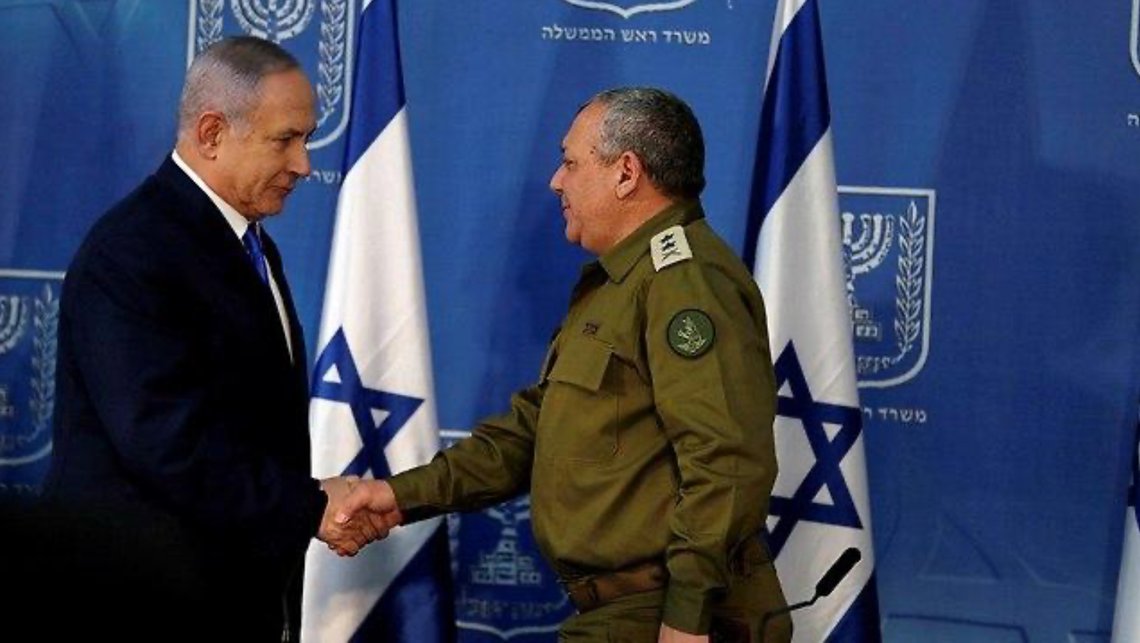


For the first time, the Arab parties in Israel could be the deciding factor in who will govern the country.
On Sunday, President Isaac Herzog will decide whether opposition leader Gadi Eisenkot or Prime Minister Benjamin Netanyahu will be given the opportunity to form a government.
Of the Knesset’s 120 members, 67 have recommended Eisenkot, whilst 46 favour Netanyahu. However, the large majority in favour of Eisenkot hinges on the two Arab parties, the Joint List and the Islamist Ra’am. Together, they hold 19 seats – more than ever before. Without them, Eisenkot’s bloc has only 48.
“The results of the consultations seem clear,” Herzog told Haaretz. He emphasises, however, that his job is to find out who can actually muster a majority, and he intends to speak to several party leaders before Sunday.
Netanyahu has been crystal clear that he will not rely on the Arab parties. He believes they are anti-Zionist, support Hamas and call Israeli soldiers war criminals.
“We must not put Israel at risk,” he said in a speech after the election.
He warns that a government relying on these parties would undermine the State of Israel. Likud has also asked the authorities to investigate whether the election was influenced from abroad. The head of the Electoral Commission, Supreme Court Justice Noam Sohlberg, has confirmed that serious suspicions of foreign interference have been raised.
Incidentally, in 2021 Ra’am joined Naftali Bennett’s government, becoming the first Arab Islamist party in Israel’s history to do so. The government lasted just over a year.
Nor is everyone in Eisenkot’s own bloc enthusiastic. One or two of the parties do not wish to sit in a government that is dependent on the Arab parties. Yair Golan of the Democrats, on the other hand, is among those pushing for precisely that.
Netanyahu’s Likud emerged as the largest party in the 27 October election, with 27 seats. Eisenkot’s party, Yashar, won 21. Netanyahu’s bloc has a total of 53 seats, but not all have endorsed him. The ultra-Orthodox party Degel HaTorah, which holds four seats, is not endorsing any of the candidates, after the government failed to secure an exemption from military service for ultra-Orthodox men.
Eisenkot is a former Chief of Defence. He served on Netanyahu’s war cabinet following the Hamas attack on 7 October 2023, but resigned after eight months. His son was killed in Gaza in December of the same year.
Voter turnout was almost 78 per cent, the highest since 1999.


