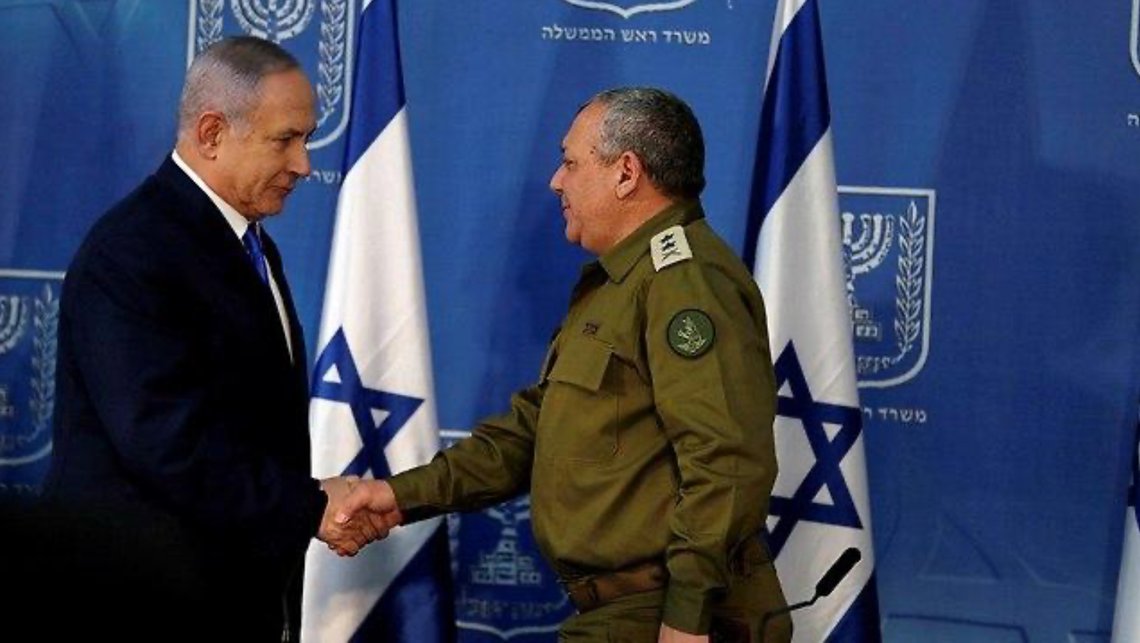


Elections to Israel’s legislative assembly, the Knesset, are taking place this Tuesday, with the key question being whether Benjamin Netanyahu or Gadi Eisenkot will succeed in securing a parliamentary majority afterwards.
Eisenkot, a former Chief of the General Staff of the Israel Defence Forces (IDF), was originally a member of Benny Gantz’s National Unity party, but last year founded a new centrist party called Yashar.
Yashar has for some time been slightly ahead of Netanyahu’s Likud party in a number of opinion polls, but neither party is expected to win more than twenty-odd seats in the Knesset, which has 120 members.
However, some polls show Likud in the lead, which also raises questions about the credibility of the various players in the polling industry.
In any case, the election result itself will not necessarily determine straight away whether Netanyahu must step down as head of government or not, but will depend on both his and Eisenkot’s ability to build alliances with a view to securing a basis for government.
A possible change of government is unlikely to lead to radical changes in Israel’s security policy.
Eisenkot is an advocate of a strong defence, he is a hardliner towards Iran and its proxies such as Hamas and Hezbollah – and he has opposed the establishment of a Palestinian state since the Hamas terrorist attack on Israel on 7 October 2023, although he had not previously been opposed to it on principle.
The Yashar leader also wants compulsory military service for Arabs and ultra-Orthodox Jews, as well as an investigation into the events of 7 October. Could the attack have been prevented? The election is thus as much a vote for or against Netanyahu as it is a choice between two parties.
Election night polls are expected at 9.00 pm Norwegian time this evening.