

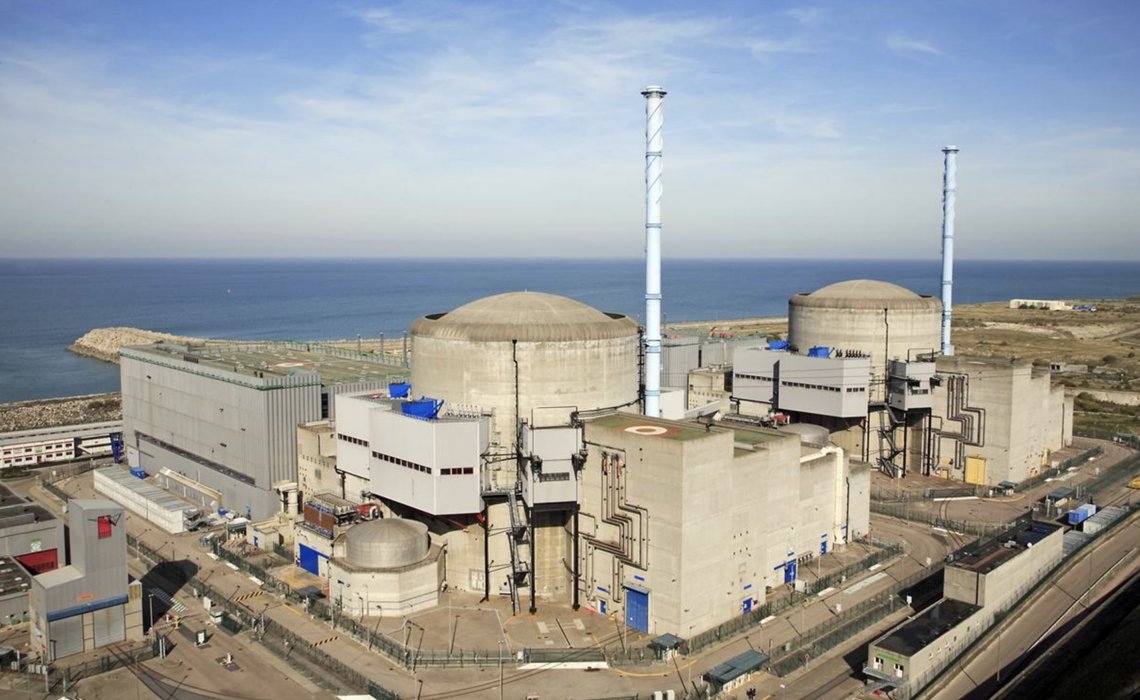


In 2022, French President Emmanuel Macron announced that France would invest in six new EPR2 nuclear reactors. The project is a long-term one and will not be fully completed for several decades, but it is now at a stage where the work needs to be financed.
France’s national electricity producer, Électricité de France (EDF), will operate the reactors, and the initial investment requirement is 72.8 billion euros.
As France is an EU member state and this involves a very large state investment in a French company, the whole project falls under EU state aid rules. Consequently, the EU must approve the plans, and Brussels has been considering the matter since November 2025.
It recently became clear that the EU is imposing two key conditions for approving the French investment plan, reports Média.
Firstly, the EU requires that some of the output from the six reactors be made available to EDF’s competitors in the electricity market. The EU is concerned about the company’s dominant position in France, where it generates 75 per cent of the electricity.
Secondly, France is required to improve its power interconnections with other countries, so that the European market can be supplied with more French nuclear power.
The matter is currently under negotiation between France and the EU, and the question is whether the parties will reach an agreement in time for the first works to commence as planned in 2028.
France is particularly sceptical about any agreements EDF might have to enter into regarding other operators’ access to the power, given that the company has had negative experiences with a similar EU scheme in the past.
From 2011 until the end of 2025, this scheme, which was imposed by Brussels, EDF to cede up to 100 terawatt-hours of nuclear power each year to its competitors, at a fixed price of 42 euros per megawatt-hour. A price that proved to be catastrophically low, as wholesale prices soared in 2022–2023, forcing EDF to buy some of the electricity back on the market at a high price, which it then had to supply at a very low price.
If the negotiations drag on, it is conceivable that they will not be concluded before the French presidential election in April and May 2027, in which Marine Le Pen is the clear favourite.
In that case, a bitter dispute between the EU and France could play into the hands of Le Pen, who has long signalled that she will not allow Brussels to do as it pleases with France. This could therefore lead to a highly explosive conflict between the Union and one of its largest member states.


