

Marine Le Pen is well placed to become France’s next president. This is causing near-panic in Brussels.
Le Pen is threatening to scupper the EU’s budget plans. The EU is doing everything it can to reach a decision on a long-term budget for the Union before the French presidential election in May, but does not appear to be succeeding.
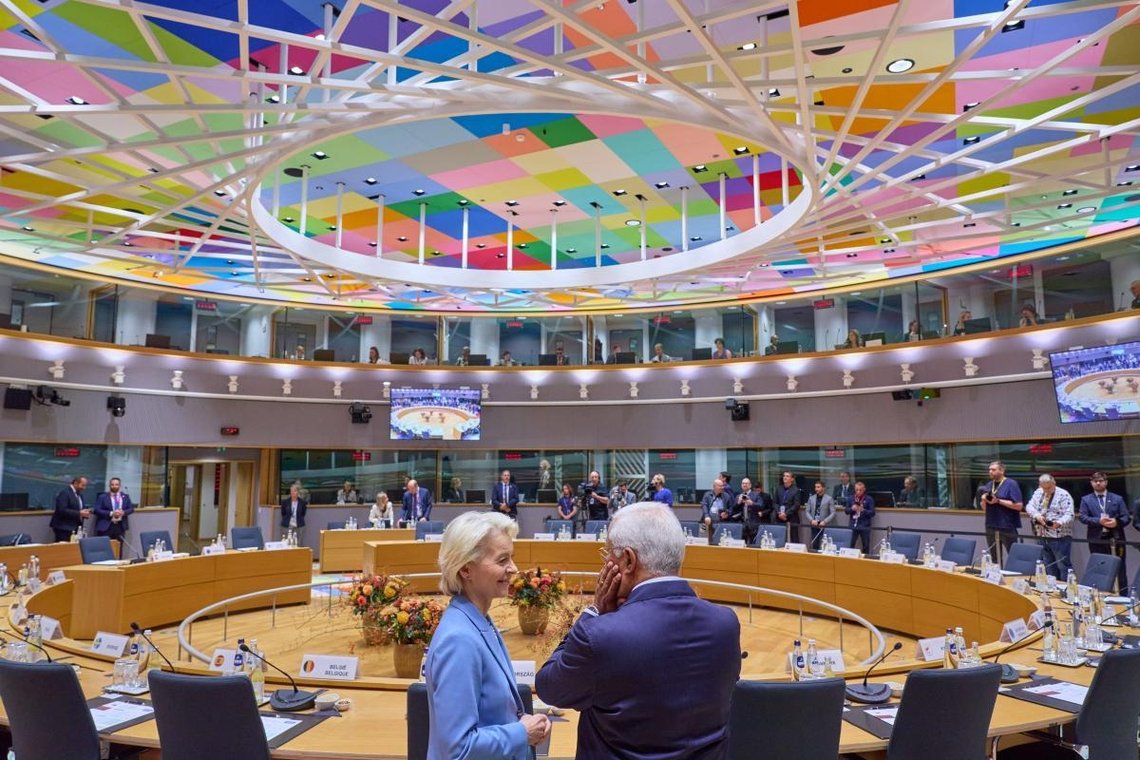
The budget battle was one of the top items on the agenda at Thursday’s EU summit.
EU President Antonio Costa has repeatedly emphasised the importance of getting the EU’s next long-term budget over the line before the French election this spring. Costa fears that if Le Pen becomes French president, the whole process will be back to square one.
A clear message from Le Pen
On Wednesday, Marine Le Pen turned up in Brussels and delivered the following message to EU leaders:
– It would be a democratic scandal to adopt a new long-term budget before the presidential election in France this spring.
Le Pen herself is absolutely certain she will win that election.
– We are seeing ever-increasing support from one election to the next. I have always been sceptical of opinion polls, but week after week they are now showing stronger support for our project,’ she replied when asked by NTB what makes her so confident of victory. (NTB – Bibiana Dahle Piene)
Wants to halve EU contribution
Le Pen told the press in Brussels that she intends to almost halve France’s net contribution to the EU, from 9.5 to a maximum of 5 billion euros. She also promises to turn European politics on its head.
Among other things, she wants the European Commission to be reduced to a secretariat for the member states.
– “All activities that fall outside the EU’s remit must be halted. The EU’s Green Deal must be scrapped, because it contributes to economic decline and deindustrialisation,” said Le Pen.
Nor should the EU engage in diplomacy, development cooperation or pursue its own foreign policy if Le Pen gets her way.
– That will result in significant savings.
Support for Ukraine
Le Pen stated on Wednesday that she would “maintain financial support for Ukraine for six months” if she is elected president in May 2027, but that beyond that she would allow financial support to “cease”, because, in her view, France “no longer has the means”, writes Le Figaro.
– France is no longer in a financial position to provide aid to Ukraine, so this financial support will cease.
Ukraine’s President Volodymyr Zelenskyy believes that Le Pen does not understand how much Ukraine means to the French economy and technological development.
– Le Pen does not fully understand certain details. Our armed forces’ technological expertise is extremely important to our partners … And French industry can only benefit from these technologies, this cooperation and this co-production.
However, Le Pen believes that this is not worth a further increase in French public debt to finance a war that shows no sign of ending.
A fine line
A sense prevailed at the EU summit that a budget agreement before Christmas is hanging by a thread.
– ‘We’re in no hurry,’ was the message from several leaders.
A press conference on the budget was scheduled for Thursday evening. But it was cancelled.
All EU member states and a majority in the European Parliament must give the green light for the budget to be adopted. This seems unlikely, and Sweden, amongst others, flatly rejected a new budget proposal from the Irish Presidency.
– “Completely unacceptable,” stated Prime Minister Ulf Kristersson as he entered the Council building.
EU countries wishing to reduce expenditure are now demanding that EU President Costa, who is responsible for the budget, put forward a new budget proposal.
Two camps
Broadly speaking, the 27 EU countries are divided into two camps:
‘The thrifty ones’, or the ‘sensible ones’ as they call themselves, consist of six wealthy countries – Germany, Sweden, Denmark, the Netherlands, Finland and Austria. They account for around 40 per cent of the EU budget and are demanding severe cuts amounting to several hundred billion euros, particularly in agricultural subsidies and the regional cohesion fund – the largest items in the budget.
The second group consists of 17 countries that call themselves the ‘friends of regional aid’, including Spain, Italy and Poland. They want an even larger budget and, above all, no cuts to agriculture or regional aid.
The European Parliament has put forward its own demands. It wants the EU budget to be increased by 10 per cent, but is unlikely to get its way.