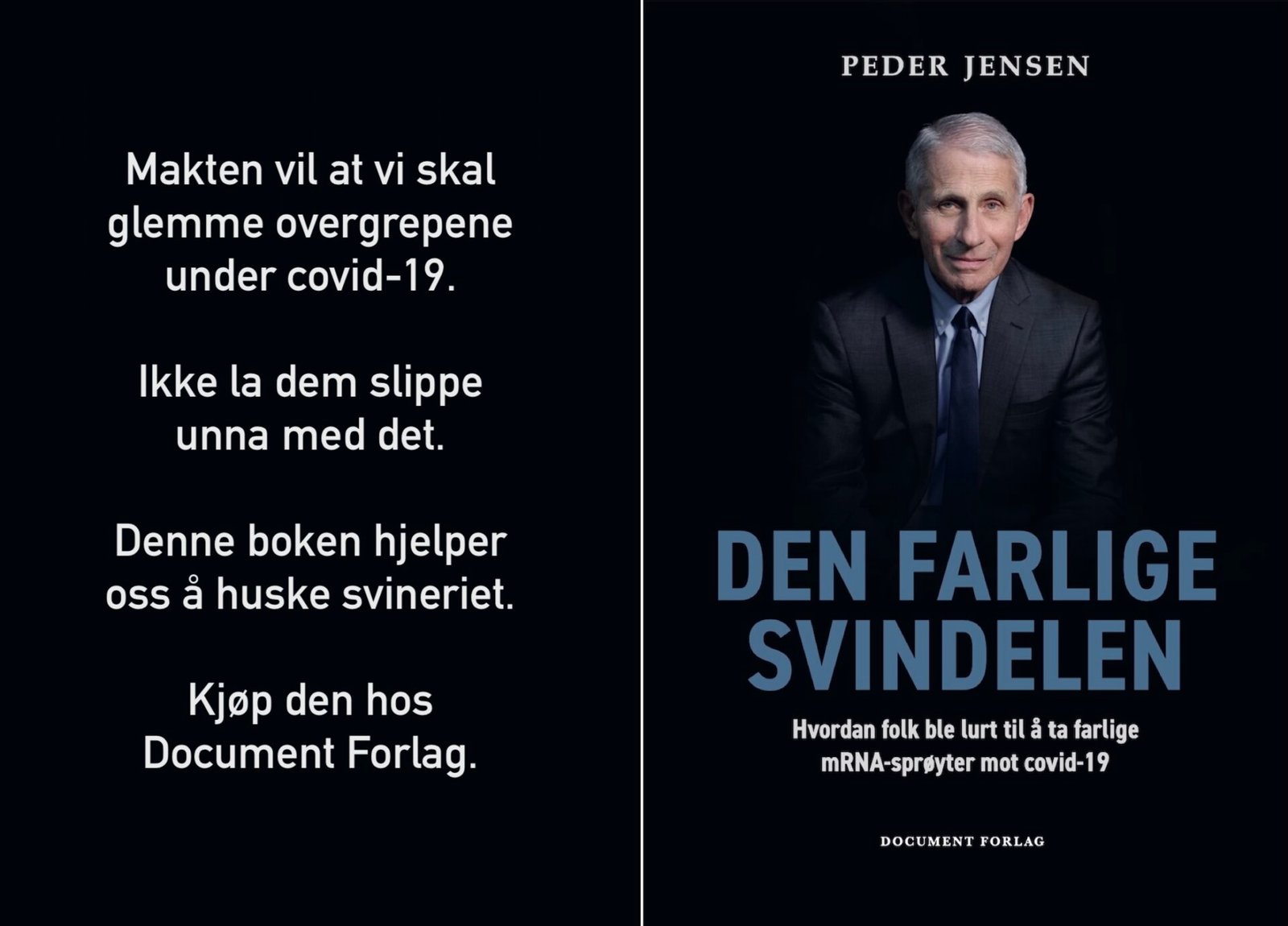
They were safe. They were effective. They were meant to protect you and the people around you. That was the message when the authorities launched the largest vaccination campaign in modern history. Billions of people had the jabs. Some voluntarily. Others because the alternative was losing their jobs, their freedom of movement or their access to society. Now Peder Jensen asks what actually happened.
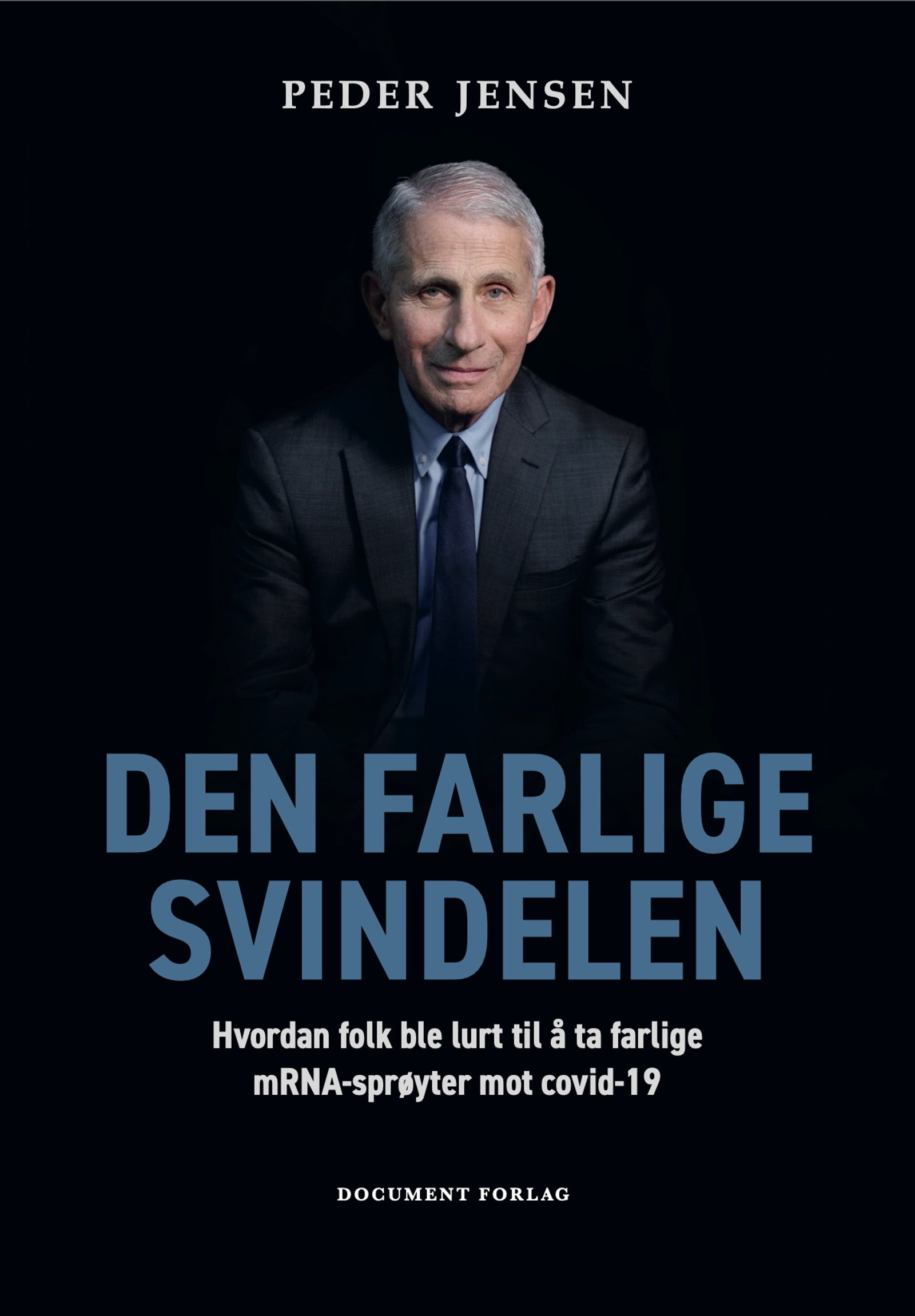
In his new book ‘The Dangerous Deception’, he tackles the story that many politicians, health authorities and the media would prefer to declare over and done with. The book traces the developments from the virus outbreak in Wuhan to mass vaccination, the reported adverse effects and the persistent excess mortality that followed.
From Wuhan to mass vaccination
How could a new medical technology be developed, fast-tracked for approval and administered to large sections of the world’s population in less than a year?
Jensen examines the research in Wuhan, Anthony Fauci’s role and the political and economic interests surrounding the pandemic. He describes how Pfizer and Moderna utilised modified mRNA and lipid nanoparticles to get the body’s own cells to produce the spike protein. The technology was new. The long-term effects were unknown. Nevertheless, the authorities assured the public that the products had been thoroughly tested.
It usually takes many years to document the long-term effects of a medicine. During the Covid pandemic, this was apparently achieved in a matter of months. Science had been rushed. Caution was left behind on the platform.
Safe and effective?
The jabs were supposed to stop the spread of the virus. They did not. Vaccinated people could still become infected and pass the virus on. Nevertheless, unvaccinated people were accused of posing a danger to society. Politicians, journalists and commentators openly discussed how this section of the population could be controlled, isolated and punished. The vaccine passport turned medical status into a ticket to a normal life.
How voluntary was consent when saying ‘no’ could cost you your job? And how informed was it when the authorities themselves did not know the consequences?
These are among the questions Jensen poses. The answers are not particularly reassuring.
The people behind the statistics
A large part of the book is about people who believe they became seriously ill following vaccination. Jensen reviews research and reports on, amongst other things, myocarditis, blood clots, neurological problems, a weakened immune system and possible signs of cancer. Behind the figures are people who did what the authorities asked them to do. When their health failed, many found that the very same system would not listen to them. They were praised when they had the jab. When the side effects emerged, things went quiet.
Jensen also investigates the excess mortality that has affected Norway and other countries since 2021. Norway did not experience any dramatic excess mortality in the first year of the pandemic. Death rates rose later. What is the reason for this? Why is anonymised data on vaccination status and mortality not being made available for a fully independent investigation? If the authorities are right, open data should confirm this. If they are wrong, the public has an even greater need to see it.
The media that stopped asking questions
‘The Dangerous Deception’ is therefore about more than just medical side effects. It is about power, fear, propaganda and failing science. Journalists and fact-checkers were supposed to keep power in check. Instead, many ended up guarding the authorities’ narrative. Critical doctors and researchers were ridiculed, censored or pushed out of the public eye.
Jensen directs harsh criticism at the pharmaceutical companies, the World Health Organisation (WHO), Anthony Fauci, Bill Gates and the Norwegian health authorities. But the responsibility does not stop there. Politicians, researchers, the media and commentators helped to create a climate in which doubt was treated as disloyalty. When the state asks you to set aside your own judgement, that is precisely when you need it most.
A book about responsibility
‘The Dangerous Deception’ will provoke. It will also provide the reader with a wealth of research, statements, statistics and personal stories to consider. Jensen asks what the authorities knew, when they knew it, and why serious warning signs did not lead to a complete halt and an investigation.
The book is at once an indictment, a record of the Covid years and a warning for the future. For if no one is held to account for what happened, there is little reason to believe it cannot happen again.
The books have left the printers and are expected to arrive at our warehouse within a few days, but can be pre-ordered now.