

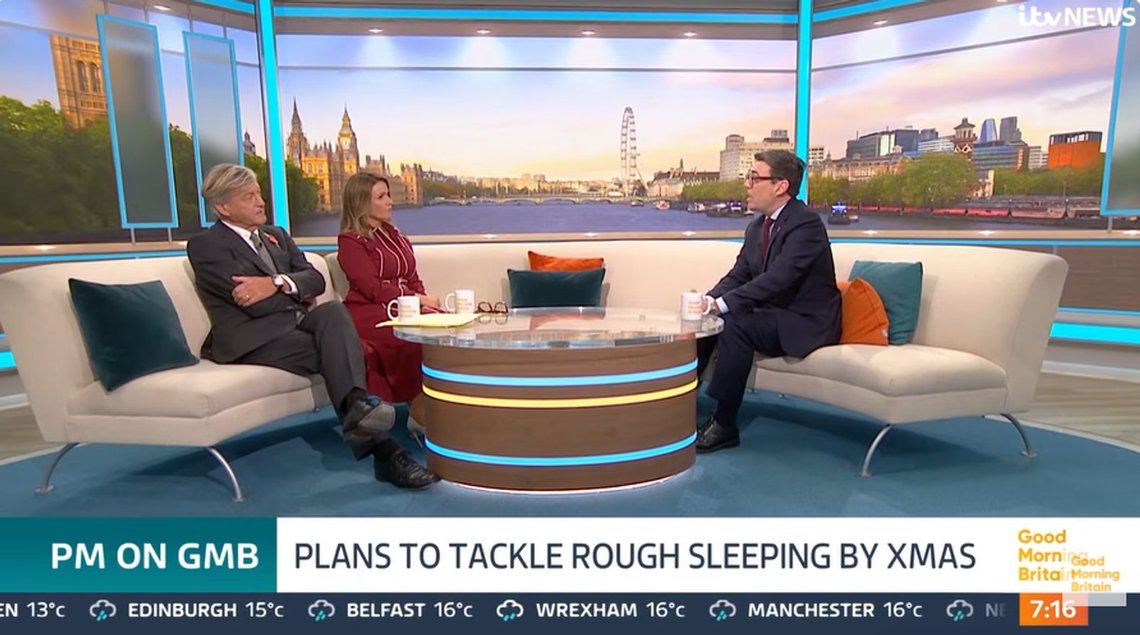


British Prime Minister Andy Burnham has ruled out the UK renewing its EU membership during this parliamentary term.
Burnham also blamed Brexit for the crisis involving small boats carrying illegal migrants crossing the English Channel.
The comments came whilst Burnham was a guest on ITV’s Good Morning Britain. This was the Labour leader’s first live TV interview since he moved into 10 Downing Street 99 days ago.
Burnham also reiterated his view that the UK should rejoin the EU within his lifetime, although he insisted that the British people would have the final say, reports The Telegraph.
“I have said that I will be honest, and in my lifetime I would like to see that happen. But I have no intention of going against the will of the people, and I have no intention of dictating based on my own opinions here. We must ensure that the British people are in charge.”
Burnham has previously accused the Kremlin of contributing to Brexit, which he described as the British equivalent of ‘Russia Collusion’.
Andy Burnham believes ‘Russia Collusion’ contributed to Brexit
A flood of small boats from 2018
Small boats carrying illegal migrants from France to the English coast were first spotted in late January 2018, two years before the UK left the EU. The Tory government led by Theresa May described the situation at the time as a “serious incident”.
The number of boat migrants surged during the Covid pandemic. As freight traffic through the Channel Tunnel was drastically reduced as a result of the lockdowns, migrants opted for small boats as an alternative.
The total number of migrants who have crossed the Channel since then is estimated at around 213,000, whom Burnham believes cannot be returned due to Brexit.
“The reason the small-boat crisis has arisen is that we cannot send people back, and that people know we cannot.”
It should be noted that the British themselves can choose to withdraw from the European Convention on Human Rights (ECHR), which is cited as a reason every time the British judiciary puts obstacles in the way of, amongst other things, attempts to establish asylum centres in third countries such as Rwanda.
It is also up to the British themselves whether they wish to continue spending billions of pounds on making life easier for illegal immigrants by providing them with financial support and free accommodation.
The number of boat migrants has fallen by around 40 per cent over the past year. The problem is that virtually none of those who have already arrived are being deported, and the problems are piling up. At a time when the British are experiencing a deep economic crisis, billions of pounds are being poured into the support and resettlement of migrants residing in the country illegally.
In addition, the British have experienced a sharp rise in crime, including the most serious offences, such as serious violence, murder and sexual assault.
There are several causes of the economic crisis, and migration is one of them. Furthermore, for years the British have pursued a climate policy centred on the dream of Net Zero and massive investment in ‘renewable’ energy, which has had catastrophic consequences for industry and households, who have seen their energy costs skyrocket.
Since Labour formed a government in July 2024, the Labour government has also raised taxes and duties sharply. At the same time, the NHS is in the midst of a full-blown crisis, the armed forces need to be rebuilt, and yet huge sums are being sent to Kyiv whilst Westminster dreams of sending British troops to Ukraine to ensure the country’s security through the Franco-British ‘coalition of the willing’ initiative.
In the interview, Burnham said he would take action on energy prices. He hinted that Chancellor of the Exchequer John Healey would announce new measures in the budget, and promised that he would be “relentless” when it comes to reducing households’ energy bills.
“What I can say is that I have already taken action to reduce people’s energy bills; I have abolished VAT on electricity bills – one of the first things I announced, in fact. And I am determined to do more. In the House of Commons last week, I said that we would look at the standing charge on gas bills and see if there is anything we can do there … People will have to wait and see what comes later this week.”
For ten years, British voters have heard political leaders make promise after promise, without these promises ever being kept. That is why few Britons are likely to be reassured by Burnham’s statements.
But the Prime Minister could, of course, choose to surprise sceptical voters and other critics by breaking the trend and actually delivering on some of his promises.
The interview can be viewed below.


